
Turnkey PCB Assembly
Kingda provides turnkey PCB assembly manufacturing from PCB manufacturing and component sourcing to SMT assembly/THT assembly, inspection, testing, and final delivery.
- Home
- Turnkey PCB Assembly
What Is Turnkey PCB Assembly?
Kingda provides turnkey PCB assembly manufacturing from PCB fabrication and component sourcing to SMT assembly/THT assembly, inspection, testing, and final delivery.
We support electronics companies from prototype and pilot builds to low-to-medium-volume production, combining engineering support, manufacturing, and supply chain coordination under one manufacturing partner.
With Kingda, your project can be managed through:Engineering Review → PCB Manufacturing → Component Sourcing → PCB Assembly → Inspection & Testing → Delivery
This helps simplify supplier coordination and provides a more structured path from design data to finished PCB assemblies.
Our Turnkey PCB Assembly Services

Engineering Support
BOM verification
DFM/DFA review
Component and footprint verification
Manufacturing data review
Production planning

PCB Manufacturing
Rigid and flexible PCBs
Multilayer PCBs
HDI PCBs
Heavy copper PCBs
Custom PCB specifications
ENIG and other surface finishes

Component Sourcing
Active and passive components
ICs and connectors
Electromechanical components
BGA, QFN, QFP and fine-pitch components
Component availability verification
Alternative component sourcing

SMT & THT Assembly
SMT assembly
THT assembly
Mixed-technology assembly
BGA assembly
Fine-pitch assembly
Prototype and low-volume assembly

Inspection & Testing
Incoming inspection
First article inspection
SPI
AOI
X-ray inspection
Visual inspection
ICT
Functional testing
Final inspection

Additional Services
IC programming
Conformal coating
PCB cleaning
Cable and wire-harness assembly
Box-build assembly
Custom packaging and labeling
Engineering Support Before Production
A reliable PCBA project starts with manufacturing data that is ready for production.
Before manufacturing, our engineering team reviews the available PCB and assembly information to identify potential production risks.
Step 1: BOM Review
We check:
- Manufacturer part numbers
- Component descriptions
- Quantities
- Package and footprint information
- Component availability
- Potential sourcing risks
Step 2: DFM & DFA Review
We evaluate design features that may affect PCB fabrication or assembly, including:
- Component spacing
- Pad and footprint compatibility
- Assembly clearances
- Soldering requirements
- BGA and fine-pitch components
- Panelization requirements
Step 3: Manufacturing Planning
After the engineering review, we coordinate PCB fabrication, component procurement, SMT Assembly/THT Assembly, inspection, testing, and delivery according to the project’s requirements.
This helps reduce communication between multiple suppliers and gives you a single manufacturing partner for the PCBA project.
PCB & PCBA Manufacturing Capabilities
Kingda supports high-mix, low-to-medium-volume PCB assembly for prototype development, pilot production, and ongoing manufacturing.
PCB Manufacturing
We provide PCB manufacturing for different board structures and technical requirements.
Rigid PCBs
Standard single-sided, double-sided, and multilayer rigid boards.
Flexible PCBs
Flexible circuit boards for applications requiring bending or space-saving interconnections.
Multilayer & HDI PCBs
Higher-density PCB structures for compact and complex electronic designs.
Heavy Copper PCBs
PCB solutions for applications requiring higher current-carrying capability and thermal performance.
PCBA Manufacturing
Our PCBA manufacturing capabilities cover different component types and assembly requirements.
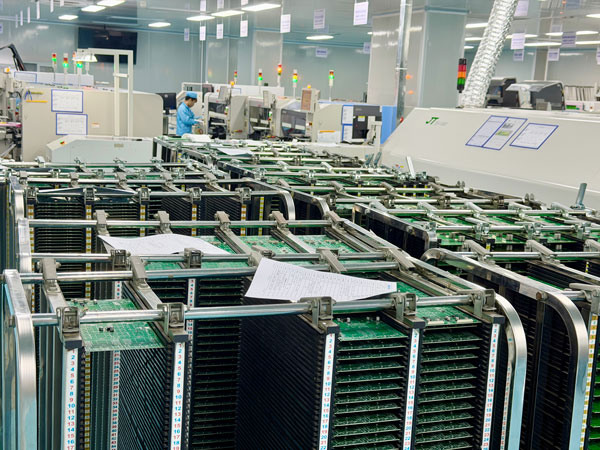
SMT Assembly
Automated placement of standard and fine-pitch surface-mount components, including:
- 01005 passive components
- QFN and QFP
- BGA
- Fine-pitch ICs
- SMT connectors
Through-Hole Assembly
THT assembly for components requiring strong mechanical connections, higher current handling, or secure board mounting.
- Connectors and terminals
- Switches and electromechanical components
- Through-hole capacitors and resistors
- Manual and selective soldering
- Prototype and production assembly
Mixed-Technology Assembly
SMT and THT components can be assembled on the same PCB according to the product design and manufacturing requirements.
PCB Assembly Quality & Testing
Quality control is applied throughout the production process rather than only at final inspection.
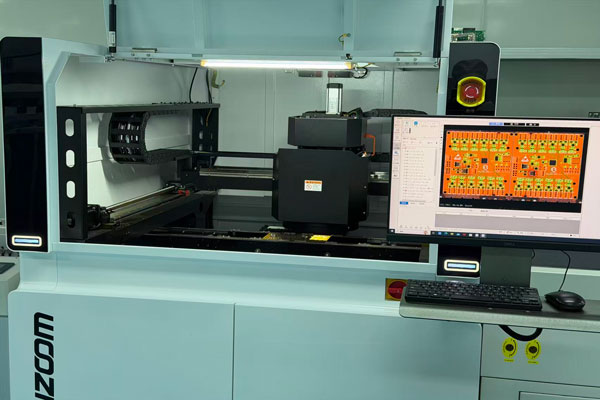
SPI — Solder Paste Inspection
Checks solder paste volume, position, and deposition before component placement.
AOI — Automated Optical Inspection
Checks component presence, placement, polarity, solder joints, and other visible assembly conditions.
X-Ray Inspection
Used to inspect hidden solder joints and connections, particularly for BGA, QFN, and other packages that cannot be fully inspected visually.
ICT — In-Circuit Testing
Used to identify electrical issues such as shorts, opens, and component-related faults when suitable test access is available.
Functional Testing
Verifies whether the assembled PCBA operates according to the required functional and electrical specifications.
First Article & Final Inspection
First article inspection helps verify the initial assembly results, while final inspection confirms the finished assemblies before shipment.
From Design Data to Finished PCBA

Project & Engineering Review
Review BOM, Gerber files, assembly drawings, specifications, testing requirements, and DFM/DFA considerations.
Quotation & Production Confirmation
Confirm the manufacturing scope, specifications, quantities, lead time, and production requirements.

Component & PCB Procurement
Source components and arrange PCB fabrication according to the approved manufacturing data.

PCB Assembly
Complete SMT, THT, or mixed-technology assembly using the approved production process.
Inspection & Testing
Perform AOI, X-ray inspection, programming, electrical testing, functional testing, and other required quality checks.

Final Inspection & Delivery
Complete final inspection and packaging, then arrange shipment according to the agreed delivery requirements.

PCB Assembly Supply Models
Different projects require different sourcing arrangements. Kingda supports three common models.
Turnkey PCB Assembly
Kingda manages the complete manufacturing process:
PCB Manufacturing → Component Sourcing → Assembly → Inspection → Testing → Delivery
Partial Turnkey Assembly
You provide selected components, such as customer-controlled, custom, or difficult-to-source parts.
Kingda manages the remaining sourcing, PCB manufacturing, assembly, inspection, and testing.
Consigned PCB Assembly
You provide the components, while Kingda handles pcb manufacturing,assembly, inspection, and testing.
Why Work With Kingda?

One Manufacturing Partner
Coordinate PCB manufacturing, component sourcing, assembly, inspection, and testing through one supplier.

Engineering-Led Manufacturing
Our engineering team reviews manufacturing data before production to identify potential issues early.

Prototype to Production
Support for prototype builds, pilot production, and repeat manufacturing.

High-Mix Manufacturing
Suitable for projects involving different PCB designs, component types, and production requirements.

Quality & Traceability
Quality control is integrated into the manufacturing process, with production and inspection information managed through our manufacturing systems.

Experienced PCBA Manufacturing
Founded in 2013, Kingda has more than 10 years of experience in PCB and PCBA manufacturing, supporting customers across prototype and production projects.
What We Need for Your PCB Assembly Project

BOM — Bill of Materials
Preferably including:

Gerber Files
Complete PCB fabrication data, including:

Centroid / Pick-and-Place File
The file should preferably include:

Assembly Drawings & Specifications
If available, also provide:

Start Your Turnkey PCB Assembly Project
Have a PCB assembly project in development?
Turnkey PCB Assembly FAQs
Turnkey PCB assembly is a manufacturing service where one supplier manages the major stages of the PCBA process, including PCB manufacturing, component sourcing, PCB assembly, inspection, testing, and delivery. This allows customers to coordinate their project through a single manufacturing partner.
A typical turnkey PCB assembly service can include:
- Engineering and BOM review
- PCB manufacturing
- Component sourcing
- SMT and THT assembly
- PCB inspection
- Electrical and functional testing
- IC programming
- Conformal coating
- Packaging and delivery
The exact scope depends on the project requirements.
For an initial quotation, the most important files are usually:
- BOM (Bill of Materials)
- Gerber files
- Centroid / Pick-and-Place file
- Assembly drawings, if available
Additional information such as testing requirements, programming files, and special manufacturing specifications can also be provided when applicable.
Yes. Kingda supports partial turnkey PCB assembly. You can provide selected components, such as customer-controlled, custom, or difficult-to-source parts, while we source the remaining components and manage PCB manufacturing and assembly.
Yes. Kingda can coordinate PCB manufacturing and PCBA manufacturing as part of the same project. This allows customers to manage bare PCB fabrication, component sourcing, assembly, inspection, and testing through one manufacturing partner.
Yes. We support prototype, pilot, and low-to-medium-volume PCB assembly projects. Our manufacturing process is suitable for projects that require engineering review, component sourcing, and production support before moving to repeat manufacturing.
Our PCB assembly capabilities include:
- SMT assembly
- Through-hole assembly
- Mixed-technology assembly
- BGA assembly
- QFN and QFP assembly
- Fine-pitch component assembly
The appropriate assembly process depends on the PCB design and component requirements.
Inspection and testing can include incoming inspection, SPI, AOI, X-ray inspection, visual inspection, ICT, functional testing, first article inspection, and final inspection.
The inspection and testing plan is selected according to the product design and customer requirements.
Yes. Functional testing can be arranged when the required test specifications, procedures, fixtures, or test equipment are available. Functional testing verifies whether the assembled PCBA operates according to the specified requirements.
We can evaluate component availability and sourcing risks during the BOM review. When an original component is unavailable, alternative sourcing options can be evaluated based on availability, specifications, lifecycle status, and customer approval.