The rapid development of automotive electronics is transforming modern vehicles into highly connected and intelligent electronic platforms. From Engine Control Units (ECUs) and Battery Management Systems (BMS) to Advanced Driver-Assistance Systems (ADAS), infotainment, vehicle networking, sensors, and electric powertrain systems, automotive PCBs play a critical role in controlling and connecting these functions.
As vehicle electronics become more sophisticated, the requirements for automotive PCB assembly are also becoming increasingly demanding. Automotive circuit boards must operate reliably under extreme temperatures, continuous vibration, mechanical shock, humidity, dust, chemicals, and electromagnetic interference. At the same time, vehicle manufacturers require smaller form factors, higher circuit density, improved thermal performance, and longer operating lifetimes.
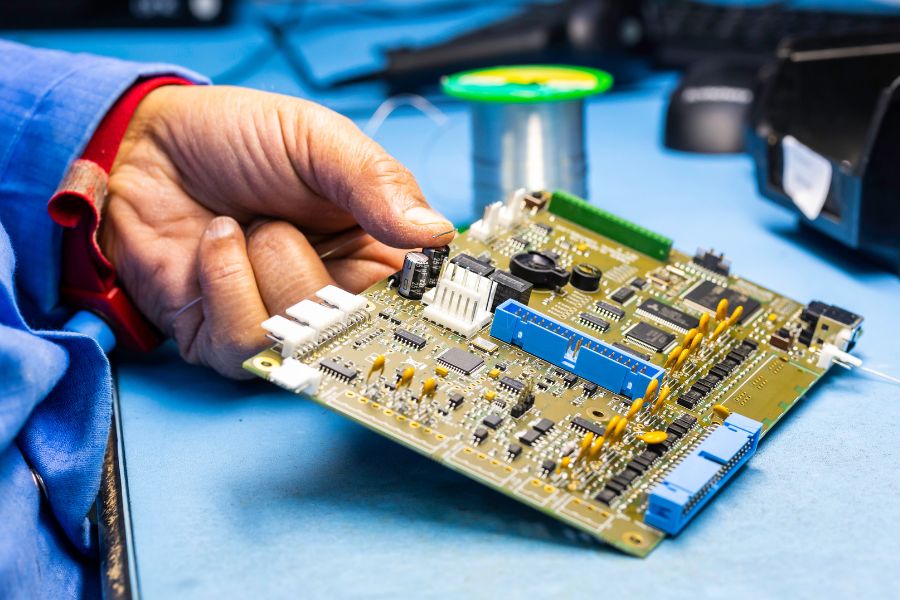
For this reason, automotive PCB manufacturing requires more than conventional PCB assembly techniques. It requires a combination of advanced PCB technologies, precise SMT and THT assembly, strict process control, comprehensive inspection, electrical testing, component traceability, and reliable quality management.
This article explores the major challenges in automotive PCB assembly, practical solutions for overcoming them, and how Kingda can support automotive electronics manufacturers from prototype development to volume production.
What Is Automotive PCB Assembly?
Automotive PCB assembly refers to the process of manufacturing and assembling printed circuit boards specifically designed for automotive electronic systems.
Depending on the vehicle and application, automotive PCBs can be found in:
- Engine Control Units (ECUs)
- Battery Management Systems (BMS)
- Advanced Driver-Assistance Systems (ADAS)
- Automotive lighting systems
- Infotainment systems
- Telematics and connectivity modules
- Vehicle networking systems
- Electric vehicle power electronics
- Charging systems
- Motor control systems
- Instrument clusters
- Safety and body-control systems
Unlike ordinary consumer electronics, automotive PCBs must provide reliable performance throughout long operating lifecycles. They must also withstand temperature cycling, vibration, mechanical stress, moisture, electromagnetic interference, and other demanding environmental conditions.
A reliable automotive PCBA manufacturing process therefore includes PCB fabrication, component sourcing, SMT placement, through-hole assembly, soldering, inspection, testing, traceability, and final quality verification.
Why Is Automotive PCB Assembly So Challenging?
The automotive industry places strict requirements on electronic components because PCB failures can affect vehicle performance, safety, and reliability.
Several major factors contribute to the complexity of automotive PCB assembly.
Product Failures and Recalls
Defective solder joints, component failures, thermal damage, vibration-induced failures, or insufficient testing can cause PCB malfunction. In automotive applications, such failures may result in expensive warranty claims or product recalls.
Higher Manufacturing Costs
Modern automotive electronics use increasingly complex components such as BGA, QFN, fine-pitch ICs, high-power semiconductors, and high-density connectors. These components require more sophisticated PCB layouts and assembly processes.
Longer Development Cycles
Automotive electronics typically require extensive design verification, prototype testing, reliability testing, and production validation before entering volume manufacturing.
Supply Chain Risks
Semiconductor shortages, component obsolescence, long lead times, and price fluctuations can create significant risks for automotive electronics manufacturers.
Quality and Compliance Requirements
Automotive products require strict process control and documentation. Depending on the application and customer requirements, manufacturers may need to comply with standards such as IATF 16949, ISO 9001, ISO 26262, and applicable environmental regulations.
1. Harsh Operating Environments
One of the most important challenges in automotive PCB manufacturing is environmental reliability.
Automotive electronic assemblies may be installed in locations exposed to extreme temperatures, vibration, humidity, mechanical shock, dust, oil, chemicals, and condensation.
Temperature Extremes
Automotive electronics can experience significant temperature variations depending on their location. Electronics installed near engines, motors, batteries, and power electronics may be exposed to particularly demanding thermal conditions.
Repeated heating and cooling can cause differences in thermal expansion between the PCB, copper structures, solder joints, and components.
Vibration and Mechanical Stress
Vehicles continuously experience vibration and mechanical shock. Over time, these stresses can contribute to:
- Solder-joint fatigue
- Component cracking
- Connector failures
- PCB delamination
- Mechanical deformation
Moisture and Contamination
Humidity, condensation, chemicals, and contaminants can cause:
- Corrosion
- Oxidation
- Leakage current
- Insulation degradation
- Short circuits
Solutions
A robust automotive PCB assembly strategy should begin with material and mechanical design.
Recommended approaches include:
- Selecting appropriate high-Tg PCB materials
- Using specialized laminates for demanding thermal environments
- Applying conformal coatings where required
- Optimizing component mounting structures
- Reinforcing mechanically sensitive components
- Designing appropriate thermal paths
- Performing environmental reliability testing
Kingda can provide engineering support during PCB fabrication and assembly to help customers select appropriate materials and manufacturing processes for different automotive applications.
2. Miniaturization and High Component Density
Modern vehicles contain more electronic functions while available installation space remains limited. This has accelerated the adoption of high-density PCB technologies.
Higher component density creates several engineering challenges.
Increased Heat Generation
When more components are placed in a smaller area, localized heat density can increase. Without proper thermal management, excessive temperature can reduce component lifetime and system reliability.
Signal Integrity Problems
High-density routing can increase the risk of:
- Crosstalk
- EMI
- Impedance discontinuity
- Signal reflection
- Ground bounce
- Excessive insertion loss
Limited Routing Space
Fine-pitch BGA and other high-density packages require sophisticated escape routing techniques.
HDI as a Solution
HDI PCB technology provides additional routing density through structures such as:
- Microvias
- Blind vias
- Buried vias
- Fine-line traces
- Fine spaces
- Sequential lamination
- Via-in-pad structures
Using HDI PCB manufacturing, designers can accommodate more circuitry within a smaller board area while potentially reducing the number of conventional through-hole vias that interfere with routing.
Kingda supports advanced PCB technologies including HDI PCB, multilayer PCB, high-frequency PCB, high-speed PCB, flexible PCB, rigid-flex PCB, and metal-core PCB, helping customers address increasingly complex automotive electronics designs.
3. Thermal Management
Thermal management is particularly important for automotive electronics involving power semiconductors, electric motors, batteries, DC/DC converters, and other high-power systems.
Poor thermal management can result in excessive junction temperatures and premature component degradation.
Effective Thermal Management Strategies
A properly engineered automotive PCB may incorporate:
- Thermal vias
- Large copper areas
- Heavy copper structures
- Heat sinks
- Metal-core PCB technology
- Thermal interface materials
- Optimized component placement
- Controlled copper distribution
Thermal design should also be considered together with electrical and mechanical requirements.
For example, increasing copper thickness may improve current carrying capability and heat spreading, but it can also affect PCB fabrication and soldering processes.
Kingda can support customers in selecting PCB structures and manufacturing processes according to the electrical, thermal, and mechanical requirements of automotive applications.
4. Quality and Reliability Requirements
Quality control is one of the most critical aspects of automotive PCBA manufacturing.
Automotive electronic systems are expected to maintain stable performance for many years. Therefore, manufacturers must control potential defects throughout the entire production process.
Typical Quality Controls
A comprehensive automotive PCB assembly process may include:
- Incoming component inspection
- PCB inspection
- Solder paste inspection
- SMT placement verification
- Automated Optical Inspection (AOI)
- X-ray inspection
- In-Circuit Testing (ICT)
- Functional Circuit Testing (FCT)
- First Article Inspection (FAI)
- Process traceability
- Final quality inspection
Kingda combines PCB fabrication and PCBA manufacturing capabilities with comprehensive inspection and testing processes to provide customers with an integrated production solution.
5. Soldering and Assembly Challenges
As automotive PCBs become more complex, soldering processes become increasingly sensitive.
Common defects include:
- Cold solder joints
- Solder bridging
- Solder voids
- Insufficient solder
- Excessive solder
- Component misalignment
- Open circuits
- Tombstoning
- BGA solder defects
These defects can directly affect electrical performance and long-term reliability.
How to Improve Automotive PCB Assembly
Precision Reflow Soldering
Reflow profiles should be optimized according to the PCB material, solder paste, component package, and thermal characteristics.
Selective Soldering
Selective soldering is useful for through-hole components on mixed-technology PCBs.
AOI Inspection
AOI can detect component placement and visible soldering defects early in the production process.
X-Ray Inspection
X-ray inspection is particularly valuable for hidden solder joints under BGA, QFN, and other bottom-terminated components.
Kingda provides SMT assembly, DIP assembly, reflow soldering, selective soldering, AOI, X-ray inspection, ICT, and functional testing to support complex PCBA projects.
6. Testing and Validation
Testing is an essential part of automotive PCB manufacturing because visual inspection alone cannot detect every potential defect.
In-Circuit Testing
ICT can verify component values, electrical connections, opens, shorts, and other circuit-level characteristics.
Functional Testing
FCT evaluates whether the assembled PCB performs according to its intended functional requirements.
X-Ray Inspection
X-ray inspection can identify hidden soldering problems that cannot be detected through conventional optical inspection.
Reliability Testing
Depending on the application, automotive PCB products may require additional reliability testing, including:
- Thermal cycling
- High-temperature testing
- Humidity testing
- Vibration testing
- Mechanical shock testing
- Burn-in testing
- Electrical stress testing
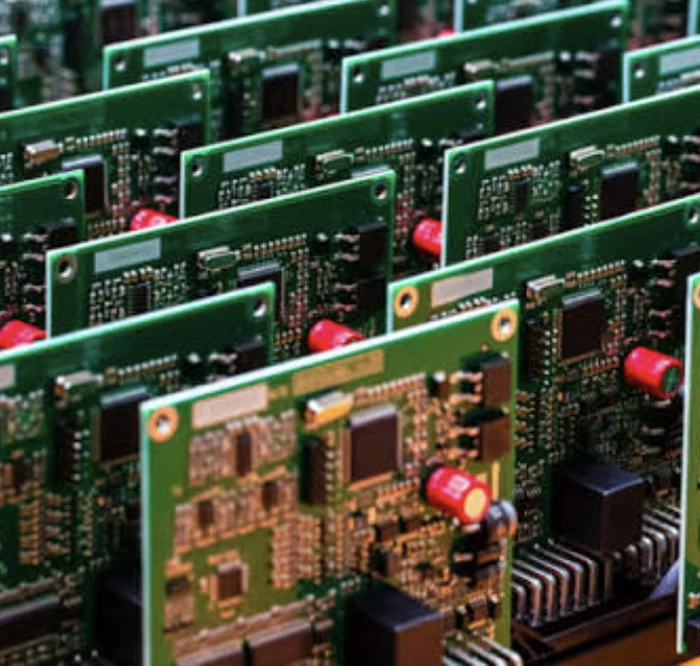
A comprehensive testing strategy helps manufacturers identify potential failures before products enter the vehicle.
7. Supply Chain and Component Management
The increasing complexity of automotive electronics has made component sourcing an important part of PCBA manufacturing.
Automotive PCB projects may involve hundreds or thousands of components, including ICs, connectors, sensors, power devices, resistors, capacitors, and specialized semiconductors.
Supply chain problems can result from:
- Component shortages
- Long lead times
- Product discontinuation
- Counterfeit components
- Price fluctuations
- Global logistics disruptions
Solutions
Manufacturers can reduce these risks through:
- Qualified supplier networks
- BOM analysis
- Component availability checks
- Alternative component evaluation
- Strategic inventory management
- Component traceability
- Long-term supply planning
Kingda provides BOM analysis, component sourcing, component verification, and supply-chain support, helping customers reduce procurement risks while maintaining production continuity.
8. Environmental and Regulatory Compliance
Automotive PCB manufacturers must also consider environmental requirements and material restrictions.
Depending on the destination market and customer requirements, products may need to meet requirements related to RoHS, lead-free manufacturing, halogen-free materials, and other environmental regulations.
Recommended Approaches
Manufacturers can improve environmental compliance by:
- Using lead-free solder
- Selecting compliant PCB laminates
- Using halogen-free materials where required
- Maintaining supplier material documentation
- Improving waste management
- Increasing material utilization efficiency
- Conducting regular compliance reviews
Kingda can support customers with PCB and PCBA manufacturing according to specified material, environmental, and customer requirements.
Why Choose Kingda for Automotive PCB Assembly?
Choosing the right automotive PCB manufacturer is critical for achieving consistent quality, stable production, and competitive lead times.
Kingda provides an integrated PCB and PCBA manufacturing solution, covering PCB fabrication, component sourcing, SMT assembly, DIP assembly, inspection, testing, and final production support.
One-Stop PCB and PCBA Manufacturing
Kingda integrates PCB manufacturing and PCB assembly under one manufacturing system. This helps reduce communication complexity between different suppliers and simplifies project management.
Advanced PCB Manufacturing
Kingda supports advanced PCB technologies such as:
- HDI PCB
- Multilayer PCB
- High-frequency PCB
- High-speed PCB
- Flexible PCB
- Rigid-flex PCB
- Metal-core PCB
- High-Tg PCB
- Controlled-impedance PCB
These capabilities are suitable for automotive electronics requiring high circuit density, compact dimensions, thermal performance, and signal integrity.
Professional SMT and DIP Assembly
Kingda provides SMT and DIP assembly for prototypes, low-volume production, and volume manufacturing.
Its assembly capabilities can support fine-pitch components, BGA packages, mixed-technology boards, and complex automotive electronic assemblies.
Comprehensive Inspection and Testing
Quality control can include AOI, X-ray inspection, ICT, FCT, and FAI, depending on project requirements.
This multi-stage inspection strategy helps detect manufacturing defects and verify product functionality.
Engineering and DFM Support
Kingda can provide engineering assistance during the transition from PCB design to manufacturing, including:
- DFM analysis
- DFA analysis
- Gerber review
- BOM verification
- Component sourcing
- Manufacturing process optimization
- Prototype support
- Production engineering support
This helps identify potential manufacturing problems before they become costly production issues.
Prototype to Mass Production
Kingda can support projects throughout different stages of development, from PCB prototyping and small-batch PCBA to larger-scale production.
This allows customers to maintain manufacturing continuity as their automotive electronics products move from engineering validation to production.
Conclusion
The rapid evolution of automotive electronics is creating increasingly demanding requirements for automotive PCB assembly. Extreme temperatures, vibration, moisture, high component density, thermal management, signal integrity, soldering quality, component availability, and regulatory compliance all require careful engineering and manufacturing control.
A successful automotive PCB program therefore requires more than simply assembling components onto a circuit board. It requires an integrated approach covering PCB design, material selection, HDI technology, thermal management, component sourcing, SMT/DIP assembly, automated inspection, electrical testing, traceability, and quality management.
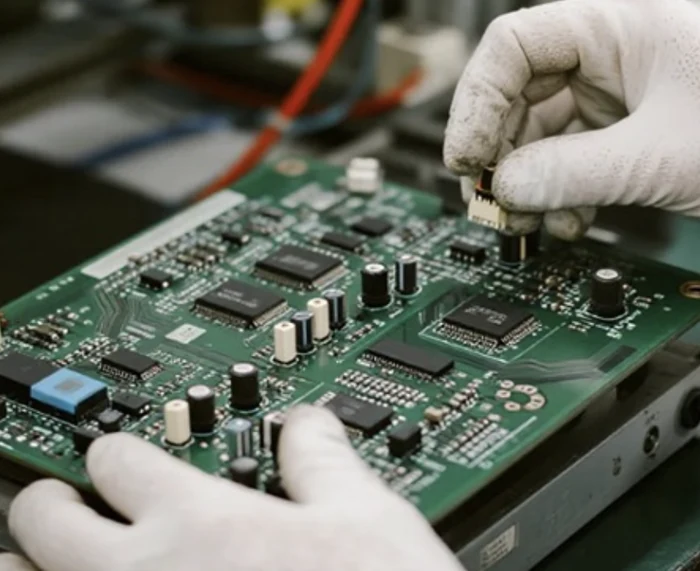
With its integrated PCB and PCBA manufacturing capabilities, advanced PCB technologies, engineering support, component sourcing, and comprehensive inspection and testing capabilities, Kingda can provide a reliable manufacturing solution for automotive electronics projects from prototype development through volume production.
For companies looking for a reliable automotive PCB manufacturer and automotive PCBA supplier, Kingda provides an integrated approach designed to improve manufacturing efficiency, product consistency, and long-term electronic reliability.