How to Choose the Best PCB Manufacturer in China
PCB manufacturing has become an essential part of modern electronic products. As electronic systems become increasingly complex, PCB manufacturers play a critical role in producing reliable circuit boards for a wide range of applications.
PCB manufacturing covers many product types and technologies, including 4-layer PCBs, multilayer PCBs, high-frequency PCBs, aluminum PCBs, flexible PCBs, rigid-flex PCBs, HDI PCBs, and other specialized circuit boards.
With more than 100 years of development, PCB technology has evolved from simple circuit interconnections to highly automated and sophisticated manufacturing processes. Modern PCB manufacturing significantly reduces wiring and assembly errors while improving production efficiency, consistency, and overall product reliability.
What Is PCB Manufacturing?
Printed circuit boards provide the electrical and mechanical foundation for electronic components. Before PCBs became widely used, electronic components were interconnected primarily through direct wiring to form complete circuits.
As electronic products became smaller and more complex, this approach became increasingly difficult to manage. PCB technology provided a more efficient way to organize electrical connections, mount components, and manufacture electronic products at scale.
Based on the number of conductive layers, PCBs are generally classified as:
- Single-sided PCBs
- Double-sided PCBs
- Multilayer PCBs
Modern PCB manufacturers can also provide specialized solutions such as HDI, high-frequency, high-speed, flexible, rigid-flex, metal-core, and controlled-impedance PCBs.
The Development of the PCB Manufacturing Industry
Over the past several decades, the global PCB manufacturing industry has developed rapidly alongside the growth of electronics, telecommunications, automotive electronics, industrial automation, consumer electronics, medical equipment, and other industries.
The rapid development of electronic products has also changed the global PCB supply chain. Cost competition, increasing production requirements, advanced manufacturing technologies, and growing demand for shorter lead times have encouraged PCB manufacturers to improve automation and production efficiency.
China has become one of the world’s major PCB manufacturing centers due to its established electronics supply chain, manufacturing infrastructure, skilled workforce, material availability, and production capacity.
For international buyers, working with an experienced China PCB manufacturer can provide access to comprehensive manufacturing capabilities, competitive production costs, and integrated supply chain support.
PCB Manufacturing Capabilities to Consider
Choosing a PCB manufacturer should begin with a clear understanding of its manufacturing capabilities. Different electronic products require different PCB structures, materials, layer counts, and manufacturing processes.
A capable PCB manufacturer should be able to support a broad range of PCB requirements while maintaining consistent quality and production control.
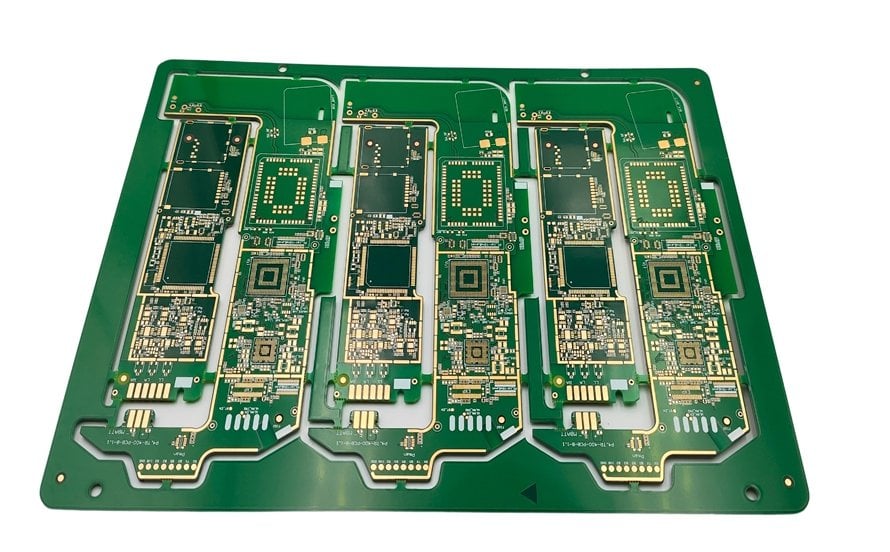
According to its current manufacturing capabilities, GoPCBA supports PCB production from prototype to volume manufacturing, including multilayer and advanced PCB technologies. Its PCB manufacturing capabilities include up to 48 layers, HDI structures, impedance control, blind and buried vias, and materials such as FR4, Rogers, aluminum, flexible materials, and rigid-flex constructions.
Standard and Advanced PCB Manufacturing
Depending on the application, PCB buyers may require:
- Single-sided and double-sided PCBs
- Multilayer PCBs
- HDI PCBs
- High-frequency PCBs
- High-speed PCBs
- Flexible PCBs
- Rigid-flex PCBs
- Aluminum and metal-core PCBs
- Heavy copper PCBs
- Controlled-impedance PCBs
- Blind and buried vias
- High-TG PCB materials
The broader the manufacturer’s process capability, the easier it is to manage different PCB projects through a single manufacturing partner.
Explore PCB Manufacturing Capabilities
Why PCB Materials Matter
Raw materials have a significant impact on PCB manufacturing cost, electrical performance, thermal performance, and long-term reliability.
Common PCB materials and manufacturing inputs include:
- Copper foil
- Copper-clad laminate (CCL)
- Prepreg
- Solder mask
- Dry film
- Resin systems
- Surface-finish materials
- Other chemical and production materials
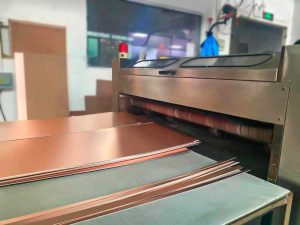
Among these materials, copper-clad laminate is particularly important because it forms the structural and electrical foundation of the PCB.
CCL is typically manufactured using reinforcement materials such as fiberglass or paper impregnated with resin and laminated with copper foil on one or both sides. The selection of laminate affects electrical properties, thermal performance, mechanical strength, dimensional stability, and high-frequency performance.
For high-speed and high-frequency applications, material selection becomes even more important because dielectric properties, copper surface roughness, loss characteristics, and layer structure can directly influence signal integrity.
The Importance of Copper Foil
Copper foil serves as the primary conductive material in a PCB. It provides the electrical pathways required to connect components and plays an important role in current carrying, thermal management, and signal transmission.
For high-speed circuits, PCB manufacturers must carefully control factors such as:
- Copper thickness
- Copper surface roughness
- Trace width and spacing
- Dielectric thickness
- Layer structure
- Impedance
- Surface finish
As digital signal speeds increase, these factors can have a greater influence on signal loss and overall electrical performance. This makes advanced manufacturing and engineering control increasingly important for high-speed PCB applications.
PCB Manufacturing and Its Downstream Applications
PCB manufacturing is a fundamental part of the electronics industry. PCBs are used across a broad range of applications, including:
- Telecommunications
- Computers and servers
- Consumer electronics
- Automotive electronics
- Industrial automation
- Medical electronics
- Power electronics
- Artificial intelligence
- IoT devices
- Energy systems
- Security equipment
- Aerospace and defense electronics
Telecommunications, computing, automotive electronics, and consumer electronics remain important application areas for PCB products. At the same time, emerging technologies such as artificial intelligence, IoT, electric vehicles, advanced communications, and industrial automation continue to create demand for increasingly sophisticated circuit boards.
Why High-Speed and High-Frequency PCBs Require Advanced Manufacturing
As digital circuit speeds continue to increase, transient voltage and current changes generate increasingly significant high-frequency components.
When signal frequencies and data rates increase, factors such as trace geometry, copper roughness, dielectric materials, surface treatment, and copper thickness can have a substantial effect on conductor loss and signal integrity.
This places higher technical requirements on PCB manufacturers.
High-speed and high-frequency PCB projects may require:
- Controlled impedance
- Advanced laminate materials
- Precise trace and spacing control
- Low-loss dielectric materials
- Accurate layer registration
- Controlled copper thickness
- Advanced surface finishes
- Specialized testing and inspection
A manufacturer with experience in advanced PCB fabrication can help reduce manufacturing risks and ensure that the final board meets the electrical and mechanical requirements of the design.
How to Choose the Best PCB Manufacturer in China
Selecting a PCB manufacturer is not simply a matter of comparing prices. The right supplier should have the manufacturing capabilities, equipment, engineering expertise, quality management, and supply-chain resources required for your project.
Here are several important factors to evaluate.
1. Evaluate the Manufacturer’s Process Capabilities
PCB manufacturing involves many complex processes, including material preparation, imaging, etching, lamination, drilling, copper plating, solder mask application, surface finishing, testing, and final inspection.
Before selecting a manufacturer, compare your PCB specifications with its actual process capabilities.
Consider:
- Maximum layer count
- Minimum trace and spacing
- Minimum mechanical and laser drill size
- Maximum copper thickness
- PCB thickness range
- Maximum panel size
- HDI capability
- Blind and buried vias
- Impedance control
- Material options
- Surface finishes
- Testing capabilities
A manufacturer with a broader process range can reduce the risk of having to move your project between multiple suppliers.
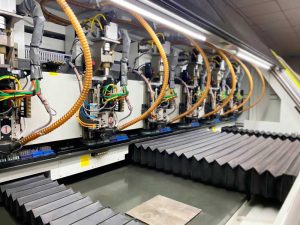
2. Check the Production Equipment
Different PCB structures require different manufacturing equipment and process controls.
A professional PCB manufacturer should have appropriate equipment for:
- PCB imaging
- Layer alignment
- Drilling
- Laser drilling
- Lamination
- Copper plating
- Etching
- Solder mask application
- Surface finishing
- Electrical testing
- Optical inspection
Equipment alone, however, is not enough. The manufacturer should also demonstrate stable process control, experienced engineering personnel, and a production system capable of maintaining consistency across different batches.
3. Compare Prototype and Production Capabilities
Prototype manufacturing is an important stage of electronic product development. A reliable PCB manufacturer should be able to support customers from early prototypes through low-volume production and, when required, higher-volume manufacturing.
This helps reduce the risks associated with transferring a project between different suppliers.
For customers developing new electronic products, prototype PCB manufacturing can help verify the design, identify manufacturing issues, validate electrical performance, and prepare the product for subsequent production.
Learn More About PCB Assembly Services
4. Check Quality Assurance and Testing
Quality control is one of the most important factors when selecting a PCB manufacturer.
Before shipment, PCBs should undergo appropriate inspection and testing based on the product requirements.
Typical PCB quality-control procedures may include:
- Incoming material inspection
- Manufacturing process inspection
- Automated optical inspection
- Dimensional inspection
- Electrical testing
- Impedance testing
- X-ray inspection where applicable
- Final quality inspection
A strong quality management system helps identify potential problems before products reach the customer and reduces the risk of failures during assembly or field operation.
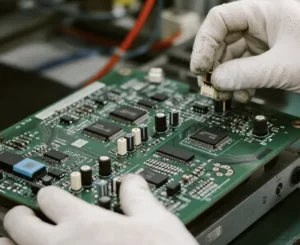
For PCBA projects, manufacturers may also provide SPI, AOI, X-ray, ICT, and functional testing.
5. Consider Supply Chain and Component Procurement
For customers purchasing complete PCBA solutions, PCB fabrication is only one part of the manufacturing process.
Component sourcing, PCB assembly, testing, and final integration can also significantly affect project cost and delivery time.
A one-stop manufacturing partner can integrate PCB fabrication with component procurement and assembly, reducing communication between multiple suppliers and simplifying project management.
GoPCBA currently provides integrated services covering PCB design, PCB manufacturing, component procurement, SMT, THT, finished product assembly, and testing.
6. Evaluate Delivery Reliability
Lead time is another critical factor when selecting a PCB supplier.
A manufacturer should have sufficient production capacity, multiple manufacturing lines, effective production planning, and order-management systems to handle different project requirements.
GoPCBA states that its PCB manufacturing operation supports rapid PCB production, including an expedited 24-hour manufacturing service, while its manufacturing process includes ERP-based production management and delivery monitoring.
For urgent prototype projects, buyers should confirm:
- Prototype lead time
- Production lead time
- Material availability
- Engineering review time
- Testing time
- Shipping options
- Expedited manufacturing capability
Why Choose a One-Stop PCB Manufacturing Partner?
Traditional PCB procurement may require customers to work with separate suppliers for PCB fabrication, component sourcing, assembly, testing, and final integration.
This approach can create additional communication, logistics, and quality-control challenges.
A one-stop PCB manufacturing partner can integrate multiple stages of the electronics manufacturing process into a coordinated workflow.
These services may include:
- PCB design and layout
- PCB fabrication
- DFM/DFA review
- Component sourcing
- SMT assembly
- THT assembly
- PCB testing
- Box-build assembly
- Final product integration
This integrated model can help reduce supplier-management complexity, improve communication, and shorten overall production cycles.
GoPCBA provides one-stop PCB and PCBA services covering PCB fabrication, assembly, component procurement, testing, and final product integration.
PCB Manufacturing for Prototype to Volume Production
Different customers have different production requirements. A startup developing a new electronic product may need only a small prototype quantity, while an established manufacturer may require stable volume production.
A flexible PCB manufacturing partner should therefore support multiple production stages.
Prototype PCB Manufacturing
Prototype PCB manufacturing allows engineers to verify PCB designs before committing to larger production quantities.
It can help identify:
- Layout problems
- Component placement issues
- Manufacturing constraints
- Signal integrity concerns
- Assembly problems
- Electrical performance issues
Low-Volume Production
Low-volume production is suitable for product validation, pilot production, market testing, and specialized electronic products.
Manufacturers with flexible production capabilities can help customers transition from prototypes to repeat production without unnecessary changes in the supply chain.
High-Volume Production
For high-volume production, manufacturers must maintain stable process control, consistent quality, reliable component supply, and predictable delivery.
The manufacturing system should also support traceability, inspection, testing, and production data management.
What Makes a Reliable China PCB Manufacturer?
A reliable PCB manufacturer should provide more than competitive pricing.
The most important factors include:
- Broad manufacturing capabilities
- Advanced production equipment
- Experienced engineering support
- Strict quality control
- Reliable material sourcing
- Stable production capacity
- Predictable delivery
- Professional technical support
- Prototype-to-production capabilities
- Integrated PCB and PCBA services
GoPCBA provides PCB manufacturing and assembly services for prototype, low-volume, and production requirements, with capabilities covering standard and advanced PCB technologies.
Conclusion
Choosing the best PCB manufacturer requires more than comparing quotations. Buyers should evaluate manufacturing capabilities, materials, production equipment, engineering support, quality control, testing, supply-chain management, and delivery reliability.
For complex PCB projects, especially high-frequency, high-speed, HDI, multilayer, flexible, rigid-flex, and controlled-impedance applications, it is essential to work with a manufacturer whose capabilities match the technical requirements of the project.
A capable one-stop supplier can further simplify the process by integrating PCB fabrication, component procurement, PCB assembly, testing, and final product integration.
If you are looking for a reliable PCB manufacturing and assembly partner in China, you can review GoPCBA’s manufacturing capabilities or discuss your project requirements directly with its engineering team.