ENIG PCB vs. HASL: Which PCB Surface Finish Is More Durable?
When selecting a surface finish for a printed circuit board, durability is an important consideration. The surface finish affects solderability, corrosion resistance, contact performance, storage life, and the overall reliability of the finished PCB.
Electroless Nickel Immersion Gold (ENIG) and Hot Air Solder Leveling (HASL) are two widely used PCB surface finishes. However, neither is universally better for every application. The right choice depends on factors such as environmental conditions, connector requirements, assembly technology, cost targets, and expected service life.
In general, ENIG PCB technology is often preferred for applications requiring a flat surface, good corrosion resistance, fine-pitch assembly, or reliable exposed contacts. HASL PCB technology remains an economical and practical choice for many conventional electronic products.
1. Understanding ENIG and HASL Surface Finishes
Before comparing durability, it is important to understand how these two finishes are constructed.
What Is ENIG?
ENIG is a surface treatment in which an electroless nickel layer is deposited onto the exposed copper surface, followed by a thin immersion gold layer.
The nickel layer acts as a barrier between the copper and the external environment, while the gold layer provides a relatively stable and oxidation-resistant surface.
The typical structure can be simplified as:
Copper → Electroless Nickel → Immersion Gold
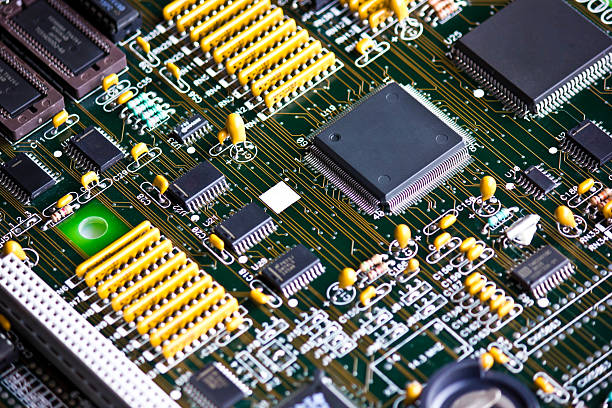
This structure provides several advantages, including a flat surface, good corrosion resistance, and compatibility with fine-pitch components and exposed contact areas.
What Is HASL?
HASL uses molten solder to coat the exposed copper areas of a PCB. Hot air is then used to remove excess solder and level the surface.
The finish can be manufactured using either traditional lead-containing solder or lead-free solder, depending on applicable environmental and regulatory requirements.
The simplified structure is:
Copper → Solder Coating
HASL is widely used because the process is relatively economical and provides good solderability for conventional PCB assembly.
For projects with more demanding surface-flatness or fine-pitch requirements, however, alternative finishes such as ENIG may be more appropriate.
2. Corrosion Resistance: ENIG Has an Advantage
Environmental exposure is one of the most important factors when evaluating PCB reliability.
PCBs may encounter humidity, oxygen, salt-containing atmospheres, industrial contaminants, and other environmental factors during storage and operation. A suitable surface finish can help protect exposed copper surfaces from oxidation and corrosion.
ENIG for Corrosion Protection
The gold surface of an ENIG finish is relatively resistant to oxidation and corrosion. The underlying nickel layer also provides a barrier that helps protect the copper from direct environmental exposure.
As a result, ENIG can be a strong choice for applications that require stable surface performance over extended periods or that operate in more demanding environments.
This does not mean ENIG makes the entire PCB corrosion-proof. Overall environmental reliability also depends on solder mask quality, PCB material, component selection, enclosure design, conformal coating, and manufacturing quality.
HASL and Environmental Exposure
HASL also provides effective protection for exposed copper under normal operating conditions. However, the solder surface can oxidize over time, particularly when exposed to unfavorable environmental conditions.
For ordinary indoor electronics with controlled operating environments, this may not create a significant problem. For applications with stricter environmental requirements, the PCB designer should evaluate the complete material and surface-finish system rather than selecting a finish based only on initial cost.
3. Mechanical Wear: Consider the Actual Application
Mechanical durability depends heavily on how the PCB surface will be used.
For ordinary soldering pads that are assembled once and remain inside an enclosure, mechanical wear may be relatively unimportant. For connector contacts or other areas subject to repeated contact, the requirements are different.
ENIG for Contact Applications
The nickel layer in an ENIG structure provides mechanical support for the surface finish, while the gold layer offers a stable contact surface.
For applications involving exposed pads or limited mechanical contact, ENIG can provide useful durability and resistance to surface degradation.
However, standard ENIG should not automatically be considered equivalent to a hard-gold contact finish. If a PCB contains connectors that undergo a very high number of insertion and removal cycles, a specialized hard-gold plating process may be more appropriate.
HASL for Conventional Solder Pads
HASL is generally intended for solderable PCB surfaces rather than repeated mechanical contact.
The unevenness associated with conventional HASL can also make it less suitable for some fine-pitch or highly planar component applications.
Therefore, when evaluating durability, it is important to distinguish between solder-joint durability and contact-surface durability.
4. Surface Flatness and Fine-Pitch Assembly
Surface flatness is another major difference between ENIG and HASL.
Conventional HASL deposits solder onto the exposed copper and uses hot air to level it. Although modern HASL processes can provide good results, the resulting surface is generally less planar than ENIG.
ENIG creates a relatively flat surface, making it suitable for:
- Fine-pitch components
- BGA packages
- QFN and other bottom-terminal packages
- High-density PCB layouts
- Applications requiring consistent pad geometry
This is one reason ENIG PCB solutions are commonly considered for high-density and precision electronic assemblies.
For general through-hole components and conventional SMT designs, HASL may provide sufficient performance while keeping manufacturing costs under control.
5. Solderability and Assembly Reliability
Surface finish selection also affects the PCB assembly process.
A good surface finish should provide consistent solderability and remain stable during storage and assembly.
ENIG
ENIG offers a flat pad surface and is compatible with many modern SMT assembly processes. It is particularly useful when component miniaturization and pad uniformity are important.
Proper control of the nickel and gold layers is essential, however. Manufacturing defects such as excessive nickel corrosion can negatively affect solder-joint reliability.
HASL
HASL provides good solderability and has been widely used for conventional PCB assembly for many years.
It can be a practical option when the design does not require extremely flat pads and the assembly process is relatively straightforward.
The choice between ENIG and HASL should therefore be based on the PCB design, component package, assembly technology, and reliability requirements rather than on surface finish alone.
6. Cost: HASL Is Usually More Economical
Cost remains an important factor in PCB sourcing.
In general, HASL is a more economical surface finish than ENIG. For cost-sensitive products manufactured in larger quantities, this difference can become significant.
HASL may therefore be suitable for:
- Standard consumer electronics
- General industrial control boards
- Conventional power electronics
- Products with standard SMT or through-hole packages
- Applications where extremely flat pads are not required
ENIG generally has a higher processing cost, but its additional benefits can justify the investment for applications requiring improved flatness, corrosion resistance, or surface stability.
When working with a PCB manufacturer, surface finish should be evaluated together with board material, layer count, copper thickness, tolerances, testing requirements, and production volume.
You can learn more about the overall process through our PCB Manufacturing capabilities.
7. How to Choose Between ENIG and HASL
There is no single surface finish that is ideal for every PCB.
A practical selection approach is to consider the following factors:
Choose ENIG When You Need:
- A relatively flat PCB surface
- Fine-pitch SMT assembly
- BGA or QFN components
- Better resistance to surface oxidation
- Stable exposed contact surfaces
- Longer storage or service requirements
- High-density PCB designs
Choose HASL When You Need:
- A cost-effective surface finish
- Good conventional solderability
- Standard SMT or through-hole assembly
- A general-purpose PCB
- A design without demanding coplanarity requirements
- Competitive manufacturing costs
For prototype and low-volume projects, the surface finish can also be selected based on the expected transition to mass production. Keeping the prototype process aligned with the intended production process can simplify later manufacturing validation.
For projects requiring engineering verification, Prototype PCB Assembly can help validate component placement, soldering, and assembly performance before larger-scale production.
8. Surface Finish Selection Should Match PCB Design
The surface finish should be considered during the PCB design stage rather than added as an afterthought.
Important design considerations include:
- Component package type
- Pad dimensions
- Required surface flatness
- Connector structure
- Environmental conditions
- Assembly technology
- Expected operating lifetime
- Storage requirements
- Production volume
- Target manufacturing cost
For example, a high-density board containing multiple BGA packages may benefit from the flat surface provided by ENIG. In contrast, a conventional control board with relatively large solder pads may not need the additional cost of ENIG.
Early coordination between PCB design and manufacturing teams can reduce unnecessary processing costs and help prevent manufacturability problems.
Our PCB Design & Layout service can be incorporated into the development process when design optimization and manufacturing requirements need to be considered together.
9. ENIG vs. HASL: A Practical Comparison
| Feature | ENIG | HASL |
|---|---|---|
| Surface flatness | Excellent | Good, but generally less planar |
| Corrosion resistance | Very good | Good under normal conditions |
| Fine-pitch suitability | Excellent | More limited |
| BGA/QFN suitability | Excellent | Depends on design and process |
| Conventional solderability | Very good | Very good |
| Mechanical contact suitability | Good for suitable applications | Generally limited |
| Cost | Higher | Lower |
| Typical application | High-density and precision electronics | General-purpose electronics |
| Process considerations | Requires controlled nickel/gold deposition | Requires controlled solder leveling |
The table shows why the question should not simply be “Which finish lasts longer?” Instead, the better question is:
Which surface finish provides the required reliability for the specific PCB application?
10. Conclusion
Both ENIG and HASL can provide reliable PCB performance when properly manufactured and correctly matched to the application.
ENIG generally offers advantages in surface flatness, corrosion resistance, fine-pitch compatibility, and exposed-pad stability. It is therefore a strong option for high-density electronics, precision assemblies, and applications with more demanding environmental or surface requirements.
HASL remains a practical and economical solution for many conventional PCB applications. When cost is a major consideration and the design does not require extremely flat pads, HASL can provide reliable solderability and adequate long-term performance.
Ultimately, selecting the right PCB surface finish requires consideration of PCB design, component packages, assembly technology, operating environment, expected service life, and cost targets.
For manufacturers and OEMs evaluating surface finishes for prototypes, low-volume production, or mass production, a complete manufacturing assessment is more valuable than comparing surface finishes based on price alone. PCB Assembly and Low Volume PCB Assembly can also be considered when validating the selected finish through actual assembly production.