PCB Board Manufacturer: How to Choose the Right PCB Partner
A reliable PCB Board Manufacturer plays an essential role in the electronics supply chain by connecting raw material suppliers with electronic product manufacturers. From consumer electronics and industrial automation equipment to electric vehicles, power systems, communication devices, and medical electronics, almost every modern electronic product depends on a reliable printed circuit board.
As electronic products become smaller, more integrated, and more performance-intensive, PCB requirements are becoming increasingly demanding. Standard single- and double-sided boards are no longer sufficient for many applications. Advanced products may require high-layer-count PCBs, HDI structures, blind and buried vias, high-frequency materials, thick copper designs, metal-core boards, or rigid-flex constructions.
For this reason, choosing the right PCB Manufacturer is about more than comparing unit prices. Engineering capability, process control, quality management, production flexibility, delivery performance, and technical support all influence the final performance and reliability of the electronic product.
The technical capability of a manufacturer is one of the most important factors to evaluate before starting a PCB project. A capable manufacturer should be able to understand the customer’s design requirements and convert engineering data into a stable and manufacturable production process.
As PCB designs become more complex, manufacturers need to support a broader range of technologies, including multilayer boards, high-density interconnect structures, high-frequency and high-speed PCBs, rigid-flex boards, metal-core PCBs, thick copper boards, and advanced via structures.
High-layer-count PCB production requires precise control of lamination parameters and layer-to-layer registration. Poor control can result in layer misalignment, delamination, voids, or dimensional instability. These problems may affect both electrical performance and assembly reliability.
High-frequency and high-speed PCBs present another set of challenges. The substrate, dielectric properties, copper characteristics, trace geometry, impedance requirements, and manufacturing process must all be considered. A suitable manufacturing process helps reduce signal loss, impedance variation, and unwanted electromagnetic interference.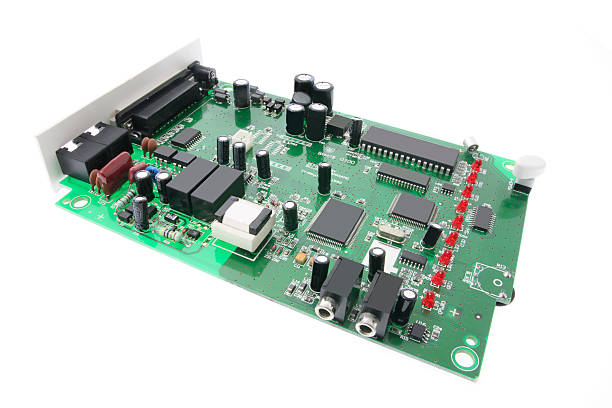
Thick copper PCBs require careful control of copper plating and etching processes. Depending on the application, thicker copper can improve current-carrying capability and thermal performance, but it also creates additional manufacturing challenges.
For advanced PCB projects, the manufacturing process should be supported by appropriate production equipment, engineering expertise, process verification, and inspection systems.
Manufacturing capability begins before the PCB enters the production line. Engineering teams should review the customer’s Gerber files, stackup, drill data, material requirements, impedance specifications, tolerances, and other production requirements.
A professional engineering review can identify potential manufacturing problems before production begins. For example, engineers may identify insufficient spacing, problematic drill structures, unsuitable material combinations, or manufacturing constraints that could increase cost or reduce yield.
Customers can also improve manufacturability at the design stage through professional PCB Design and Layout. Proper layout planning helps ensure that the finished board can be manufactured consistently while meeting electrical and mechanical requirements.
Quality is one of the most important factors when evaluating a PCB Board Manufacturer. A PCB is the physical foundation that connects and supports electronic components. Defects such as open circuits, short circuits, poor plating, incorrect hole locations, delamination, or solder mask problems can affect the performance of the entire electronic assembly.
Therefore, effective quality management should cover the complete production process rather than relying only on final inspection.
PCB production begins with raw materials such as copper-clad laminate, copper foil, solder mask materials, and other chemical or auxiliary materials.
A reliable quality system should include supplier evaluation and incoming material inspection. Material specifications, thickness, dimensional stability, electrical properties, and other relevant characteristics should be verified according to the requirements of the PCB project.
Using consistent and qualified materials helps maintain stable manufacturing performance from batch to batch.
Quality control should continue throughout PCB production. Different manufacturing stages require different inspection methods.
Automated optical inspection (AOI) can be used to identify circuit pattern defects and other visual abnormalities. X-ray inspection can help evaluate internal structures and certain multilayer or via-related conditions. Electrical testing can verify circuit continuity and identify potential open or short circuits.
Depending on the product structure, manufacturers may also perform dimensional inspection, solder mask inspection, surface finish inspection, impedance testing, and other process-specific checks.
A systematic PCB Manufacturing process combines engineering controls, production monitoring, inspection, and testing to improve consistency and reduce the risk of defects reaching the customer.
A mature quality management system should also provide production traceability.
Manufacturing data can include material batches, production equipment, process parameters, inspection results, and other relevant information. When a quality issue is identified, traceability allows engineers to investigate the affected production stage and determine the potential root cause.
The objective is not simply to identify defective products. The more important goal is to understand why the problem occurred and prevent the same issue from recurring.
This approach supports continuous process improvement and gives customers greater confidence in long-term production stability.
Not every PCB project has the same production requirements. A startup developing a new electronic product may need only a small number of prototype boards, while an established manufacturer may require large-volume production after product validation.
A suitable PCB supplier should therefore be able to support different stages of the product lifecycle.
During the R&D stage, engineers often need PCB samples quickly to verify circuit performance, mechanical fit, component placement, and overall product functionality.
Fast prototype production can shorten development cycles and allow engineering teams to identify design problems earlier.
When the PCB moves from prototype to assembly testing, Prototype PCB Assembly can help integrate PCB fabrication and component assembly into the product development process.
This is particularly useful when engineering teams need functional assemblies rather than bare PCBs for testing.
After prototype validation, many products enter a low-volume production stage. At this point, manufacturers need to balance production efficiency, quality consistency, and cost.
Low-volume production can be important for product launches, engineering validation, specialized equipment, and products with relatively limited demand.
For these projects, Low Volume PCB Assembly can provide a practical bridge between prototype development and larger-scale manufacturing.
As demand increases, production planning, capacity allocation, process standardization, and supply chain management become increasingly important.
Different industries place different requirements on PCB performance, dimensions, materials, and manufacturing processes. This makes Custom PCB Manufacturing an important consideration when selecting a supplier.
Industrial equipment may operate continuously in demanding environments. PCBs used in automation controllers, motor control systems, industrial power supplies, and instrumentation may require high reliability, stable electrical performance, and appropriate thermal management.
Manufacturing consistency is especially important when PCBs are used in equipment expected to operate for long periods.
Automotive electronic systems can be exposed to temperature changes, vibration, electrical noise, and other environmental stresses.
Depending on the application, automotive PCBs may require suitable materials, robust interconnections, controlled impedance, thermal management, and strict process control.
The manufacturer should understand the actual application environment and select an appropriate manufacturing approach rather than applying the same process to every PCB project.
Medical electronics and other high-reliability products generally require strict control of manufacturing quality and process consistency.
The PCB manufacturer should be able to follow clearly defined specifications and inspection requirements while maintaining stable production performance.
For these applications, documentation, traceability, process control, and reliable communication between the customer and manufacturer can be just as important as manufacturing equipment.
Communication equipment and high-speed electronic systems often have demanding signal integrity requirements. PCB material selection, stackup design, impedance control, trace geometry, and manufacturing accuracy all contribute to overall signal performance.
For advanced designs, the manufacturer should work closely with the customer’s engineering team to identify manufacturing constraints before production.
Delivery performance is another important factor when evaluating a PCB Manufacturer.
For engineering projects, delayed prototypes can postpone testing and product validation. For established products, unstable production schedules can interrupt assembly lines and increase inventory requirements.
A reliable manufacturer should therefore have an organized production scheduling system and sufficient process flexibility to handle different order types.
Prototype orders often require shorter production cycles because engineers need physical boards for immediate testing.
A manufacturer with an efficient engineering review process and flexible production scheduling can reduce the time between design submission and prototype delivery.
This allows customers to move more quickly through design verification and product development.
For volume production, delivery consistency is often more important than simply achieving the fastest possible lead time.
A stable production schedule allows downstream assembly operations to plan material requirements, labor, equipment utilization, and inventory more efficiently.
The ideal manufacturing partner should therefore balance speed with repeatability and production stability.
For many electronic products, PCB fabrication is only one part of the manufacturing process. Components must also be sourced, placed, soldered, inspected, and tested before the completed PCB assembly can be integrated into the final product.
This is where integrated PCB Assembly Services can provide additional value.
Instead of managing separate suppliers for bare PCB production and assembly, customers can consolidate more stages of the manufacturing process with a qualified supplier.
PCB assembly may involve surface-mount technology (SMT), through-hole components, or a combination of both technologies.
An integrated manufacturing workflow can reduce communication between multiple suppliers and simplify production coordination.
For customers that require a more comprehensive manufacturing solution, Turnkey PCB Assembly can integrate multiple stages of the supply chain into a more streamlined process.
This can be especially useful for product development teams that want to focus on product engineering while reducing the complexity of manufacturing management.
Selecting a PCB supplier should be based on the complete manufacturing requirement rather than price alone. Before placing an order, customers should evaluate several key areas.
Confirm that the manufacturer can produce the required board structure, layer count, materials, surface finish, via types, tolerances, and other technical specifications.
For advanced projects, ask whether the manufacturer has experience with high-frequency, high-speed, HDI, rigid-flex, thick copper, or other specialized PCB technologies relevant to the project.
Review the manufacturer’s inspection process, testing capabilities, traceability system, and quality documentation.
A strong quality system should identify potential defects early rather than relying exclusively on final inspection.
Consider whether the supplier can support your entire product lifecycle, from prototype and engineering validation to low-volume production and higher-volume manufacturing.
This can reduce the need to switch suppliers as the product develops.
Good communication between the customer and manufacturer is critical for complex PCB projects.
The supplier should be able to understand engineering requirements, identify manufacturing risks, provide practical feedback, and respond efficiently when designs or specifications change.
If your project requires assembled boards, evaluate whether the supplier can also support component sourcing and PCB assembly.
An integrated manufacturing partner can simplify purchasing, production scheduling, quality management, and logistics.
A reliable PCB Board Manufacturer should provide more than basic circuit board fabrication. Technical expertise, engineering support, quality control, manufacturing flexibility, customization, delivery stability, and assembly capabilities all contribute to the success of an electronic product.
As PCB technology continues to evolve toward higher density, higher speed, greater integration, and improved reliability, manufacturers must continuously improve their processes and engineering capabilities.
For companies developing new electronic products or scaling existing designs, GopCBA can serve as a manufacturing resource for PCB fabrication and assembly requirements. By combining appropriate manufacturing processes with engineering communication and production support, customers can build a more efficient path from PCB design to functional electronic products.