PCB Manufacturer: How to Choose the Right PCB Manufacturing Partner
A printed circuit board is more than a carrier for electronic components. It is the foundation of electrical connectivity, signal transmission, power distribution, and mechanical integration within an electronic product. As electronics become smaller, faster, and more complex, selecting the right PCB Manufacturer has become an important part of product development and supply-chain management.
A reliable PCB manufacturing partner should do more than simply fabricate boards from Gerber files. The right supplier should be able to support different production stages, understand complex PCB technologies, maintain stable manufacturing processes, provide engineering assistance, and scale production as the customer’s requirements change.
From prototype development and engineering validation to low-volume production and volume manufacturing, the capabilities of a PCB supplier can directly influence product quality, development time, production cost, and delivery reliability.
This guide explains the key factors to consider when choosing a PCB manufacturing partner.
What Does a PCB Manufacturer Do?
A PCB manufacturer converts PCB design data into a physical circuit board through a series of controlled manufacturing processes.
Depending on the board type, the production process may include:
- Material preparation
- Inner-layer imaging
- Etching
- Lamination
- Drilling
- Desmear
- Copper plating
- Outer-layer imaging
- Pattern plating
- Solder mask application
- Surface finishing
- Routing or profiling
- Electrical testing
- Automated optical inspection
- Final quality inspection
A capable manufacturer may also provide additional services such as PCB assembly, component sourcing, engineering review, and prototype support.
This integrated approach can reduce the number of suppliers involved in a project and simplify communication between design, fabrication, and assembly teams.
1. Manufacturing Capability Is the First Selection Criterion
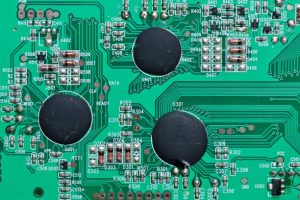
The first factor to evaluate is whether the manufacturer can consistently produce the PCB construction required by your design.
Different electronic products require different PCB technologies. A supplier specializing in basic two-layer FR-4 boards may not be suitable for a high-density multilayer, high-speed, or rigid-flex application.
A qualified manufacturer may support technologies such as:
- Single-sided and double-sided PCBs
- Multilayer PCBs
- High-density interconnect (HDI) PCBs
- High-speed PCBs
- High-frequency PCBs
- Rigid-flex PCBs
- Heavy copper PCBs
- Metal-core PCBs
- High-Tg PCBs
- High-layer-count PCBs
- Controlled-impedance PCBs
- Blind and buried via structures
The appropriate technology depends on the electrical, mechanical, thermal, and reliability requirements of the final product.
For example, a high-speed networking product may require carefully controlled impedance and low-loss materials, while a power electronics application may place greater emphasis on copper thickness, thermal performance, and current capacity.
2. Technology and Engineering Expertise Matter
Modern PCB manufacturing is increasingly engineering-driven.
As component density increases and signal speeds become higher, manufacturing defects cannot always be solved simply by adjusting production equipment. Stackup design, trace geometry, via structures, material selection, copper distribution, and impedance requirements must often be considered together.
An experienced manufacturer should be able to review the design before production and identify potential manufacturing risks.
A professional DFM review may examine:
- Minimum trace and spacing
- Hole diameter
- Aspect ratio
- Annular ring
- Copper thickness
- Layer registration
- Via structures
- Solder mask clearance
- Surface finish
- Board thickness
- Impedance requirements
- Manufacturing tolerances
Early engineering review can prevent avoidable production problems and reduce the risk of costly redesigns.
This is particularly important for complex multilayer boards, where a small design issue can become much more difficult to correct after fabrication begins.
3. Material Selection Should Match the Application
The PCB laminate has a direct influence on electrical performance, thermal reliability, mechanical stability, and manufacturing cost.
FR-4 remains one of the most widely used PCB materials because of its balanced electrical, mechanical, thermal, and cost characteristics. However, advanced applications may require specialized materials.
Depending on the design, PCB manufacturers may work with:
Standard FR-4
Suitable for a wide range of general-purpose electronic products.
High-Tg Materials
High-Tg laminates can provide improved thermal stability for applications exposed to elevated temperatures or demanding thermal cycling.
Low-Loss High-Speed Materials
High-speed digital designs may require low-loss laminate systems with carefully controlled dielectric properties to reduce signal attenuation and maintain signal integrity.
High-Frequency Materials
RF and microwave applications can require specialized materials with stable dielectric properties and low loss.
Metal-Core Materials
Metal-core PCB constructions can provide enhanced thermal management for applications where heat dissipation is a major design consideration.
The best PCB Manufacturer should be able to recommend materials based on actual electrical, thermal, mechanical, and reliability requirements instead of treating one material as a universal solution.
4. Multilayer PCB Manufacturing Requires Strong Process Control
As the number of PCB layers increases, manufacturing becomes more demanding.
A multilayer PCB must maintain accurate alignment between internal layers while maintaining consistent dielectric thickness, copper thickness, and electrical performance.
Key manufacturing challenges include:
- Layer-to-layer registration
- Lamination control
- Resin flow
- Copper distribution
- Drilling accuracy
- Plated-hole reliability
- Board thickness
- Warpage control
- Impedance consistency
The manufacturing process must maintain stability from the inner layers through final inspection.
For high-layer-count designs, engineering experience is especially important because the board’s electrical and mechanical performance depends on the complete stackup rather than any single layer.
A manufacturer with strong multilayer experience can help evaluate whether the proposed stackup is practical, manufacturable, and suitable for the intended application.
5. Quality Control Should Cover the Entire Production Process
PCB quality cannot be guaranteed through final inspection alone.
A reliable supplier should establish process controls throughout manufacturing.
Typical quality-control procedures may include:
- Incoming material inspection
- Inner-layer inspection
- AOI
- Dimensional inspection
- Copper thickness measurement
- Hole inspection
- Microsection analysis
- X-ray inspection where appropriate
- Electrical testing
- Surface-finish inspection
- Final visual inspection
For demanding applications, traceability is also important.
Material batches, production parameters, inspection results, and test records can provide valuable information when investigating quality issues or maintaining long-term product consistency.
Quality systems and certifications can also provide useful evidence of manufacturing discipline. However, customers should evaluate actual process capability and quality performance rather than relying on certification alone.
6. Prototype Capability Can Accelerate Product Development
For new electronic products, prototype production is often the first real test of whether a PCB design can move successfully from engineering to manufacturing.
A strong prototype PCB supplier should provide:
- Rapid engineering feedback
- DFM analysis
- Prototype fabrication
- Flexible quantities
- Fast manufacturing
- PCB assembly support
- Engineering communication
- Production transition support
Prototype production allows engineers to validate the PCB before committing to larger quantities.
Typical prototype validation may include:
- Mechanical dimensions
- Connector locations
- Component placement
- Electrical functionality
- Signal integrity
- Thermal performance
- Assembly compatibility
- Manufacturing tolerances
Working with a manufacturer that can support both PCB fabrication and assembly can further reduce development time.
7. PCB Assembly Capability Adds Supply-Chain Value
PCB fabrication and PCB assembly are closely connected.
A circuit board may meet all fabrication specifications but still experience problems during assembly because of issues involving solder mask, pad geometry, component footprints, board warpage, surface finish, or thermal behavior.
For customers seeking a complete manufacturing solution, it can be beneficial to work with a supplier that offers both PCB fabrication and assembly.
Assembly capabilities may include:
- SMT assembly
- Through-hole assembly
- Mixed-technology assembly
- Reflow soldering
- Wave soldering
- Component sourcing
- AOI
- X-ray inspection
- Functional testing
- Final assembly
An integrated manufacturing workflow can reduce communication gaps between PCB fabrication and assembly.
For larger or more complex projects, a turnkey approach can further simplify procurement and production management.
8. Lead Time and Production Scalability
Delivery speed is another important factor when choosing a PCB supplier.
However, lead time should not be evaluated independently from quality and production capability.
A manufacturer may offer a very short prototype lead time but struggle to maintain consistent quality during larger production runs. Conversely, a supplier with strong volume capacity may not be optimized for rapid engineering prototypes.
The ideal partner should be able to support different stages of the product lifecycle:
Prototype → Engineering Validation → Pilot Production → Low-Volume Production → Volume Production
This allows customers to avoid changing suppliers every time their production requirements change.
A scalable production system can also help reduce qualification costs and maintain consistency between prototype and production versions.
9. Communication and Engineering Support
Technical communication is often underestimated when selecting a PCB manufacturer.
A PCB project can involve questions about:
- Gerber files
- Drill files
- Stackup
- Material
- Copper thickness
- Impedance
- Surface finish
- Solder mask
- Special tolerances
- Testing requirements
- Packaging
- Assembly
If the supplier does not understand the customer’s technical requirements, even a small communication error can cause significant production problems.
A strong engineering and customer-service team should be able to identify unclear specifications before manufacturing and communicate practical solutions.
This is particularly valuable for international customers working across different time zones and technical standards.
10. Manufacturing Equipment and Process Capability
Modern PCB production requires specialized equipment at almost every stage.
Depending on the PCB technology, a manufacturer may need equipment for:
- Laser or mechanical drilling
- Imaging
- Etching
- Lamination
- Electroplating
- Surface finishing
- AOI
- Electrical testing
- X-ray inspection
- Dimensional inspection
However, equipment quantity alone does not determine manufacturing quality.
More important factors include equipment accuracy, process stability, maintenance, process monitoring, operator expertise, and engineering control.
A well-managed production line can often deliver more consistent results than a factory that simply has a large number of machines but weak process management.
11. Cost Should Be Evaluated as Total Manufacturing Cost
PCB price is important, but the lowest quotation is not always the lowest total cost.
Customers should consider:
- PCB unit price
- Engineering charges
- Tooling
- Prototype cost
- Testing
- Scrap rate
- Shipping
- Lead time
- Component procurement
- Assembly cost
- Rework risk
- Quality-related delays
A slightly higher unit price may be more economical if the supplier provides better yield, fewer defects, faster communication, and more reliable delivery.
For complex PCBs, engineering quality can have a significant influence on the overall project cost.
12. Look for a Manufacturer That Supports the Full Product Lifecycle
The most useful manufacturing partner is not necessarily the factory with the largest production capacity. It is the supplier that can support the customer’s actual product lifecycle.
A comprehensive PCB manufacturing partner can potentially support:
Design Review
PCB Fabrication
Prototype
PCB Assembly
Testing
Pilot Production
Volume Manufacturing
This integrated model reduces the need to coordinate multiple suppliers and can simplify technical communication.
GOPCBA provides PCB manufacturing and assembly services for customers developing products from prototype through production.
What Should You Ask a PCB Manufacturer Before Placing an Order?
Before selecting a supplier, customers should consider asking:
- What PCB technologies do you manufacture?
- What is your maximum practical layer count?
- Can you manufacture controlled-impedance PCBs?
- What materials can you support?
- Can you handle high-Tg and low-loss materials?
- What copper thicknesses are available?
- What inspection and electrical testing methods are available?
- Do you provide DFM engineering review?
- Can you support PCB assembly?
- Can you handle both prototypes and production quantities?
- How do you control material and production traceability?
- What quality certifications and process controls do you maintain?
The answers to these questions can provide a much clearer picture of a supplier’s real capabilities than a simple price quotation.
How to Choose the Best PCB Manufacturer for Your Project
The right supplier depends on the technical requirements and production stage of your project.
For a simple electronic product, standard FR-4 fabrication may be sufficient. For high-speed computing, automotive electronics, industrial control, telecommunications, medical electronics, or power applications, the requirements may be much more demanding.
A suitable supplier should offer the right combination of:
- Manufacturing technology
- Engineering expertise
- Material capability
- Quality control
- Testing
- Production scalability
- Lead-time management
- Assembly capability
- Technical communication
- Cost efficiency
Customers should evaluate the manufacturer based on the complete supply chain rather than comparing PCB unit prices alone.
Conclusion
Choosing the right PCB Manufacturer is an important decision for electronic product development and long-term production.
A reliable manufacturing partner should provide more than PCB fabrication. It should combine engineering expertise, advanced manufacturing processes, material knowledge, quality control, testing capability, responsive communication, and production scalability.
For complex products, early DFM review and prototype validation can significantly reduce manufacturing risk. As the product moves toward production, integrated PCB fabrication and assembly can further simplify the supply chain.
Whether you are developing a prototype, launching a new electronic product, or scaling an established design, selecting a capable PCB Manufacturing partner can help improve product reliability, shorten development cycles, and create a more stable path from engineering to production.
For customers looking for an integrated PCB fabrication and assembly partner, GOPCBA supports projects across PCB manufacturing, prototype assembly, and turnkey PCB assembly.