PCB Prototyping Manufacturer: How to Choose the Right Partner for Fast, Reliable PCB Prototypes
What Is PCB Prototyping?
PCB prototyping is the process of manufacturing a limited quantity of printed circuit boards to verify an electronic design before moving into larger-scale production. It provides engineers with a physical version of the circuit that can be assembled, tested, and evaluated under real operating conditions.
For electronics companies, startups, engineering teams, and research organizations, PCB prototyping is an important bridge between PCB design and production. A prototype can reveal problems related to circuit layout, signal integrity, thermal performance, component placement, mechanical dimensions, manufacturability, and assembly before these issues become expensive production problems.
Choosing the right PCB prototyping manufacturer therefore involves more than comparing prototype prices. The manufacturer should have the engineering expertise, manufacturing capabilities, quality systems, and production flexibility required to support the complete development cycle.
Why PCB Prototyping Is Critical for Electronics Development
Modern electronic products are becoming smaller, faster, and more functionally integrated. As a result, PCB designs are becoming increasingly complex.
A prototype PCB allows engineers to validate several important aspects of a design, including:
- Electrical functionality
- Component compatibility
- PCB dimensions and mechanical fit
- Signal and power integrity
- Thermal performance
- High-speed signal routing
- Impedance control
- Manufacturing feasibility
- Assembly process compatibility
- Reliability under operating conditions
A design that looks correct in CAD software may still encounter manufacturing or performance issues when converted into a physical PCB.
Early prototype production helps identify these issues before mass production, reducing redesign costs and shortening the overall product development cycle.
For companies developing advanced electronics, working with an experienced PCB manufacturing partner can make prototype validation considerably more efficient.
Key Capabilities of a Professional PCB Prototyping Manufacturer
Not every PCB manufacturer is equally suitable for prototype production. A capable prototype supplier should combine engineering support with flexible manufacturing capabilities.
1. Broad PCB Technology Capabilities
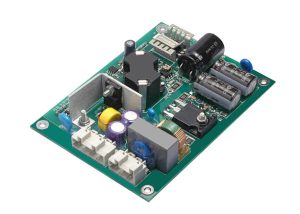
Basic two-layer FR-4 boards are relatively straightforward to manufacture. However, many modern products require more advanced PCB technologies.
Depending on the application, a PCB prototyping manufacturer may need to support:
- 2-layer and multilayer PCBs
- High-layer-count circuit boards
- HDI PCBs
- Blind and buried vias
- High-frequency PCBs
- High-speed PCBs
- High-Tg materials
- Rigid-flex PCBs
- Metal-core PCBs
- Heavy copper PCBs
- Controlled-impedance PCBs
- Mixed-material or hybrid constructions
A manufacturer with broader process capabilities can help engineers prototype increasingly complex products without changing suppliers during development.
GOPCBA provides a wide range of PCB manufacturing services for prototype and production requirements, supporting different board structures, materials, technologies, and application requirements. PCB Manufacturing Services
2. Engineering and DFM Support
One of the most valuable services a PCB prototype manufacturer can provide is engineering review before fabrication.
A professional DFM process evaluates whether the customer’s PCB files can be manufactured consistently using the selected materials and production processes.
Typical DFM checks may include:
- Minimum trace width and spacing
- Copper thickness
- Via and hole dimensions
- Annular ring requirements
- Layer stackup
- Solder mask clearance
- Silkscreen positioning
- Board outline
- Edge clearance
- Copper distribution
- Impedance requirements
- Special fabrication requirements
For complex designs, the engineering team may also review whether the selected material system, stackup, via structure, and manufacturing tolerances are appropriate for the intended application.
Early engineering feedback can prevent fabrication delays and unnecessary prototype iterations.
For customers who need assistance before manufacturing, GOPCBA also provides PCB design and layout engineering support covering design review, DFM considerations, layout optimization, and production preparation. PCB Design & Layout Engineering
3. Fast PCB Prototype Turnaround
Prototype speed is often a major factor in product development.
When an engineering team discovers a problem during testing, waiting several weeks for a revised PCB can significantly delay the development schedule. This is why quick-turn PCB prototyping is particularly valuable during early-stage development.
An efficient prototype manufacturer should have streamlined processes covering:
- Gerber or production file review
- Engineering verification
- Material preparation
- PCB fabrication
- Electrical testing
- Final inspection
- Packaging and shipping
Fast production should not mean sacrificing quality. The goal is to shorten unnecessary waiting time while maintaining stable manufacturing processes and appropriate inspection standards.
A strong supplier should also be able to support multiple prototype revisions as the design evolves.
4. Material Selection for PCB Prototypes
Material selection directly influences PCB electrical, thermal, mechanical, and reliability performance.
For conventional electronic products, FR-4 remains widely used because it provides a practical balance of electrical performance, mechanical strength, manufacturability, and cost.
However, specialized applications may require different materials.
Common PCB Materials
Standard FR-4:
Suitable for many consumer, industrial, and general-purpose electronics.
High-Tg FR-4:
Useful when higher thermal stability and improved dimensional performance are required.
High-Speed Materials:
Designed for applications where dielectric properties and signal integrity become critical.
High-Frequency Materials:
Used in RF, microwave, antenna, wireless communication, and other demanding high-frequency applications.
Metal-Core Materials:
Useful for applications requiring enhanced thermal management, such as certain LED and power electronics designs.
Flexible Materials:
Used when repeated bending, compact packaging, or three-dimensional interconnection is required.
The prototype manufacturer should be able to recommend materials based on electrical requirements, operating temperature, mechanical constraints, cost, and expected production volume rather than simply offering the lowest-cost material.
5. Advanced PCB Processes for Complex Prototypes
As PCB designs become more compact and integrated, standard fabrication processes may not be sufficient.
HDI and Microvia Technology
HDI technology enables higher routing density by using smaller features and structures such as microvias and sequential build-up layers.
It is commonly used in:
- Smartphones
- Wearable electronics
- Compact computing equipment
- Medical electronics
- High-density consumer devices
Blind and Buried Vias
Blind and buried vias can improve routing flexibility while saving valuable board space.
They are particularly useful for high-density multilayer PCB designs where conventional through-hole vias would consume excessive routing area.
Controlled Impedance
High-speed interfaces and RF circuits may require controlled impedance.
Achieving the target impedance depends on factors such as:
- Trace width
- Copper thickness
- Dielectric thickness
- Dielectric constant
- Stackup structure
- Copper surface characteristics
- Manufacturing tolerances
For these designs, PCB prototyping should reproduce the intended production stackup as closely as practical so that electrical test results are meaningful.
High-Frequency PCB Fabrication
High-frequency PCB prototypes require tighter control of material properties, geometry, copper characteristics, and fabrication consistency.
A capable manufacturer should understand that high-frequency performance depends on the complete transmission-line structure rather than a single material specification.
Quality Control in PCB Prototyping
The purpose of a prototype is to validate a design. Therefore, the prototype itself must be manufactured accurately enough to provide reliable engineering feedback.
A professional quality system should cover the entire manufacturing process.
Incoming Material Inspection
Raw materials should be verified against the required specifications before production.
Important parameters may include:
- Material type
- Thickness
- Copper weight
- Dielectric characteristics
- Lot information
- Supplier documentation
In-Process Inspection
Manufacturing parameters should be monitored throughout fabrication.
Typical controls include:
- Drilling accuracy
- Hole quality
- Copper plating
- Etching
- Trace geometry
- Solder mask
- Surface finish
- Board dimensions
Electrical Testing
Electrical testing can identify open circuits, short circuits, and other connectivity problems.
For prototypes intended for functional evaluation, electrical testing provides an additional layer of confidence before the boards are shipped for assembly and testing.
Final Inspection
Final inspection can include:
- Visual inspection
- Dimensional inspection
- Surface finish verification
- Solder mask inspection
- Hole inspection
- Electrical testing
- Documentation review
A systematic quality process reduces the risk that manufacturing defects will be mistaken for design problems during prototype evaluation.
PCB Prototype Assembly Is the Next Step
Fabricating the bare PCB is only one part of prototype development. In many projects, the prototype must be assembled before engineers can fully evaluate the design.
Prototype assembly may involve:
- SMT component placement
- Through-hole assembly
- Mixed-technology assembly
- Reflow soldering
- Selective soldering
- Inspection
- Functional testing
Using a manufacturer capable of providing both PCB fabrication and assembly can reduce communication between separate suppliers and simplify prototype management.
GOPCBA offers prototype PCB assembly for engineering validation and product development, helping customers move from fabricated boards to assembled prototypes more efficiently. Prototype PCB Assembly
From Prototype to Mass Production
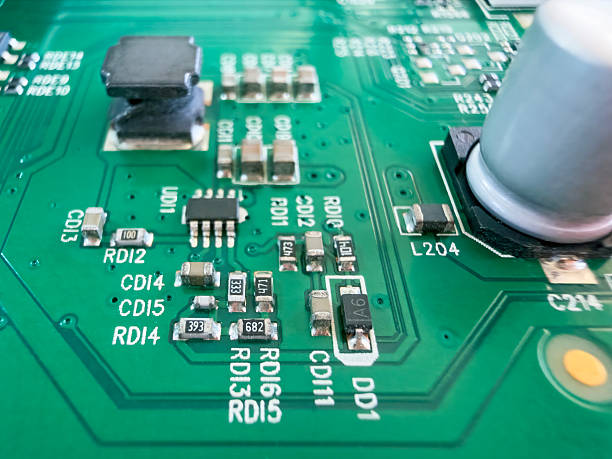
A good PCB prototype manufacturer should not only be capable of producing a few sample boards. It should also have the infrastructure to support the product when it enters production.
This is important because a design may pass initial prototype testing but require additional engineering optimization before volume manufacturing.
A scalable supplier should be able to support:
Design → Prototype → Testing → Design Revision → Pilot Production → Mass Production
Continuity between these stages reduces the risk of introducing unexpected differences between prototype and production boards.
Important production considerations include:
- Material availability
- Stackup consistency
- Process capability
- Production tolerances
- Quality standards
- Component supply
- Capacity
- Cost control
- Production traceability
This is especially important for products with long life cycles or regular engineering revisions.
Why DFM Should Be Completed Before PCB Prototyping
Design for Manufacturing should not be treated as a final production step.
Performing DFM during the prototype stage allows engineers to identify potential manufacturing problems before fabrication.
For example, a PCB may contain traces that are technically present in the design file but difficult to manufacture consistently at the selected copper thickness and fabrication tolerance.
Similarly, insufficient spacing around holes, solder mask openings, or board edges can create production risks.
A DFM review can therefore help engineers balance:
Electrical Performance + Mechanical Requirements + Manufacturing Capability + Cost + Reliability
This approach is particularly valuable for HDI, high-density multilayer, high-speed, and other complex PCB designs.
How to Choose the Right PCB Prototyping Manufacturer
When comparing suppliers, consider the following factors.
Manufacturing Capability
Does the supplier support the PCB technology required by your project?
Engineering Support
Can the engineering team review your files and provide practical DFM recommendations?
Prototype Speed
Can the supplier meet your development schedule without compromising manufacturing quality?
Quality Management
Does the company have documented quality processes and appropriate certifications?
Material Availability
Can it provide the materials required for standard, high-Tg, high-frequency, high-speed, flexible, or other specialized PCB designs?
Testing Capability
Does the supplier perform electrical and dimensional inspection before shipment?
Production Scalability
Can the supplier support your project if the prototype successfully moves into pilot production and mass production?
Communication
Can engineering questions be answered quickly and accurately?
For international customers, clear technical communication and responsive project management can be just as important as the manufacturing process itself.
PCB Prototyping for Different Industries
PCB prototypes are used across a wide range of electronics applications.
Consumer Electronics
Compact multilayer and HDI prototypes help engineers develop smaller and more integrated consumer products.
Industrial Electronics
Industrial control systems often require robust PCBs with stable electrical and mechanical performance.
Automotive Electronics
Automotive applications can require specialized materials, stringent quality control, and reliability-oriented manufacturing processes.
Medical Electronics
Medical products often place high importance on consistency, traceability, and manufacturing quality.
Telecommunications
High-speed and high-frequency PCB technologies are frequently required for communication equipment and RF-related applications.
Power Electronics
Power applications may require heavier copper, thermal management solutions, and materials selected for elevated electrical and thermal stresses.
The best prototype supplier should therefore be capable of adapting its manufacturing process to the requirements of different industries rather than relying on a one-size-fits-all approach.
PCB Prototype Manufacturer vs. Low-Cost PCB Supplier
Price is important, but the lowest prototype quotation is not necessarily the lowest total development cost.
A low-cost supplier may offer inexpensive fabrication but provide limited engineering support. If a manufacturing issue causes an additional prototype revision, the actual project cost can increase significantly.
A more capable PCB prototype manufacturer can help reduce total development cost by:
- Identifying DFM problems early
- Reducing prototype iterations
- Improving manufacturing consistency
- Supporting advanced PCB technologies
- Providing reliable testing
- Simplifying prototype assembly
- Supporting the transition to production
The most useful metric is therefore total development efficiency, rather than PCB unit price alone.
Turnkey PCB Services Can Simplify Product Development
For engineering teams that want to minimize supplier coordination, turnkey manufacturing can combine several processes into one workflow.
A turnkey PCB service may include:
- PCB fabrication
- Component sourcing
- PCB assembly
- SMT placement
- Through-hole assembly
- Inspection and testing
- Final assembly
- Packaging and shipping
GOPCBA provides turnkey PCB assembly services that integrate PCB fabrication, component procurement, assembly, inspection, and related production processes into a streamlined supply chain. Turnkey PCB Assembly Services
This can be particularly useful for startups and engineering teams that do not have an established electronics manufacturing supply chain.
What Files Are Needed for PCB Prototyping?
Before requesting a prototype quotation, customers should prepare accurate manufacturing documentation.
Depending on the project, this may include:
- Gerber files
- NC drill files
- PCB stackup information
- Fabrication drawing
- Material specification
- Copper weight
- Surface finish
- Impedance requirements
- Special process requirements
- Bill of materials for assembly
- Pick-and-place files for assembly
Providing complete documentation allows the manufacturer to perform a more accurate engineering review and quotation.
For more complex boards, clearly documenting critical dimensions, impedance requirements, materials, and special processes can significantly reduce communication errors.
Why Choose GOPCBA for PCB Prototyping?
A reliable prototype partner should combine manufacturing technology, engineering support, quality control, and production scalability.
GOPCBA supports customers throughout the electronics development cycle, from PCB engineering and fabrication to prototype assembly and production.
Its manufacturing capabilities cover conventional and advanced PCB technologies, while engineering support helps customers evaluate manufacturability before production.
For companies developing new electronic products, this integrated approach can reduce unnecessary prototype iterations and create a smoother transition from initial design validation to volume manufacturing.
Customers can also use rapid PCB prototyping services when development schedules require faster design verification and shorter manufacturing cycles. Rapid PCB Prototyping
Conclusion
Choosing the right PCB prototyping manufacturer is an important decision in the electronics product development process. A capable supplier should provide more than fast fabrication. It should offer engineering support, DFM analysis, appropriate material selection, advanced PCB manufacturing technologies, strict quality control, testing, and a clear path from prototype to production.
The right manufacturing partner can help engineers identify design and manufacturing risks earlier, reduce unnecessary prototype iterations, accelerate product development, and establish a reliable foundation for future production.
For projects ranging from conventional multilayer PCBs to HDI, high-speed, high-frequency, rigid-flex, and other advanced circuit boards, selecting a manufacturer with both prototype flexibility and production capability can provide significant long-term value.