Smart Warehouse Robot Mainboard PCB: Design and Manufacturing Guide
What Is a Smart Warehouse Robot Mainboard PCB?
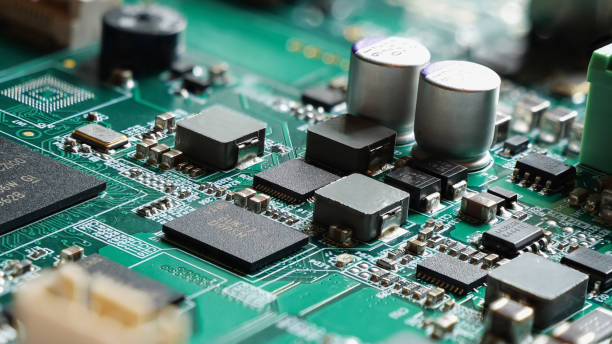
A Smart Warehouse Robot Mainboard PCB is the central electronic platform used to connect and coordinate the major control, sensing, communication, and power-management functions of an autonomous warehouse robot.
Modern warehouse robots may perform material handling, sorting, transportation, inventory movement, and automated picking tasks. To complete these operations accurately, the robot needs to process information from multiple subsystems simultaneously.
The mainboard PCB may connect and manage:
- Navigation sensors
- Cameras and vision systems
- LiDAR or ranging sensors
- Motor controllers
- Battery management systems
- Wireless communication modules
- Positioning systems
- Safety sensors
- Industrial interfaces
- Embedded processors
- Power-management circuits
Unlike a simple control board, the mainboard of an automated warehouse robot often combines high-speed digital circuits, power electronics, sensor interfaces, and communication functions within a relatively compact form factor.
As warehouse automation becomes more intelligent and interconnected, PCB design and manufacturing quality have a direct influence on system stability, communication reliability, motion control, and overall robot performance.
For complex robotic electronics, PCB Design and Layout should consider signal integrity, power distribution, thermal management, component placement, and manufacturability from the beginning of the project.
Why Warehouse Robot Mainboard PCBs Require Specialized Design
Warehouse robots operate in environments that can be very different from conventional office electronics.
A robot may repeatedly accelerate, decelerate, turn, stop, lift loads, and communicate with warehouse management systems throughout its operating cycle. The PCB therefore needs to remain electrically and mechanically stable under repeated operation.
Key design requirements can include:
- Reliable power distribution
- Stable sensor communication
- High-speed data processing
- Motor-control signal integrity
- Wireless connectivity
- Thermal management
- Vibration resistance
- Protection against dust and humidity
- Compact circuit integration
- Long-term electrical reliability
The exact requirements depend on the robot architecture and operating environment.
For example, an autonomous mobile robot may emphasize navigation and wireless communication, while an automated guided vehicle designed for heavier loads may place greater emphasis on motor control and power handling.
The PCB should therefore be developed around the complete robot system rather than designed as a generic control board.
Environmental Reliability of Smart Warehouse Robot PCBs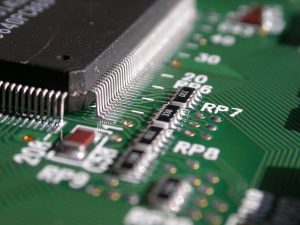
Warehouse environments can expose electronic systems to dust, humidity, temperature changes, vibration, and repeated mechanical movement.
A suitable PCB design should account for these conditions during both material selection and layout.
Dust and Contamination
Dust accumulation can become a concern in industrial environments.
PCB assemblies can be affected by conductive or corrosive contaminants, particularly when contamination combines with moisture.
Depending on the application, designers may consider:
- Appropriate enclosure design
- Protective coatings
- Suitable solder mask systems
- Component spacing
- Contamination control
- Sealing and ventilation strategies
The PCB itself should be considered together with the robot enclosure and environmental protection system.
Temperature Variation
Warehouse facilities may experience significant temperature differences depending on location and application.
Cold storage environments can impose low-temperature requirements, while electronics positioned near motors, power devices, or enclosed compartments may experience elevated temperatures.
PCB material selection should therefore consider:
- Operating temperature
- Glass-transition temperature
- Thermal expansion
- Component temperature ratings
- Solder-joint reliability
- Thermal cycling
The appropriate temperature range should always be determined from the actual application rather than applying one universal specification to every warehouse robot.
Humidity
Humidity can affect electronic reliability through corrosion, insulation degradation, and leakage-current risks.
Proper enclosure design, material selection, surface finish, and—where appropriate—conformal coating can help improve environmental resistance.
Signal Integration and Data Processing
A warehouse robot can receive data from many sources at the same time.
Typical inputs include:
- LiDAR navigation data
- Camera images
- Wheel encoders
- Inertial measurement units
- Proximity sensors
- Safety sensors
- Battery-monitoring data
- Positioning information
The mainboard must transfer and process this information efficiently.
Poor signal routing can result in communication errors, electromagnetic interference, timing problems, or unstable sensor readings.
A multilayer PCB can provide dedicated routing and reference-plane structures while helping designers manage power, ground, and high-speed signal paths within a compact board area.
High-Speed Communication Interfaces
Modern warehouse robots may use multiple communication interfaces to connect internal modules and external systems.
Depending on the architecture, interfaces can include:
- Ethernet
- CAN
- RS-485
- USB
- SPI
- I²C
- UART
- Wireless communication interfaces
High-speed interfaces require careful PCB routing.
Design considerations include:
- Controlled impedance where required
- Short and direct signal paths
- Continuous reference planes
- Appropriate termination
- Differential-pair routing
- Reduced via transitions
- Separation from noisy power circuits
Communication reliability is especially important when navigation, motor control, safety monitoring, and warehouse management functions depend on continuous data exchange.
Motor Control and Power Management
Motor systems are among the most important electronic subsystems in warehouse robots.
The mainboard or associated motor-control boards may need to manage:
- Motor drivers
- DC motors
- BLDC motors
- Servo systems
- Braking circuits
- Battery interfaces
- Power conversion
Power electronics can generate electrical noise and significant heat.
The PCB layout should therefore separate sensitive signal circuits from high-current switching paths where appropriate.
High-Current Routing
High-current paths require suitable copper width and thickness based on the expected electrical load.
Important considerations include:
- Current capacity
- Copper thickness
- Trace width
- Temperature rise
- Connector ratings
- Via current capability
For higher-current designs, copper planes or reinforced copper structures may be considered.
Power Integrity
Stable power delivery is essential for processors, sensors, communication modules, and control electronics.
Power-distribution design should minimize voltage drops and unwanted noise while providing appropriate decoupling close to sensitive components.
Thermal Management for Warehouse Robot Mainboard PCBs
Warehouse robots can generate considerable heat from processors, motor drivers, power converters, wireless modules, and other active components.
Excessive temperature can reduce component lifetime and may also affect system stability.
Thermal design can include several complementary methods.
Thermal Vias
Thermal vias provide a path for heat transfer from component areas into internal or external copper structures.
They are particularly useful beneath components that contain thermal pads.
Copper Planes
Large copper areas can spread heat across the PCB.
They may also improve power distribution and reduce electrical impedance.
Heat Sinks and Mechanical Structures
For higher-power components, heat sinks or chassis-based thermal paths may be required.
The PCB should be designed to work with the robot’s complete thermal architecture rather than treating thermal management as a PCB-only problem.
High-Density PCB Technology for Warehouse Robots
Warehouse robots often need to fit computing, sensing, communication, and power-management electronics into a limited enclosure.
This creates demand for compact PCB structures.
Potential technologies include:
- Multilayer PCBs
- HDI structures
- Microvias
- Blind vias
- Buried vias
- Fine-line routing
- Fine-pitch component footprints
High-density design can reduce board size while providing more routing resources.
However, increased density also creates greater manufacturing sensitivity. Trace spacing, via dimensions, layer registration, solder-mask clearance, and component placement must be carefully coordinated.
For complex designs, PCB Manufacturing should be considered during the design stage so that the selected stackup and geometries remain practical for consistent production.
PCB Materials for Smart Warehouse Robot Applications
Material selection should reflect the electrical, thermal, mechanical, and environmental requirements of the robot.
FR-4 Materials
Standard FR-4 remains suitable for many industrial control and robotic applications.
It can provide a practical balance between:
- Electrical performance
- Mechanical strength
- Thermal performance
- Cost
- Availability
For many warehouse robot control boards, an appropriate FR-4 system may provide sufficient performance.
High-Tg Materials
High-Tg materials can be considered when the PCB is exposed to higher temperatures or repeated thermal cycling.
They can provide improved dimensional and thermal stability compared with standard materials under suitable operating conditions.
High-Frequency Materials
If the mainboard contains demanding high-speed communication or RF circuits, specialized low-loss materials may be required for selected signal paths.
Material selection should be based on actual signal frequency, loss requirements, stackup construction, and system performance targets.
PCB Layout for Warehouse Robot Control Systems
Effective PCB layout is essential because the mainboard may contain several different circuit domains.
A typical board can include:
- CPU or MCU
- Memory
- Motor-control circuits
- Sensor interfaces
- Communication circuits
- Power-management circuits
- Battery monitoring
- Safety circuits
These functional blocks should be positioned according to electrical, thermal, mechanical, and service requirements.
Analog and Digital Separation
Sensitive analog circuits should be protected from noisy switching circuits where practical.
Examples include:
- Sensor signal conditioning
- ADC inputs
- Current measurement
- Precision voltage references
Careful grounding and return-path management can reduce unwanted coupling.
Ground Plane Design
A well-designed ground structure can provide stable return-current paths and reduce electromagnetic interference.
High-speed signals should maintain appropriate reference-plane continuity whenever possible.
PCB Assembly for Smart Warehouse Robot Electronics
The bare PCB is only one part of the final electronic system.
The PCB Assembly process determines how reliably components are mounted and interconnected.
Typical assembly processes may include:
- Solder paste printing
- Surface-mount component placement
- Reflow soldering
- Through-hole assembly
- Inspection
- Electrical testing
- Functional testing
The appropriate process depends on the component mix and board architecture.
Fine-Pitch Component Assembly
Robot mainboards can contain compact processors, memory devices, communication ICs, connectors, and sensor interfaces.
Accurate placement and solder-paste control are important for reducing assembly defects.
Automated optical inspection can help identify visible soldering and placement problems.
Through-Hole Components
High-current connectors and mechanically stressed interfaces may use through-hole components where appropriate.
Their mechanical strength can be advantageous for connectors exposed to repeated insertion, vibration, or cable movement.
Reliability Testing for Warehouse Robot Mainboards
Because warehouse robots can operate for long periods and repeat the same movement cycles many times, reliability testing is an important part of product development.
Testing may include:
Electrical Testing
Electrical tests can identify:
- Open circuits
- Short circuits
- Insulation problems
- Incorrect connections
- Power-distribution issues
Thermal Testing
Thermal testing can evaluate whether critical components remain within their specified operating limits under representative loads.
Vibration Testing
Mechanical vibration testing can help identify weaknesses in:
- Solder joints
- Connectors
- PCB mounting
- Large components
- Mechanical interfaces
The appropriate vibration profile should be derived from the robot’s actual operating environment.
Functional Testing
Functional testing verifies whether the assembled PCB performs its intended system-level functions.
For warehouse robots, this can include:
- Sensor communication
- Motor-control interfaces
- Navigation data processing
- Wireless communication
- Battery monitoring
- Safety functions
Prototype Development and Design Validation
Prototype production is valuable when developing a new warehouse robot mainboard.
A prototype can expose problems that may not be visible during schematic or simulation work.
Common validation areas include:
- Power stability
- Signal integrity
- Thermal behavior
- Sensor compatibility
- Communication reliability
- Mechanical fit
- Assembly yield
- Software-hardware interaction
Using Prototype PCB Assembly allows engineering teams to evaluate a physical assembly before moving into larger-scale production.
Prototype testing can also help optimize component placement, PCB dimensions, mounting holes, connector locations, thermal structures, and manufacturing parameters.
Customized PCB Design for Different Warehouse Robots
Not every warehouse robot has the same electronic architecture.
Autonomous Mobile Robots
AMRs commonly require strong integration between:
- Navigation
- Mapping
- Wireless communication
- Motor control
- Obstacle detection
- Battery management
Their mainboards may therefore prioritize computing capability, sensor interfaces, and communication density.
Automated Guided Vehicles
AGVs may emphasize predictable route control, motor management, industrial communication, and safety systems.
Their PCB requirements can differ from those of highly autonomous mobile robots.
Picking and Sorting Robots
Robots used for picking and sorting can require fast image processing, actuator control, and sensor integration.
The PCB may need additional high-speed interfaces to support cameras and processing hardware.
Heavy-Duty Warehouse Robots
Heavy-duty transportation platforms can place greater emphasis on power distribution, motor control, connector strength, and thermal management.
The PCB should therefore be designed around the actual electrical load and mechanical environment.
Components and Supply Chain Planning
A warehouse robot mainboard may contain processors, memory devices, power semiconductors, communication ICs, connectors, sensors, and numerous passive components.
Component selection should consider:
- Electrical specifications
- Availability
- Lifecycle status
- Package type
- Operating temperature
- Approved alternatives
- Long-term supply
Early component planning can reduce redesign risks caused by component shortages or unexpected lifecycle changes.
For projects involving multiple production stages, Components Procurement can also help coordinate component sourcing with PCB assembly requirements.
Designing Smart Warehouse Robot PCBs for Manufacturability
Design for manufacturability should be incorporated before PCB fabrication begins.
Important DFM considerations include:
- Minimum trace and spacing
- PCB thickness
- Copper thickness
- Via dimensions
- Component spacing
- Solder-mask clearances
- Panelization
- Assembly orientation
- Test-point placement
- Connector accessibility
The goal is not simply to create a compact PCB, but to create one that can be manufactured, assembled, tested, serviced, and scaled reliably.
Early DFM review can reduce manufacturing changes and improve production consistency.
Future Development of Warehouse Robot Mainboard PCBs
Warehouse automation is moving toward greater autonomy, connectivity, and intelligence.
Future robot mainboards are likely to integrate more computing and communication functions within smaller physical spaces.
Potential development trends include:
- More powerful edge processors
- Higher-speed Ethernet
- Increased sensor integration
- Advanced AI processing
- More efficient power management
- Higher-density PCB architectures
- Greater wireless connectivity
- Improved thermal solutions
- More integrated safety functions
As robots become more autonomous, the PCB must support increasingly complex interactions between perception, computation, motion control, communication, and power systems.
This will increase demand for PCB technologies capable of combining high density, high-speed signaling, power handling, and long-term reliability.
Why Smart Warehouse Robot Mainboard PCB Quality Matters
The Smart Warehouse Robot Mainboard PCB serves as a central platform connecting many of the robot’s critical electronic functions.
Its performance can influence navigation accuracy, sensor communication, motor control, wireless connectivity, power stability, and system reliability.
A successful design therefore requires more than selecting suitable components. Engineers must consider PCB stackup, routing, impedance, grounding, thermal management, mechanical reliability, environmental protection, manufacturing tolerances, and assembly quality as an integrated system.
For automated warehouse equipment, reliable PCB engineering can help reduce unexpected downtime and support stable operation across repeated production and logistics cycles.
Conclusion
The Smart Warehouse Robot Mainboard PCB is a critical component in modern warehouse automation systems. As robots become more intelligent and multifunctional, their mainboards must support increasingly complex combinations of computing, sensing, communication, power management, and motion control.
Key engineering considerations include environmental reliability, high-speed signal integrity, power distribution, thermal management, high-density interconnection, component selection, precision manufacturing, and reliable PCB assembly.
A structured development process—from PCB design and material selection to prototype validation, manufacturing, assembly, and testing—can help engineering teams identify potential problems early and improve the reliability of the finished robotic system.
With the continued expansion of automated warehouses, autonomous mobile robots, sorting systems, and intelligent material-handling equipment, advanced PCB technology will remain an important foundation for reliable and scalable warehouse automation.