Carbon Ink PCB Manufacturing Process and Applications
In modern PCB Manufacturing, carbon ink technology has become an important solution for specific electronic applications due to its unique conductive layer processing method. Unlike traditional copper etching processes, carbon ink PCB technology creates conductive paths through screen printing and curing processes.
With advantages such as low production cost, excellent environmental resistance, and reliable electrical performance, Carbon Ink PCB technology provides an effective alternative for applications where traditional copper circuits are not the optimal choice.
Carbon ink PCBs are widely used in consumer electronics, automotive control systems, medical sensors, industrial equipment, and smart wearable devices. Their unique material characteristics allow manufacturers to achieve lightweight, flexible, and cost-effective circuit solutions.
1. Core Technologies of Carbon Ink PCB Manufacturing
Carbon Ink Material System and Performance Control
The electrical performance of carbon ink depends mainly on its material formulation. The primary components include conductive carbon particles, thermosetting resin, and various functional additives.
Different applications require different carbon ink characteristics. For example, button contacts require low-resistance carbon ink to ensure stable electrical conductivity during repeated pressing operations. On the other hand, resistor layers in potentiometers use high-resistance carbon ink, where resistance values can be adjusted by controlling carbon particle concentration.
Carbon ink viscosity control is a critical factor during manufacturing. If the viscosity is too low, printed patterns may spread and lose dimensional accuracy. If the viscosity is too high, edge burrs and uneven printing may occur.
Therefore, manufacturers must continuously monitor and adjust carbon ink properties according to production conditions to achieve consistent circuit performance.
Professional PCB Design & Layout services help engineers optimize circuit structures and material selection to ensure carbon ink PCB designs achieve reliable performance.
2. Screen Printing Process Optimization
Screen Mesh Selection
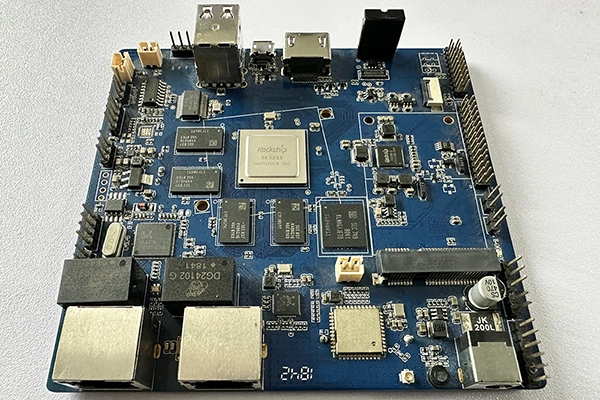
Screen printing is one of the most important processes in carbon ink PCB production.
Manufacturers select appropriate polyester mesh counts and photoresist thickness according to the required circuit accuracy. Fine-line carbon circuits require higher-density mesh and thinner photoresist layers to achieve precise patterns.
For keyboard contacts and larger conductive areas, relatively lower mesh counts may be selected to create thicker carbon layers and improve durability.
Printing Process Control
During printing, factors such as scraper hardness, printing pressure, and printing speed directly affect carbon ink performance.
Polyurethane scrapers with specific hardness levels are commonly used to maintain stable printing quality. In areas with complex patterns or sharp corners, printing speed and pressure must be carefully adjusted to prevent carbon ink accumulation, uneven thickness, or broken conductive lines.
A well-controlled printing process ensures consistent conductivity, mechanical durability, and long-term reliability.
For applications requiring complete electronic production solutions, professional PCB Assembly Services provide integrated manufacturing support from PCB fabrication to component assembly.
3. Curing Process and Reliability Enhancement
After screen printing, carbon ink requires a controlled curing process to achieve the required electrical and mechanical properties.
A step-by-step temperature curing process is typically applied:
- Pre-baking stage: Removes solvents from the carbon ink layer.
- Main curing stage: Ensures complete resin cross-linking and improves structural stability.
After curing, the carbon layer must provide strong adhesion, excellent wear resistance, and sufficient soldering compatibility.
Proper curing directly affects the service life and reliability of carbon ink PCBs, especially in applications involving repeated mechanical contact or environmental exposure.
For flexible electronic applications requiring lightweight and bendable circuit solutions, Flexible PCB Assembly technology provides advanced manufacturing options for wearable devices and compact electronic products.
4. Typical Applications of Carbon Ink PCB Technology
Consumer Electronics Input Devices
Remote Controls and Appliance Buttons
Carbon ink contacts are widely used in remote controls and household appliance buttons.
They provide:
- Long pressing cycle durability
- Low contact resistance
- Fast response performance
Compared with traditional metal contact solutions, carbon ink provides a more economical and reliable option for high-volume consumer electronics.
Membrane Keyboards
In POS machines, industrial keyboards, and control panels, carbon ink combined with PET substrates creates flexible circuit structures.
These circuits can withstand temperature variations and repeated bending while maintaining stable electrical performance, making them suitable for lightweight and compact electronic devices.
Automotive Electronic Control Modules
Window Control Switches
Carbon ink circuits used in automotive window switches provide excellent corrosion resistance and environmental stability.
They can operate reliably in complex vehicle environments and reduce problems commonly associated with oxidation and circuit failure, improving switch lifespan.
Air Conditioning Control Panels
Carbon ink printed touch areas are widely applied in automotive control panels.
Even under conditions involving moisture, dust, or oil contamination, carbon ink touch sensors can maintain stable operation. The response sensitivity can also be adjusted by controlling carbon layer thickness.
For automotive electronic products requiring reliable production capacity, professional High Volume PCB Assembly solutions support consistent quality and scalable manufacturing.
Medical and Industrial Sensor Applications
Blood Glucose Test Strip Electrodes
Nano carbon ink electrodes offer excellent biocompatibility and strong enzyme adsorption capabilities.
These properties make carbon-based electrodes suitable for medical testing applications such as blood glucose monitoring, where accuracy and reliability are essential.
Industrial Liquid Level Sensors
Carbon ink probes used in industrial water tanks utilize the excellent chemical resistance of carbon materials.
Compared with traditional stainless-steel probes, carbon ink sensors provide advantages including:
- Strong acid and alkali resistance
- Fast response speed
- Lower manufacturing cost
These advantages make them suitable for various industrial monitoring systems.
Smart Wearable Device Applications
Smart wearable products such as fitness bands and smart devices increasingly adopt flexible carbon ink circuits for touch buttons and sensor connections.
After repeated bending tests, carbon ink circuits demonstrate minimal performance changes. Compared with traditional copper-based solutions, carbon ink technology offers:
- Lower weight
- Better flexibility
- Improved suitability for wearable applications
These advantages support the development of thinner, lighter, and more comfortable smart electronic products.
Conclusion
Carbon ink PCB technology has become an important alternative to traditional metal conductive layers due to its flexible printing process, environmental durability, and cost advantages.
By precisely controlling material formulations, printing parameters, and curing processes, manufacturers can achieve an effective balance between electrical conductivity, reliability, and production efficiency.
Although carbon ink PCBs are not designed for high-frequency signal transmission applications, they provide significant advantages in consumer electronics, automotive systems, medical sensors, industrial controls, and wearable devices.
With advanced Carbon Ink PCB manufacturing capabilities combined with professional PCB Manufacturing, PCB Assembly Services, and flexible production solutions, experienced PCB manufacturers help customers develop reliable and cost-effective electronic products.