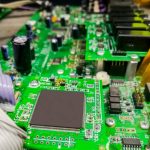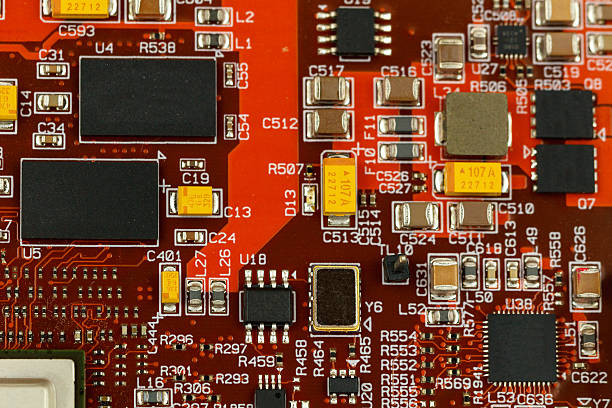
Drone Video Transmission PCB Module PCB for High-Speed Signal Reliability
In modern drone systems, the video transmission module plays a critical role in sending real-time images and video data from the airborne camera system to the ground receiving terminal.
The Drone Video Transmission PCB serves as the core hardware platform of this module and directly affects signal stability, image quality, transmission distance, and overall communication reliability.
As drone technology continues to advance toward higher resolution imaging, longer transmission ranges, and more compact designs, PCB requirements are becoming increasingly demanding. High-frequency performance, controlled impedance, lightweight construction, thermal reliability, and precision manufacturing have become essential factors in drone video transmission PCB development.
Material Selection for High-Frequency Signal Transmission
Drone video transmission systems typically operate in high-frequency communication bands, requiring PCB materials with excellent electrical performance.
The selection of low-loss PCB materials is essential because dielectric properties directly influence signal attenuation and transmission efficiency.
Important material characteristics include:
- Stable dielectric constant
- Low dissipation factor
- Low signal loss
- High thermal resistance
- Excellent dimensional stability
Low-loss laminates can minimize signal degradation during high-speed data transmission, helping maintain clear and stable video streams.
For high-frequency communication applications, specialized materials must maintain consistent electrical characteristics under different operating conditions.
Thermal performance is another important consideration.
During drone operation, the video transmission module may generate continuous heat due to high-speed processors, RF components, and wireless communication circuits.
PCB materials with higher glass transition temperatures (Tg) can maintain structural stability under elevated temperatures and reduce the risk of:
- Material deformation
- Layer separation
- Electrical performance degradation
For advanced drone communication systems, High Frequency PCB technology provides optimized dielectric performance, impedance control, and signal integrity management.
GOPCBA provides professional High Frequency PCB Manufacturing solutions for applications requiring reliable high-speed signal transmission and stable RF performance.
PCB Design Considerations for Signal Optimization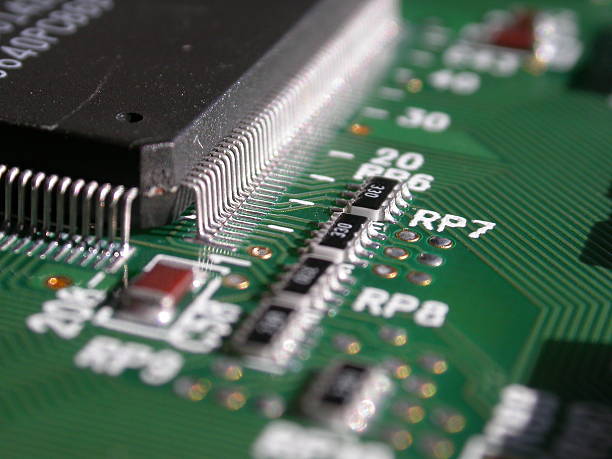
Impedance Control
Impedance control is one of the most important design requirements for drone video transmission PCBs.
Because video transmission signals typically operate at high frequencies, impedance mismatch can cause:
- Signal reflection
- Data distortion
- Transmission instability
- Image freezing or interruption
During PCB design and manufacturing, engineers must accurately calculate transmission line impedance based on:
- Operating frequency
- Signal characteristics
- Dielectric thickness
- Copper thickness
- Trace width
- Distance to reference planes
Controlled impedance design ensures that high-frequency signals travel through predictable transmission paths with reduced signal loss.
For RF and high-speed communication modules, impedance accuracy is closely related to PCB material selection, stack-up design, and manufacturing consistency.
Layout and Routing Optimization
PCB layout has a significant impact on drone video transmission performance.
High-frequency signal paths should be separated from:
- Low-frequency circuits
- Power supply sections
- High-noise components
This prevents electromagnetic interference and reduces unwanted coupling.
Important layout principles include:
- Keep high-frequency traces short and direct
- Avoid unnecessary bends and vias
- Maintain continuous ground reference planes
- Optimize return current paths
- Separate sensitive RF circuits from noise sources
Ground layers play an important role in improving shielding effectiveness and reducing electromagnetic interference.
Power supply design is also critical.
Proper placement of filtering capacitors helps reduce power noise and ensures stable operation of video transmission components.
For compact drone electronics requiring high routing density, HDI PCB technology can provide additional interconnection space while maintaining a small form factor.
GOPCBA supports advanced HDI PCB Manufacturing capabilities for compact electronic systems requiring microvias, fine-pitch routing, and high-density interconnections.
Manufacturing Requirements for High Reliability
High-Precision PCB Manufacturing
Drone video transmission PCBs usually contain highly integrated circuits with dense traces and complex structures.
Therefore, manufacturing precision is critical.
Key manufacturing requirements include:
- Accurate drilling
- Fine-line circuit formation
- Precise layer alignment
- Reliable lamination
- Stable copper plating
During drilling, microvia and through-hole accuracy must be strictly controlled to ensure reliable component assembly and electrical connections.
Circuit fabrication requires precise control of:
- Trace width
- Trace spacing
- Copper thickness
- Etching accuracy
Small manufacturing deviations can affect signal integrity and create problems such as:
- Open circuits
- Short circuits
- Impedance variation
- Transmission instability
For multilayer drone PCB structures, lamination quality is equally important.
Proper lamination ensures:
- Strong layer bonding
- Accurate layer registration
- Reduced internal stress
- Improved long-term reliability
Advanced Multilayer PCB manufacturing technology allows engineers to integrate more circuits into smaller PCB footprints while maintaining stable electrical performance.
GOPCBA provides professional Multilayer PCB Manufacturing services for complex electronic applications requiring high reliability and precision.
Surface Finishing Technology
Surface finishing plays an important role in improving soldering performance and corrosion resistance.
One commonly used surface treatment is ENIG (Electroless Nickel Immersion Gold).
ENIG provides:
- Uniform gold surface protection
- Excellent solderability
- Improved oxidation resistance
- Long-term electrical reliability
For drone video transmission modules exposed to changing environments, reliable surface protection helps maintain stable electrical connections during extended operation.
Depending on specific requirements, other surface treatments may also be selected according to:
- Cost considerations
- Assembly requirements
- Reliability targets
- Storage conditions
Proper surface finishing helps improve PCB durability and manufacturing consistency.
Strict Testing and Reliability Verification
Drone video transmission PCBs must undergo comprehensive testing to ensure stable performance under demanding operating conditions.
Electrical Performance Testing
Electrical testing verifies:
- Circuit continuity
- Insulation resistance
- Signal transmission performance
- Impedance characteristics
High-frequency testing is particularly important because video transmission quality depends heavily on signal integrity.
Testing equipment can evaluate:
- Signal attenuation
- Phase variation
- Transmission loss
- Frequency response
These measurements help confirm whether the PCB meets communication performance requirements.
Environmental Reliability Testing
Drones often operate in complex environments involving:
- Temperature changes
- Vibration
- Humidity
- Mechanical stress
Therefore, drone video transmission PCBs require environmental reliability testing.
High Temperature Testing
High-temperature testing evaluates PCB stability during:
- Long-duration operation
- High-power transmission
- Direct sunlight exposure
It helps verify whether materials and structures can maintain reliable performance.
Low Temperature Testing
Low-temperature testing ensures that PCB performance remains stable in cold environments.
This is especially important for drones used in:
- High-altitude applications
- Outdoor environments
- Extreme weather conditions
Vibration Testing
During flight, drones experience continuous vibration.
Vibration testing evaluates:
- PCB mechanical strength
- Component solder reliability
- Connection stability
- Structural durability
These tests help prevent failures caused by:
- Cracked solder joints
- Loose components
- Circuit damage
Special Design Requirements for Drone Applications
Drone video transmission PCBs must consider several unique application requirements.
Lightweight Design
Weight reduction is critical for drone systems because every additional gram affects:
- Flight time
- Energy consumption
- Payload capability
PCB designers should optimize:
- Board thickness
- Layer structure
- Material selection
- Component placement
Lightweight PCB solutions can help extend drone operating time while maintaining required performance.
Environmental Protection
Drones may operate in environments exposed to:
- Moisture
- Dust
- Temperature fluctuations
To improve environmental resistance, PCB assemblies may use protective coatings such as conformal coating.
These coatings help protect circuits from:
- Humidity
- Dust contamination
- Chemical exposure
- Corrosion
Compact Integration
Drone electronics require highly integrated designs.
Combining fine-line technology, HDI structures, and multilayer PCB technology enables engineers to achieve:
- Smaller module size
- Higher routing density
- Better signal performance
- Reduced system weight
Prototype Development for Drone PCB Projects
Before mass production, prototype validation is essential for drone video transmission PCB development.
Prototype manufacturing allows engineers to evaluate:
- Signal integrity
- RF performance
- Mechanical compatibility
- Thermal behavior
- Manufacturing feasibility
Early prototype testing helps identify potential issues before large-scale production.
GOPCBA provides professional PCB Prototype Manufacturing services, helping customers verify advanced PCB designs and accelerate product development.
Conclusion
The Drone Video Transmission PCB is a critical component that determines the communication performance of modern unmanned aerial systems.
Reliable drone PCB solutions require comprehensive control over:
- High-frequency material selection
- Impedance design
- Signal routing
- Precision manufacturing
- Surface treatment
- Electrical testing
- Environmental reliability
As drones continue to evolve toward higher resolution imaging, longer communication distances, and more intelligent functions, PCB technology will play an increasingly important role.
By combining Drone Video Transmission PCB, High Frequency PCB, HDI PCB, PCB Manufacturing, and Multilayer PCB technologies, manufacturers can provide reliable hardware platforms for advanced drone applications.
GOPCBA delivers professional PCB Manufacturing Services, supporting customers with high-performance PCB solutions for drones, wireless communication systems, industrial electronics, and other advanced applications.