Gaming Mouse PCB Price Guide 2025: Real Costs Explained
Every serious gamer knows that precise control starts inside the hardware. At the center of every high-performance gaming mouse sits a small circuit board that quietly decides how fast clicks register, how smoothly the sensor tracks, and how well the RGB lighting syncs with gameplay. That board is the gaming mouse PCB, and its quality separates a tournament-ready device from a frustrating one. For brands, developers, and procurement teams planning a 2025 launch, understanding the real cost of this PCB is essential. This guide breaks down gaming mouse PCB pricing by board type, material, and assembly complexity, compares manufacturing regions, and shows how to reduce cost without sacrificing the responsiveness players demand.
What Is a Gaming Mouse PCB?
A gaming mouse PCB is the central printed circuit board inside a gaming mouse. It connects every core component into one system: the microcontroller that runs the firmware, the optical or laser sensor that tracks movement, the mechanical or optical switches that register clicks, and the RGB lighting controller that drives the LEDs. In wireless models the board also carries the battery management circuit and radio module.
Most wired gaming mice use a two-layer or four-layer FR-4 board. Budget models keep costs down with two layers, while performance mice with higher polling rates and more lighting zones step up to four layers for cleaner power and signal routing. Premium wireless mice often use rigid-flex PCB construction so the board can fold around the internal battery and fit into extremely slim bodies. Because the PCB defines signal paths, power stability, and mechanical layout, it influences latency, tracking accuracy, and durability more than any other single part.
Why does the board matter so much in competitive play? Click latency depends on switch signal integrity and microcontroller response. Tracking accuracy depends on clean power delivery to the sensor and low electrical noise near the imaging element. RGB synchronization depends on properly routed lighting buses. A well-designed PCB keeps all of these signals clean, while a poorly laid-out board can introduce jitter, ghost clicks, or dropped inputs during intense matches.
Main Types of Gaming Mouse PCBs
The market for gaming mouse circuit boards falls into a few clear categories, each with its own cost profile.
Two-layer FR-4 boards are the workhorse of standard wired gaming mice. They cost about $0.80 to $1.50 per board and are perfectly capable of supporting a modern optical sensor, a basic microcontroller, and mechanical switches. Their simple stack-up keeps production fast and yield high.
Four-layer high-Tg boards appear in higher-end mice that need dedicated power and ground planes, better thermal behavior, and cleaner routing for high-speed sensor interfaces. Expect $1.80 to $3.00 per board. The extra layers reduce electromagnetic interference and let the designer separate analog sensor traces from digital and RGB lines.
Rigid-flex boards are used in advanced wireless and ultra-lightweight mice. Polyimide flex layers allow the PCB to bend around batteries and curved shells, which saves internal space and removes fragile board-to-board connectors. This construction costs roughly $4.00 to $6.50 per board because of specialized materials and more complex processing.
Fully assembled modules, with components such as sensors, switches, microcontrollers, and connectors soldered on, typically range from $5.00 to $12.00 depending on the switch type, MCU specification, and RGB feature set.
Key Factors That Affect Gaming Mouse PCB Price
Four forces dominate the price of a gaming mouse PCB: material and layer count, design complexity, assembly and component cost, and order quantity.
Material and layer count. Standard FR-4 is economical, high-Tg FR-4 adds heat resistance for compact high-power designs, and polyimide flex material costs the most. Surface finish also moves the number: HASL is the budget option, while ENIG adds roughly 15 percent for better flatness and corrosion resistance on fine-pitch pads.
Design complexity and miniaturization. Ergonomic mouse bodies force components into curved, tight spaces. High-density interconnect layouts with laser microvias and blind or buried vias increase fabrication cost by about 10 to 20 percent compared with a relaxed design. RGB zone lighting, side buttons, scroll-wheel encoders, and thumb clusters all add routing complexity and production time. Every design feature must be weighed against the sales price the finished mouse can support.
Assembly and components. Surface-mount assembly typically costs $2.00 to $5.00 per board. The bill of materials dominates the finished module: premium optical sensors, gold-plated switches rated for 60 million or 90 million clicks, and the microcontroller together account for the largest share. Full assembly with RGB lighting control and a quality MCU lands between $5.00 and $12.00 per unit.
Quantity and lead time. Volume is the most powerful lever. A 100-piece prototype order runs about $3.00 per board, while a 1,000-piece order drops toward $1.90 per board for bare boards. Expedited prototyping within 72 hours adds 15 to 25 percent on top of the standard price.
2025 Gaming Mouse PCB Price Overview
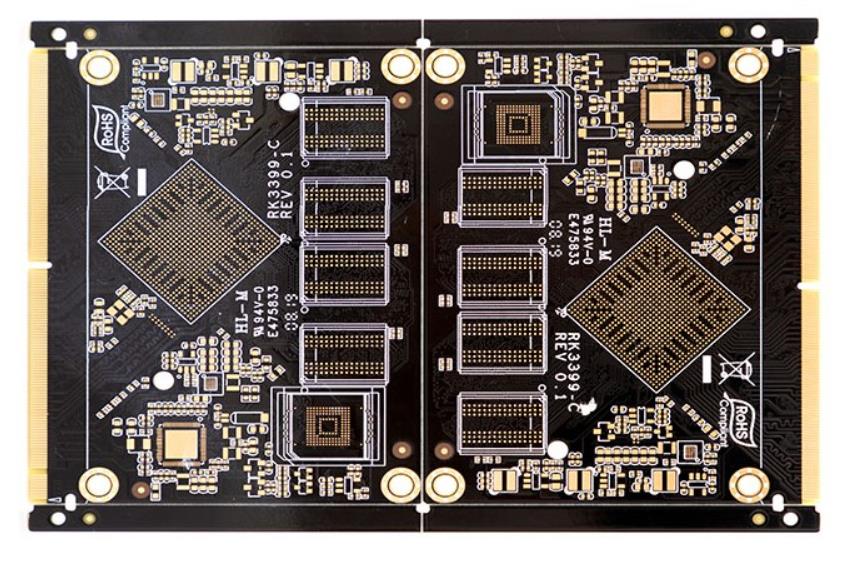
The table below summarizes realistic 2025 pricing for the main board categories in US dollars per board.
Two-layer FR-4 boards for standard wired mice run $0.80 to $1.50. Four-layer high-Tg boards for premium models run $1.80 to $3.00. Rigid-flex polyimide boards for wireless or lightweight mice run $4.00 to $6.50. Fully assembled modules with components run $5.00 to $12.00.
These ranges assume mid-size production runs and standard finishes. Large orders and long-term agreements push pricing toward the lower end, while quick-turn and low-volume orders sit at the upper end. Factories with automated lines and in-house assembly can also quote complete mouse PCBA solutions in one document, which shortens the whole purchasing cycle.
Global Price Comparison for 2025
Manufacturing location creates surprisingly large price gaps for gaming mouse PCBs because labor, supply chains, and overhead differ so much between regions.
Chinese manufacturers offer the best value at $0.80 to $3.00 per board for bare boards, with seven to ten day lead times and full RoHS compliance. US suppliers typically quote $3.50 to $7.00 per board, reflecting higher labor and facilities costs. European suppliers run $4.00 to $8.00 per board with excellent documentation but longer lead times.
By sourcing from China, gaming hardware brands typically save 30 to 50 percent on PCB procurement while keeping world-class reliability and precision. The savings matter because gaming peripherals compete on price at retail, and every dollar saved on the PCB can fund a better sensor or switch inside the final product.
Material Cost Comparison
Material selection is the fastest way to move the cost needle on a gaming mouse PCB.
Standard FR-4 is the most economical choice at $0.80 to $1.50 per board and satisfies most wired designs. High-Tg FR-4 improves thermal endurance for compact high-current designs at $1.80 to $3.00 per board. Polyimide flex material enables ultra-light and foldable structures but costs $4.00 to $6.50 per board. Surface finish selection, whether HASL or ENIG, and copper weight variations together shift the total by roughly 15 percent.
Choosing the right material is a performance decision, not just a cost decision. A mouse intended for marathon gaming sessions generates sustained heat inside the palm, and a board that cannot manage that heat will eventually show sensor drift or switch timing problems.
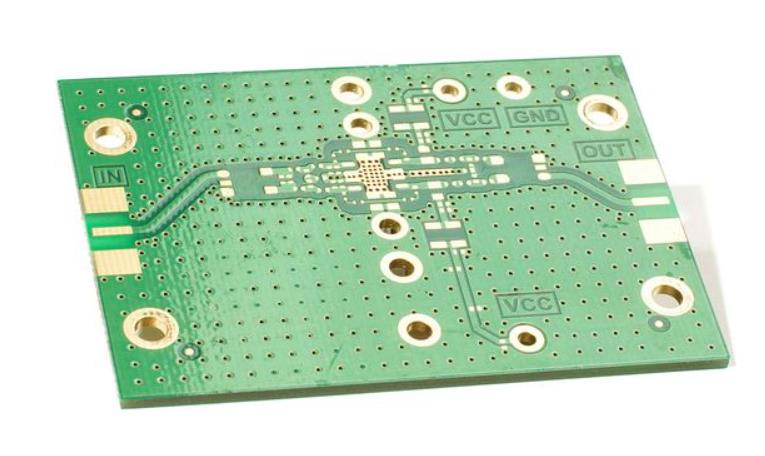
Assembly Cost Trends in 2025
PCB assembly for gaming mice has become more stable in price as automation and AI-assisted placement lines mature. Average assembly cost sits between $2.00 and $5.00 per board, depending on component density and the number of fine-pitch parts.
Automated SMT lines place optical sensors, microcontrollers, and RGB drivers with high repeatability. The key challenge is soldering quality on tiny sensor packages and switch pads that must survive millions of actuations. Modern lines use precise solder paste printing, X-ray inspection for hidden joints, and automated optical inspection on every panel. This efficiency is exactly how a factory balances high performance with low cost: fewer defects means less rework, which keeps per-unit pricing competitive.
For brands that want a tested drop-in module, turnkey service combines bare-board fabrication, component sourcing, assembly, and functional testing in one workflow. You can review how the full flow is handled on the PCB assembly service page and decide whether to receive boards, modules, or finished tested assemblies.
Future Price Forecast
Raw material costs for copper and epoxy resin are projected to rise about 5 to 10 percent per year, which will slowly push PCB pricing upward through 2027. The expected trajectory is modest: standard two-layer boards may reach $0.90 to $1.80, multilayer high-end boards $2.50 to $4.50, and rigid-flex boards $5.00 to $7.00.
Brands can protect themselves with annual supply agreements and forecast-based ordering. Locking in volume early lets the factory purchase materials at better rates and guarantees capacity during peak seasons. It also smooths out the currency and logistics swings that hit spot buyers hardest.
How to Reduce Gaming Mouse PCB Cost
Cost reduction on a gaming mouse PCB should never compromise click feel or tracking quality, but several proven techniques lower the bill.
First, simplify routing and avoid unnecessary blind vias. Optimizing trace layouts and reducing laser-drilled holes saves about $0.20 to $0.40 per board. Second, standardize thickness and copper weight where the design allows, saving $0.30 to $0.50 per board without affecting performance. Third, order in larger batches; unit price can fall to about $1.00 per board at high volume. Fourth, consolidate component libraries so the same switch, encoder, and LED package family is used across multiple mouse models, which improves procurement leverage.
Finally, request a free design-for-manufacturability review before quoting. DFM feedback often catches spacing, annular ring, or panelization issues that would otherwise add cost during fabrication. Many qualified suppliers include this review automatically when you submit Gerber files, and the PCB manufacturing team behind gopcb offers this kind of engineering support as a standard step.
Choosing a Reliable Gaming Mouse PCB Manufacturer
The right manufacturing partner for gaming mouse PCBs combines fine-pitch assembly capability, experience with optical sensors, and strict quality control. Look for automated SMT lines, optical and X-ray inspection, electrical testing on every board, and functional testing for assembled modules. A factory certified to IPC standards with RoHS-compliant materials gives you confidence that boards will behave consistently across production runs.
Support for both wired and wireless designs matters too. Wireless mice add antenna layout, battery management, and rigid-flex construction to the engineering challenge, and only a supplier with real experience in those areas can advise on the trade-offs. Before committing, review the supplier’s documented PCB capabilities and quality management system. Transparent pricing with itemized quotations, fast prototype delivery, and responsive communication round out the checklist for a long-term gaming hardware partnership.
Frequently Asked Questions
Q1. Which factors affect gaming mouse PCB price the most? Material type, layer count, and assembly complexity are the biggest drivers, followed by order quantity.
Q2. Do manufacturers support small prototype orders? Yes, most qualified suppliers accept prototypes from as few as five boards and offer expedited service for urgent validation.
Q3. How long does a 1,000-piece assembled PCB order take? Typically seven to ten working days, depending on design complexity and component availability.
Q4. Is a flexible gaming mouse PCB more expensive? Yes, flex and rigid-flex boards generally cost two to three times more than standard rigid boards because of specialized materials and processing.
Q5. Can I customize RGB control circuitry on the mouse PCB? Yes, factories experienced in peripheral electronics routinely integrate RGB lighting drivers and zone control into the mouse board design.
Conclusion
Gaming mouse PCB price in 2025 spans roughly $0.80 to $12.00 per board depending on layer count, materials, and assembly approach. The winning strategy is not to buy the cheapest board but to engineer the right complexity, source from a capable manufacturer, and consolidate volume. With clean layout, quality assembly, and thorough testing, a gaming mouse PCB becomes a true competitive advantage rather than just another bill of materials line.