UPS PCB Price Guide 2025: Power Backup Board Costs
When the power fails, the equipment that keeps businesses running depends on a silent hero: the UPS. An uninterruptible power supply bridges the gap between the mains and the load, switching to battery power in milliseconds. At the heart of that system is the UPS PCB, the control board that manages battery charging, power switching, surge protection, and voltage regulation. Buyers frequently ask why UPS circuit boards vary so much in price. The answer lies in application, complexity, and manufacturing quality. This guide explains UPS PCB price ranges in 2025, the factors that drive cost, regional differences, and practical ways to reduce expense without sacrificing the reliability that backup power demands.
What Is a UPS PCB and Why Does It Matter?
A UPS PCB is the control core of an uninterruptible power supply system. It manages the battery charger, the transfer switch that changes from mains to battery power, the inverter that converts DC back to AC, and the protection circuits that guard against surges and voltage sags. It also communicates status to the user through indicators and software.
The quality of this board determines the reliability, efficiency, and lifespan of the whole UPS. Even the best battery and enclosure cannot compensate for a poorly designed control board. A UPS that fails to transfer within milliseconds can crash a server, corrupt data, or shut down a production line. That is why serious buyers evaluate the UPS PCB with the same care they give to the batteries and the inverter.
Main Components of a UPS Board
A UPS circuit board carries several functional groups that work together during normal operation and power failure. The battery management section monitors charge state, controls the charging current, and protects the battery from overcharge and deep discharge. The transfer switch section detects mains loss and connects the inverter output within milliseconds. The inverter stage converts DC battery power into clean AC power for the load. Monitoring and communication circuits report status through LEDs, LCDs, or network interfaces.
Protection is woven through all of these sections. Input surge protection absorbs voltage spikes from the grid, output protection guards against overloads and short circuits, and thermal sensors shut the system down safely if temperatures climb. Each function adds components and layout complexity, which is why a fully featured industrial UPS board costs several times more than a basic home board.
Average UPS PCB Prices in 2025
UPS circuit board pricing in 2025 falls into three broad tiers. Entry-level boards cost $10 to $30 and suit home UPS units with basic battery management and switching functions. Mid-range boards run $40 to $80 and serve office and commercial installations that need stable power for sensitive electronics. High-end boards start at $100 and reach $150 or more, built for industrial UPS systems, telecom networks, and data centers where reliability is non-negotiable.
These ranges reflect the electrical demands of each application. A home UPS may switch a few hundred watts; a data center UPS module handles hundreds of kilowatts and needs far more robust power stages, sensing, and thermal management on the board.
Key Factors That Drive UPS PCB Price
Understanding the main cost drivers makes supplier quotations comparable and predictable.
Board size and layer count. Simple two-layer boards cost about $15 to $25. Six-layer industrial-grade boards reach $60 to $100 because they add power and ground planes, better thermal performance, and room for dense control logic.
Material and copper weight. Standard FR-4 keeps material cost around $10 to $20 per board. High-quality FR-4 with 2 oz copper or more, needed for high-current paths in larger UPS units, raises material cost to $40 to $70.
Manufacturing process. Basic wave soldering costs about $15 per board, while SMT assembly with automated testing starts near $50 because it places fine-pitch components and verifies every function.
Customization and added functions. Temperature sensing, remote monitoring, and enhanced surge protection add $20 to $50 per board. Each added feature means more components, more layout work, and more test coverage.
Together these factors decide whether a board is an economical home solution or a high-end industrial product.
Low-End vs High-End UPS Boards
The gap between low-end and high-end UPS boards is about far more than price. Entry-level boards at $10 to $30 suit small home UPS units with modest power requirements and simple user interfaces. Mid-range boards at $40 to $80 serve commercial UPS systems where consistent output and communication features matter. High-end boards at $100 to $150 plus are engineered for industrial UPS, telecom networks, and data centers, with redundant sensing, wide operating temperature ranges, and documentation suited to critical infrastructure.
Choosing a tier requires honesty about the application. A home router does not need a $150 board, but a hospital imaging system or a financial data center absolutely does. Over-specifying wastes money; under-specifying risks downtime that costs far more than the difference in board price.
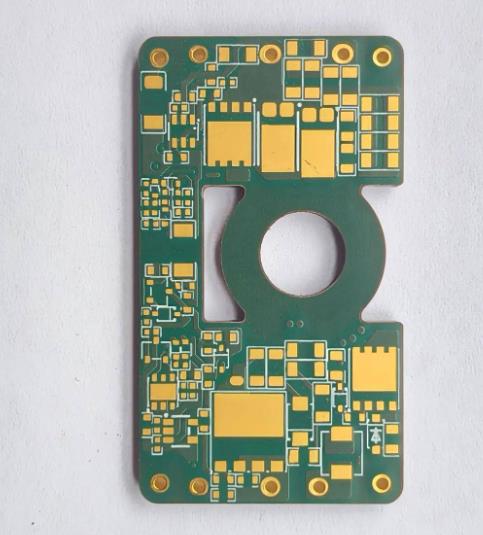
Design Essentials for Power Backup Boards
UPS board design follows rules that differ from ordinary electronics. High-current paths need wide traces or copper pours sized for continuous load, plus proper connection to the terminal blocks. Creepage and clearance distances must satisfy safety standards because the board works with hazardous mains voltages. The inverter switching stage needs clean gate drive layout and snubber circuits to control voltage spikes. Thermal design routes heat away from power semiconductors to heatsinks or the enclosure.
Sensing accuracy matters for battery management: current sense resistors need Kelvin connections, and voltage dividers need tight tolerances so the board charges the battery correctly and reports runtime honestly. Communication sections must be isolated from the power stage to prevent noise from corrupting status data. Designs that respect these principles pass certification faster and fail less in the field, which is why experienced power-electronics manufacturers review layouts before fabrication begins.
Manufacturing Cost Comparison by Region
China remains the world’s most cost-effective location for UPS PCB production. Manufacturing a mid-range UPS board in China costs about $50, while the same board built in the US or Europe runs $70 to $90 because of higher labor and overhead. At volume, Chinese suppliers can push unit pricing for mid-range boards below $30.
The savings come from mature supply chains, automated lines, and scale, not from reduced testing. Reputable Chinese manufacturers run the same electrical and functional tests as their Western counterparts. For buyers, the practical strategy is to source boards from China while keeping design and validation close to the engineering team, then transfer proven designs to volume production.
How to Reduce UPS PCB Cost Without Losing Quality
Cost reduction on a UPS board is achievable through disciplined choices. Order in volume: commitments above 500 boards typically reduce unit price by 20 to 30 percent, moving a $50 mid-range board down to $35 to $40. Choose an experienced manufacturer, because fewer design errors save $10 to $20 per board in rework costs. Optimize the circuit design by removing unnecessary features and simplifying routing, which can save $15 to $30 per board. Select materials rationally, replacing exotic composites with standard FR-4 where the electrical requirements allow, cutting $10 to $15 per board.
None of these steps touches safety-critical functions. The savings come from eliminating waste, not from weakening surge protection or battery management.
Quality and Testing for UPS Boards
A UPS board carries high currents and switches under load, so testing depth matters more than in ordinary electronics. Electrical testing verifies the power traces and control logic. Functional testing simulates a mains failure and confirms that the board transfers to battery, inverts the DC supply, and returns to mains within the required time. Thermal testing loads the board to confirm heat paths work, and automated optical inspection catches soldering defects on dense power stages.
Manufacturers that combine board fabrication with PCB assembly can run these tests end to end. The PCBA testing services used by certified factories verify each UPS board before it leaves the plant, protecting the customer’s equipment and reputation.
Choosing a UPS PCB Supplier
Selecting the right supplier for UPS circuit boards requires more than comparing price lists. Confirm that the factory understands power electronics, including high-current layout, thermal design, and safety clearances. Check certifications such as ISO 9001 and RoHS, and review the documented PCB capabilities and quality management system. Ask about lead times from prototype to volume and request tested samples before committing to large orders.
A supplier that starts standard UPS board models around $20 and offers industrial-grade multilayer designs from $50 to $100 provides a practical range for most buyers. Transparent itemized quotations, responsive engineering support, and consistent delivery turn a board vendor into a long-term manufacturing partner for your power products.
A well-executed DFM review also reduces cost by catching manufacturability issues early, such as annular ring violations, cramped spacing, or unbalanced copper that causes panel warpage. Correcting these in the file stage costs nothing; correcting them after tooling adds fees and weeks of delay.
Market Trends for UPS Circuit Boards in 2025
The UPS market is evolving with the power landscape. Data center growth and edge computing are pushing demand for modular, high-efficiency UPS systems, which require more sophisticated control boards with communication interfaces. Lithium-ion batteries are replacing lead-acid in many designs, adding battery management complexity to the board. Renewable integration and energy storage are blurring the line between UPS and storage inverters, expanding the feature set of new control electronics. Remote monitoring over the network is becoming standard, so boards increasingly carry Ethernet, Wi-Fi, or cellular modules.
These trends raise the electronics content and value of every UPS, and they reward manufacturers that combine power-electronics board experience with modern assembly and testing capability. For buyers, they also mean that the cheapest board is rarely the right board, because the control electronics now determine the UPS’s intelligence, efficiency, and serviceability.
Frequently Asked Questions
Q1. What is the lowest price for a UPS PCB? Entry-level boards start around $10 for small home systems with basic functionality.
Q2. How much more expensive are industrial UPS boards? Industrial models typically cost three to five times more than home versions, from $100 to $150 and above.
Q3. Can I order small batches of custom UPS PCBs? Yes, most manufacturers support low-volume prototyping and scale to full production with volume pricing.
Q4. How do I lower UPS PCB cost without hurting quality? Order in volume, simplify the design, standardize materials, and work with an experienced manufacturer to avoid rework.
Q5. What testing does a UPS board need? Electrical test, mains-to-battery transfer simulation, thermal screening, and automated optical inspection are the essentials.
Q6. What lead time should I expect for UPS PCB prototypes? Fast-turn prototypes typically ship in five to seven working days, while volume production runs about two to four weeks depending on material availability and quantity.
Conclusion
UPS PCB price in 2025 depends on size, materials, process, and application, ranging from entry boards near $10 to industrial designs above $150. The correct approach is to match the board to the real requirements of the system, then use volume, design optimization, and a reliable supplier to control cost. With a quality UPS circuit board at the core, your backup power system delivers the stability that homes, offices, and data centers depend on when the lights go out.