Ceiling Fan PCB Guide: Custom Board Price, MOQ and Ordering
Ceiling fans are no longer simple pull-chain appliances. Modern models run with remote controls, smartphone apps, and smart home integration, all coordinated by a small circuit board hidden above the motor. Choosing the right ceiling fan PCB, whether you assemble fans, repair them, or develop a new smart model, determines performance, energy efficiency, and product lifetime. Custom boards outperform generic replacements because they are designed for the specific motor and feature set. This guide explains custom ceiling fan PCB pricing, minimum order quantities, the ordering process, and how to buy quality boards without overspending.
What Is a Ceiling Fan PCB?
A ceiling fan PCB is the control circuit that manages the fan motor, speed selection, direction switching, and added smart features such as remote control, Wi-Fi, and lighting control. In older fans, a capacitor and pull chain did the whole job. In modern fans, the PCB reads user input, drives the motor through the right switching pattern, protects the system from overloads, and communicates with the rest of the smart home.
Compared with a generic universal board, a custom ceiling fan PCB is engineered for one specific motor and enclosure. That brings several advantages: better performance and energy efficiency because the drive waveform matches the motor, longer service life from quality materials matched to the thermal environment, compatibility with remote or IoT control, and lower failure rates under continuous high-load operation. Understanding the price and minimum order quantity of these boards matters for procurement planning, because it prevents budget overruns and protects you from low-quality substitutes.
Price Factors for Custom Ceiling Fan PCBs
Custom ceiling fan boards typically range from $10 to $50 each depending on design complexity and features.
Material quality. Premium FR-4 with 1 oz or 2 oz copper costs more than basic laminate, roughly $15 to $30 per board, but it provides the durability and heat resistance a ceiling-mounted motor demands. Copper weight matters because the board may carry the motor current directly.
Layers and complexity. Single-layer boards are cheapest at about $10 to $15. Multilayer boards or designs with integrated smart control logic run $40 to $50 because they add routing layers, finer traces, and more components.
Added features. Thermal protection, IoT modules, and surge protection increase cost. Adding a Wi-Fi control module, for example, typically adds $5 to $10 per board.
Prototype versus volume. Small prototype runs cost $15 to $25 per board. Volume production lowers the price dramatically, bringing simple designs down to $5 to $12 per board.
Designing the Board for Motor Compatibility
The relationship between the control board and the motor is the first thing to get right. Ceiling fan motors come in several types, and each one needs a different drive approach. Shaded-pole and permanent-split-capacitor motors are common in conventional fans and are controlled by switching capacitor taps for speed. DC motors, increasingly used in modern energy-efficient fans, need an electronic drive that rectifies the mains supply and creates a variable-frequency output, similar in principle to a small motor drive in appliances.
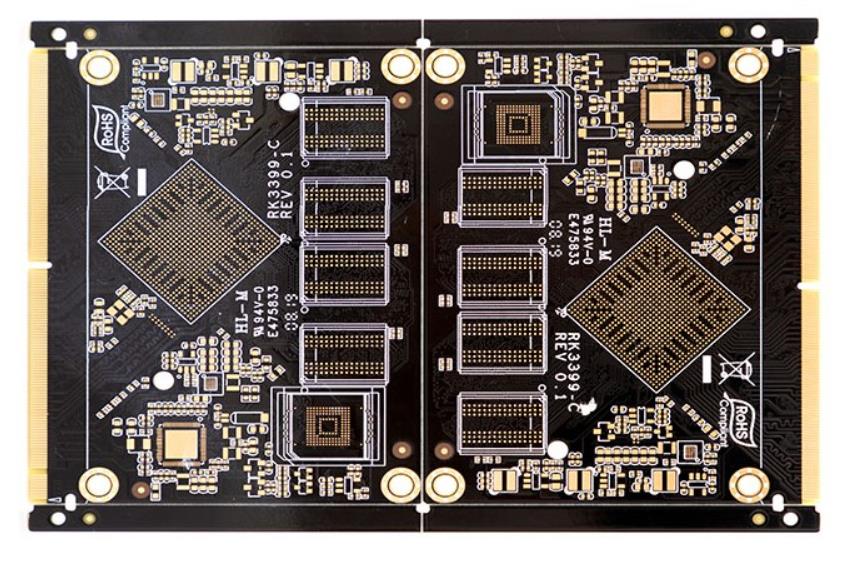
The board designer must match the drive stage to the motor’s current draw and start-up behavior. Undersized components overheat; oversized components waste cost. The layout must also separate the mains-side circuitry from the low-voltage control side, with adequate creepage and clearance for safety certification. Thermal management is handled through copper pours, thermal vias, and sensible component spacing, because a ceiling fan motor runs warm and the electronics often live directly above it. When the design is reviewed against the manufacturing process, these choices translate into a board that is both reliable and economical to build.
Global Ceiling Fan PCB Price Comparison
Ceiling fan PCB prices vary noticeably around the world because of labor, material, and logistics differences. US suppliers typically quote $12 to $50 per board, and European suppliers $15 to $55, reflecting higher production and compliance costs. Asian manufacturers, especially in China, India, and Vietnam, offer $5 to $20 per board with mature supply chains and reasonable lead times.
Global buyers usually source from Asia for cost while relying on established brands for quality and on-time delivery. The regional gap is large enough that a mid-size fan brand can fund its entire smart-control development from the savings on a single production year.
Minimum Order Quantity and Its Impact on Price
Minimum order quantity shapes both budget and planning. Typical supplier MOQs range from 50 to 500 boards. Small prototype orders carry higher unit prices, around $20 per board for 50 samples, while a 500-board batch can drop to $7 to $8 per board. Volume orders often qualify for negotiated discounts that cut total project cost substantially.
Understanding MOQ helps buyers balance risk, cost, and delivery time, especially for small businesses and startups. Ordering too few boards wastes money on unit price; ordering too many locks up cash and inventory. The right starting point is a prototype run to validate the design, followed by a volume order sized to your sales forecast.
Smart Features Shaping Modern Fan Boards
The ceiling fan is becoming a connected comfort device, and the PCB is what makes the transformation possible. Wi-Fi control lets users operate the fan from a phone app and integrate it with voice assistants. Zigbee and Bluetooth mesh versions connect fans into whole-home systems without a strong Wi-Fi signal in every room. Energy monitoring features report power consumption, and occupancy sensing can turn fans off when nobody is in the room. Many smart fans also embed lighting control on the same board, combining light dimming with fan speed in one package.
Each smart feature adds a wireless module, an antenna area, and firmware to the design. The antenna layout must be tuned with the fan’s metal parts in mind, since a motor housing can shield radio signals. Certification requirements for the wireless module, such as FCC or CE testing, add schedule and documentation work. Working with a factory that has built IoT-enabled appliance boards before smooths out these details considerably.
The Ceiling Fan PCB Ordering Process
A structured ordering process protects quality and budget. Design submission comes first: provide the schematic, technical requirements, dimensions, and the feature list, so the factory understands exactly what the board must do. Quotation and confirmation follow, with the supplier pricing the board by type, layer count, and components. Prototype manufacturing and testing come next, using a small batch to verify the design and run functional tests. Volume production and shipping begin only after the prototype is approved.
Following this flow reduces the risk of production errors and unexpected costs. It also gives the buyer a checkpoint to request changes while they are still cheap, instead of discovering a problem after thousands of boards are built.
Choosing a Ceiling Fan PCB Supplier
Supplier selection determines whether the project runs smoothly. A quality supplier offers transparent pricing, reliable lead times, responsive after-sales support, and compliance with industry standards such as ISO and RoHS. Fan motor control boards carry current and generate heat, so look for a factory that understands power layout and thermal design, not just standard digital boards.
Combining fabrication and PCB assembly in one partner shortens the chain: the board arrives assembled and tested instead of traveling to a second vendor. That integration also simplifies the ordering process described above, because one team handles design review, fabrication, assembly, and testing.
Reducing Cost Without Sacrificing Quality
Cost optimization on a ceiling fan board does not require cutting corners. Use standard PCB dimensions and materials to keep production simple; standard FR-4 boards run about $10 to $15, while non-standard sizes push toward $20. Consolidate orders to earn volume discounts, with 500 to 1,000 board orders dropping unit price to $5 to $8. Choose a regional supplier to reduce shipping and import duties where the volumes justify it. Standardize the control features across a fan product line so one board design serves multiple models, doubling the volume and halving the per-model engineering cost.
By applying these strategies, buyers obtain high-value custom boards without sacrificing functionality or reliability.
Common Issues and Solutions in Fan Board Projects
Even with a reliable supplier, projects encounter typical friction points. Production delays depend on order size, with two to six weeks being the normal range, so plan schedules with buffer. Design mismatches appear when the schematic or layout was not confirmed before production, which is why prototype approval is mandatory. Communication gaps cause extra costs, so keep requirements written and maintain a single point of contact. Heat-related failures in the field usually trace back to insufficient copper or thermal design, both of which should be reviewed during the design-for-manufacturability stage.
Before selecting a partner, review its documented PCB capabilities and quality management system. Confirming these details early prevents unpleasant surprises when the first volume order runs.
A capable manufacturer catches these issues during the DFM review rather than after tooling. Engineering feedback at the file stage is free; the same corrections after production starts cost real money and weeks of delay.
Testing and Quality for Fan Control Boards
Ceiling fan boards must survive years of switching and heat. Electrical testing verifies the motor drive paths and control logic. Functional testing runs the board through speed changes and direction reversal with a real or simulated motor load. Automated optical inspection checks solder quality on the power components, and thermal testing confirms the board handles continuous operation. For smart fans, RF testing verifies that the wireless module communicates reliably without interfering with the motor drive.
Manufacturers running these checks as standard procedure, supported by the PCBA testing methods used at certified facilities, deliver boards with consistently low field failure rates.
Frequently Asked Questions
Q1. How long does custom ceiling fan PCB production take? Prototype batches take one to two weeks, and volume production three to six weeks depending on quantity.
Q2. Can I order small batches for prototype testing? Yes, but unit pricing is higher for small orders than for production volumes.
Q3. What payment terms are common for global PCB orders? Suppliers typically require 30 to 50 percent deposit, with the balance due before shipment; international wire transfer and PayPal are widely accepted.
Q4. Do smart ceiling fans need a different PCB? Yes, smart models add a wireless module and control interface, which increases board complexity and cost by about $5 to $10 per unit.
Q5. Can one board design serve several fan models? Often yes, with software configuration, which is the fastest way to reduce per-model engineering and inventory cost.
Conclusion
Understanding price, MOQ, and the ordering process helps buyers make smart decisions about custom ceiling fan PCBs. Regional pricing, volume discounts, and supplier reliability are the deciding factors, and a trusted manufacturing partner delivers competitive pricing from $5 to $50 per board with quality production and on-time delivery. By balancing cost, quality, and lead time, your ceiling fan project can move from schematic to shipping smoothly, with boards that perform reliably for years overhead.