Microcontroller PCB Guide: Design, Cost and Manufacturing Basics
Microcontroller circuit boards sit at the heart of nearly every smart product made today. They run the logic inside smart home devices, industrial controllers, medical monitors, robots, and countless consumer gadgets. For a developer, engineer, or buyer who is new to electronics, understanding what a microcontroller PCB is, how it is designed, what it costs, and how to source it well can save months of frustration and thousands of dollars. This guide walks through the fundamentals of the PCB design and layout work behind these boards, the manufacturing choices, realistic price ranges, and the questions to ask before ordering.
What Is a Microcontroller PCB?
A microcontroller PCB is a printed circuit board that integrates a microcontroller chip together with the supporting electronics needed to make it run. Unlike a plain board that only connects passive parts, this kind of board contains a programmable processor, a power supply section, input and output interfaces, and the small components that keep signals clean and stable. Because the microcontroller executes software, the same physical board can behave completely differently depending on the firmware loaded onto it, which is why these boards power everything from a toy to an industrial machine.
The difference between a microcontroller circuit board and an ordinary PCB is therefore intelligence. A conventional board routes electricity between components; a microcontroller board receives data, makes decisions in software, and sends commands back out. That combination of processing, memory, and connectivity in a compact package makes the board the brain of the device around it.
Core Components of a Microcontroller Board
Although every design differs, a typical microcontroller PCB contains a small set of functional blocks.
Microcontroller chip. The processor core runs the programmed logic. It contains the CPU, flash memory for firmware, RAM, clock circuitry, and peripherals such as timers, ADCs, and communication controllers. Common families include AVR, PIC, STM32, ESP32, and others chosen for performance, power, and price.
Power section. The board needs clean, stable voltage. A regulator converts the incoming supply to the chip voltage, usually 3.3 or 5 volts, and decoupling capacitors filter noise so the chip does not reset unexpectedly.
Input and output interfaces. Headers, connectors, and protection circuits let the board talk to sensors, displays, relays, motors, and other boards. These interfaces carry digital and analog signals and are often the first place design mistakes appear.
Passive components. Resistors, capacitors, inductors, and diodes stabilize power, filter signals, set pull-up states, and protect the chip from transients. They look simple but their placement determines much of the board reliability.
Getting these blocks right in the schematic and then laying them out cleanly is what separates reliable microcontroller PCB design from boards that fail in the field for unclear reasons.
How a Microcontroller Board Works
The operation of a microcontroller circuit board can be described in three repeating stages. In the input stage, sensors or external devices send data to the microcontroller. A light sensor, for example, converts brightness into an analog voltage that the chip reads through an ADC input. In the processing stage, the chip compares the reading against the logic stored in its firmware and decides what to do, such as deciding that the room is too dark. In the output stage, the chip drives an actuator or display, such as turning on an LED or sending a command to a motor driver.
A robotics example makes this concrete. A robot board receives distance readings from an ultrasonic sensor, the firmware decides whether an obstacle is close, and the board then sends control signals to the motor drivers to steer around it. The same pattern appears in thermostats reading temperature, wearables reading heart rate, and industrial controllers reading machine position. The hardware only provides the pathways; the firmware gives the board its behavior, which is why development boards with the same chip can serve completely different products.
Types of Microcontroller PCBs
Microcontroller boards come in several construction styles, and the right choice depends on the product and volume.
Single-layer boards are the cheapest and are common for simple hobby projects, basic sensor nodes, and prototypes. Routing freedom is limited because traces share one copper layer, so layouts must be planned carefully.
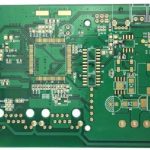
Multilayer boards provide dedicated power and ground planes plus several routing layers, which lets designers place the microcontroller and its peripherals in a compact area with low noise. Most commercial products use two to six layers depending on connectivity and signal speed.
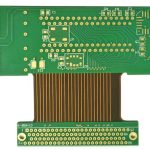
Rigid boards are the standard for consumer electronics and industrial equipment because they are durable, inexpensive, and easy to assemble. Flexible boards are thin and bendable, making them ideal for wearables, foldable devices, and applications where the circuit must fit into a curved enclosure. Some designs combine both into rigid-flex constructions that fold inside a product.

Applications of Microcontroller Boards
Microcontroller circuit boards appear in almost every category of electronic equipment. Consumer electronics use them in smartphones, smart TVs, washing machines, game consoles, and kitchen appliances. Internet of Things products depend on them for smart home hubs, connected sensors, door locks, and lighting controls. Robotics relies on them in drones, robotic arms, and autonomous vehicles. Automotive electronics use them for engine control, safety systems, and infotainment. Medical devices employ them in portable diagnostic tools, patient monitors, and wearable health trackers. In each case the board receives signals, executes firmware, and controls outputs, which is why the demand for well-designed microcontroller boards keeps growing across industries.
Advantages of Microcontroller PCBs
There are practical reasons these boards dominate embedded products. Compact integration packs the processor, memory, and interfaces into a small area, shrinking the final device. Energy efficiency matters for battery-powered products such as sensors and wearables, where sleep modes and low-power peripherals extend run time. Scalability lets the same design family serve toys, appliances, and industrial systems with different chips and firmware. Reliability comes from standardized, repeatable designs built to known specifications. Cost-effectiveness is real at volume, where the unit price of an assembled board drops far below the cost of building the same function from discrete logic. These advantages explain why companies move quickly from a development board to a custom board once the product concept is proven.
Microcontroller PCB Design Essentials
Good layout discipline prevents most field failures, and the key points are well established.
Component placement. Group the microcontroller near its crystal or oscillator, decoupling capacitors close to power pins, and connectors at the board edge. Short, direct paths between related parts reduce noise and make routing easier.
Power integrity. A solid ground plane, dedicated power plane on multilayer boards, and local decoupling keep the supply clean. Voltage ripple at the chip pins is one of the most common causes of random resets.
Signal routing. Keep high-speed or sensitive traces away from switching outputs, maintain spacing between adjacent nets, and use ground vias to shield critical signals. Crosstalk between long parallel traces creates mysterious intermittent faults.
Thermal management. Copper pours and thermal vias move heat away from regulators and driver chips, extending component life and keeping performance stable in warm enclosures.
Design verification. Running simulation and a design-for-manufacturing check before ordering catches errors that are cheap to fix on a computer and expensive to fix after fabrication.
When these rules are applied during the design phase, the board transitions smoothly into production at a prototype PCB assembly stage and later into volume.
Common Problems and Solutions
Even experienced teams hit the same handful of issues, and each has a standard cure.
Overheating. Power regulators and drivers dissipate heat that a small board cannot shed. Improve layout, add thermal copper, and include vias to the ground plane to cool hot areas.
Signal interference. Poor routing causes crosstalk and glitches on sensor inputs. Keep trace spacing adequate, route sensitive lines over a ground plane, and use series resistors where needed.
Unstable power. Voltage dips cause random resets and corrupted communications. Place decoupling capacitors at every power pin, size the regulator correctly, and add bulk capacitance near loads.
Soldering defects. Poor solder joints create intermittent contact that is painful to debug. Use quality assembly processes, correct stencils, and thorough inspection to eliminate cold joints and bridges.
Most of these problems surface during testing, which is why functional testing and automated inspection belong in every serious project plan. A partner that runs full PCBA testing will catch marginal boards before they ship instead of leaving failures for the field.

Microcontroller PCB Cost in 2025 and 2026
Pricing for microcontroller boards follows design complexity and quantity more than anything else. In prototype development, small batches are expensive per unit because tooling, setup, and engineering time are spread over few boards; expect roughly 20 to 50 dollars per bare board for small runs of a simple design. In volume production, the unit price drops dramatically as the same cost spreads across thousands of boards, commonly reaching 5 to 15 dollars per board. Complex designs raise the ceiling: multilayer stackups, controlled impedance, flex construction, or specialty materials can push a single board above 25 dollars before assembly. Assembly, component procurement, testing, and shipping typically add 10 to 20 percent on top of the bare board cost.
For a startup or a hobbyist, starting with a small prototype batch is the sensible path because it proves the design cheaply. For an established product, volume production lowers cost per unit and locks in a reliable supply chain. The numbers also explain why board cost should never be the only criterion: a board that saves two dollars but fails in the field is far more expensive than a slightly pricier board from a disciplined manufacturer.
How to Choose a Microcontroller PCB Manufacturer
The manufacturer you choose determines whether the project ships on time and works in the field. Look for experience with embedded designs specifically, because microcontroller boards demand attention to power, noise, and programming interfaces that generic digital boards may not receive. Confirm quality standards such as ISO certification, IPC compliance, and RoHS-compliant materials, and verify that the factory documents its inspections. Check custom capabilities such as flex circuits, special surface finishes, conformal coating, and component procurement. Request transparent pricing that covers fabrication, assembly, testing, and delivery rather than a quote that grows after the order starts. Finally, prefer a partner that offers engineering feedback, because a DFM review that catches a routing mistake before tooling is worth far more than after-sales apologies. A full-service partner handles the boards through PCB manufacturing and PCB assembly, so you receive tested, ready-to-program boards instead of managing separate vendors.
Future Trends in Microcontroller Boards
Several trends will shape the next generation of microcontroller circuit boards. Miniaturization continues, pushing smaller and higher-performance boards into wearables and implantable medical devices. AI and cloud integration are appearing in new designs, with boards optimized to run lightweight machine learning models and maintain wireless connectivity. Environmental requirements are driving halogen-free laminates and recyclable substrate materials into mainstream production. Flexible and three-dimensional constructions give product designers new freedom for curved and space-constrained enclosures. Together these trends mean that custom boards, rather than off-the-shelf modules, will keep growing in importance for products that need a specific size, feature set, and cost target.
Frequently Asked Questions
Q1. What is the difference between a microcontroller PCB and a normal PCB? A normal PCB only provides electrical connections between components, while a microcontroller PCB integrates a programmable chip so the board can execute firmware, make decisions, and control the device.
Q2. How much does a microcontroller PCB cost? Prototype runs typically cost 20 to 50 dollars per bare board, and volume production can bring the price down to 5 to 15 dollars per board before assembly and testing.
Q3. Can a beginner design a microcontroller PCB? Yes. With PCB design software, reference designs, and development boards, beginners can complete a basic layout and order prototype boards to learn the full cycle.
Q4. Which microcontroller should I choose for a new product? Choose by required performance, power budget, connectivity, available peripherals, ecosystem support, and unit cost; common families include AVR, PIC, STM32, and ESP32.
Q5. How long does microcontroller PCB production take? Prototype boards typically take one to two weeks and volume orders two to four weeks, depending on layer count, finish, assembly, and testing requirements.
Conclusion
The microcontroller PCB is the core of modern smart electronics. Understanding its components, operation, design rules, and cost structure lets developers and buyers move from idea to shipped product with confidence. Whether you are a beginner ordering your first prototype or an engineer scaling an established design, working with a manufacturer experienced in embedded boards, disciplined testing, and clear communication turns a good schematic into reliable hardware that performs for years.