Why High-Reliability PCB Manufacturing Matters
Reliability is the foundation of PCB performance and one of the most important competitive factors in modern electronics manufacturing.
As electronic products become smaller, more integrated, and more complex, PCB manufacturing faces increasingly demanding requirements for dimensional accuracy, material stability, electrical performance, and long-term durability.
A small PCB defect can eventually result in equipment failure, production delays, warranty costs, product recalls, or damage to a company’s reputation. For this reason, high reliability should not be treated as an optional feature. It should be a fundamental requirement throughout the entire PCB production process.
A reliable PCB is the result of controlled materials, standardized manufacturing processes, comprehensive inspection, process traceability, and continuous quality improvement.
Why PCB Reliability Is a Core Competitive Advantage
In today’s electronics industry, competition is no longer based simply on price.
Product stability, manufacturing consistency, service life, and long-term performance have become critical factors when customers evaluate electronic products and their suppliers.
A strong focus on PCB reliability allows manufacturers to reduce production risks, improve product consistency, and support customers from prototype development through volume production.
Meeting the Requirements of More Advanced Electronics
Modern electronic products are continuously evolving toward higher integration, smaller form factors, higher performance, and greater functionality.
These trends place increasingly demanding requirements on PCBs, including:
- Higher circuit density
- Smaller trace widths and spacing
- More precise drilling
- Higher layer counts
- Improved dimensional stability
- Better thermal performance
- Higher environmental resistance
- More demanding electrical characteristics
Conventional manufacturing processes may not always provide sufficient control for complex PCB structures.
For demanding applications, advanced PCB manufacturing technologies can support multilayer, HDI, high-TG, heavy-copper, high-frequency, rigid-flex, and other specialized PCB structures.
Building a Stronger Product Advantage
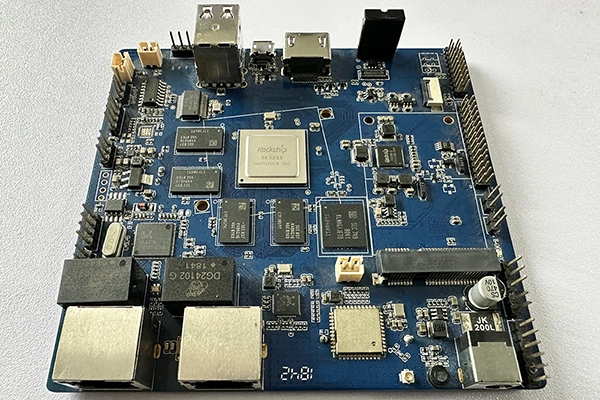
Customers increasingly expect electronic products to operate reliably over long periods and under demanding environmental conditions.
A PCB with inconsistent quality can lead to intermittent failures, unexpected downtime, field service problems, and increased maintenance costs.
By contrast, a well-controlled manufacturing process can improve batch-to-batch consistency and reduce the probability of manufacturing-related failures.
For OEMs and electronics manufacturers, PCB reliability therefore becomes an important part of overall product quality and brand reputation.
Reducing Total Lifecycle Costs
One common misconception is that choosing the lowest-cost PCB always reduces manufacturing expenses.
In reality, the purchase price of the PCB represents only one part of the total product cost.
A defective PCB can create additional expenses through:
- Rework
- Replacement components
- Labor costs
- Logistics
- Warranty claims
- Production downtime
- Delayed product launches
- Customer support
- Product returns
For example, if a production batch contains thousands of electronic products, even a relatively small PCB failure rate can generate significant downstream costs.
Investing in reliable PCB production at the beginning can therefore reduce the total cost of ownership over the product lifecycle.
Preventing Cascading Product Failures
The PCB serves as the electrical foundation of an electronic product. It provides electrical connections between components, distributes power, and carries signals throughout the system.
A small manufacturing defect can therefore affect the entire product.
Common PCB reliability problems include:
- Plated-through-hole failures
- Copper corrosion
- Via cracking
- Interlayer delamination
- Pad or annular ring cracking
- Open circuits
- Short circuits
- Soldering defects
- Dimensional deformation
These defects may initially appear as intermittent electrical problems. Under continuous operation or environmental stress, however, they can develop into complete system failures.
In industrial, medical, telecommunications, energy, automotive, and other demanding applications, such failures can have serious operational and financial consequences.
Full-Process Quality Control Builds PCB Reliability
High reliability does not come from a single inspection step.
It is created through a controlled manufacturing system that manages quality from raw materials to final shipment.
A comprehensive PCB quality management system can integrate design review, DFM analysis, material verification, production control, inspection, testing, and traceability.
GOPCBA’s published quality-management process covers PCB design, DFM checking, new product introduction, PCBA manufacturing, supply-chain management, testing, and personnel training.
Closed-Loop Process Inspection
Quality control should cover the complete manufacturing process rather than relying solely on final inspection.
Important production stages include:
- Material preparation
- Inner-layer fabrication
- Drilling
- Copper deposition
- Electroplating
- Imaging
- Etching
- Solder mask
- Surface finishing
- Routing and profiling
- Electrical testing
- Final inspection
Controlling each stage helps prevent defects from being transferred to subsequent processes.
Controlling Critical Manufacturing Parameters
High-reliability PCB production requires tight control of critical process parameters.
These may include:
Copper Thickness
Copper thickness directly affects current-carrying capability, electrical resistance, thermal performance, and long-term reliability.
The required copper thickness should be selected according to the application’s electrical and thermal requirements.
Hole and Via Quality
Reliable plated-through holes and vias are essential for electrical continuity between PCB layers.
Poor plating or insufficient copper thickness can increase the risk of open circuits, corrosion, and mechanical failure.
Trace Width and Spacing
Trace geometry must remain within the specified manufacturing tolerance.
Unexpected changes in trace width or spacing can affect electrical performance, current capacity, signal integrity, and production yield.
Material Performance
PCB materials have a direct impact on thermal, mechanical, and electrical reliability.
Depending on the application, engineers may require standard FR-4, high-TG materials, high-frequency laminates, low-loss materials, halogen-free materials, or other specialized substrates.
Material selection should be based on operating temperature, electrical requirements, mechanical stress, and expected service life.
Maintaining Consistent Production Quality
A PCB manufacturer may successfully produce prototypes but struggle to maintain the same quality during mass production.
This is why production consistency is as important as prototype performance.
A mature manufacturing system should use standardized processes, controlled production parameters, automated inspection, and manufacturing data to reduce variation between production batches.
GOPCBA’s published PCB capabilities include advanced multilayer manufacturing, HDI, high-TG and thick-copper PCB technology, controlled-impedance structures, and other high-performance PCB technologies.
Material Selection Is the Foundation of PCB Reliability
The quality of raw materials directly affects the reliability of the finished PCB.
Important materials include:
- Copper foil
- Laminates
- Prepreg
- Solder mask
- Surface-finish materials
- Adhesive materials
- Other process chemicals
For high-reliability applications, material selection should consider:
- Glass transition temperature
- Thermal expansion
- Dielectric properties
- Insulation performance
- Moisture resistance
- Thermal resistance
- Mechanical strength
- Flame-retardant performance
Selecting the correct substrate is particularly important for products exposed to high temperatures, humidity, vibration, thermal cycling, or other harsh environments.
Reliability Must Be Considered During PCB Design
Manufacturing quality alone cannot compensate for an unsuitable PCB design.
Reliability should be considered from the earliest design stage.
A reliable design should evaluate:
- Layer stack-up
- Trace width and spacing
- Current distribution
- Thermal management
- Via structure
- Component placement
- Signal integrity
- Impedance control
- Mechanical constraints
- Manufacturing tolerances
Early DFM analysis can identify potential manufacturing risks before production begins.
GOPCBA’s PCB design services include DFM considerations and support for complex PCB structures, helping engineers evaluate manufacturing feasibility during the design stage.
Testing Is Essential to PCB Reliability
Manufacturing inspection and electrical testing are critical parts of a high-reliability production process.
Visual inspection alone cannot identify every potential defect.
Depending on the product requirements, manufacturers may use:
- Automated Optical Inspection (AOI)
- X-ray inspection
- Electrical testing
- Flying probe testing
- In-circuit testing
- Functional testing
- Solder paste inspection
- Dimensional inspection
For assembled circuit boards, PCB testing can verify electrical characteristics and functional performance before shipment. Testing can help identify manufacturing and assembly defects that may otherwise reach the customer.
For high-volume production, comprehensive testing is particularly important because even a small defect rate can translate into a significant number of defective products.
Reliability Throughout the Product Lifecycle
High reliability should extend beyond PCB fabrication.
For assembled electronic products, PCB fabrication, component sourcing, assembly, inspection, testing, and final integration should work together as one controlled manufacturing process.
A complete manufacturing workflow can help ensure consistency from prototype development to volume production.
For example, PCB capabilities determine whether the board structure can be manufactured correctly, while PCBA capabilities determine whether components can be assembled consistently onto the finished PCB. GOPCBA’s published PCBA capabilities cover a broad range of PCB assembly requirements, including SMT and through-hole technologies.
This integrated approach can reduce communication gaps between different manufacturing stages and make quality problems easier to identify and resolve.
High Reliability Is a Long-Term Manufacturing Strategy
Reliable PCB production is not achieved through a single technology or inspection procedure.
It requires a combination of:
- Appropriate material selection
- Robust PCB design
- Standardized manufacturing processes
- Accurate process control
- Comprehensive inspection
- Electrical testing
- Production traceability
- Continuous process improvement
For electronics manufacturers, this approach provides benefits beyond preventing immediate failures.
It can improve product consistency, reduce warranty and rework costs, shorten troubleshooting cycles, and support stable long-term production.
Conclusion
High reliability is not simply an additional feature of PCB manufacturing. It is a fundamental requirement for electronic products that must operate safely and consistently throughout their intended service life.
As electronic systems become more integrated and demanding, PCB reliability increasingly depends on the combination of design, materials, manufacturing technology, process control, and testing.
A reliable PCB manufacturing strategy should therefore begin before production and continue through fabrication, assembly, inspection, and final testing.
By implementing systematic quality control and selecting appropriate manufacturing technologies, electronics companies can reduce failure risks, control lifecycle costs, improve product consistency, and build more competitive products for demanding markets.
Ultimately, high-reliability PCB manufacturing is not just about producing a board that works today. It is about producing a PCB that continues to perform consistently under the electrical, thermal, mechanical, and environmental conditions it was designed to withstand.