High-Frequency Hybrid PCB Cost Guide 2026
A high-frequency hybrid PCB cost is higher than standard FR-4 pricing because the board combines low-loss RF laminates with more economical FR-4 layers, adding material expense and complex lamination steps. 5G communications, automotive radar, satellite equipment, aerospace electronics, and high-speed RF modules often use Rogers, PTFE, Taconic, or Isola material in the RF sections while keeping FR-4 in the digital and power sections. This hybrid construction protects signal performance without making the entire board from expensive microwave laminates.
This 2026 guide explains realistic high-frequency hybrid PCB prices, compares material combinations, reviews the process and testing factors that raise cost, and provides practical ways to control total expense.
What Is a High-Frequency Hybrid PCB?
A high-frequency hybrid PCB uses two or more dielectric materials in one laminated stackup. High-frequency layers are placed where RF signals travel, while FR-4 supports digital control, power, and lower-speed circuitry. Typical structures combine Rogers RO4003C or RO4350B layers with FR-4 cores and prepreg, or use PTFE-based material when extremely low loss is required.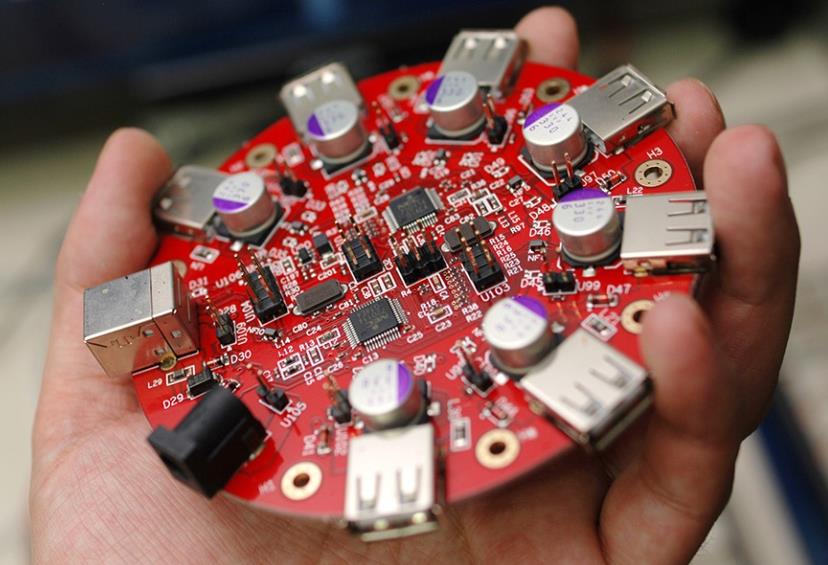
The advantage of hybrid construction is that only the critical RF regions need expensive low-loss material. This lowers cost compared with an all-Rogers or all-PTFE board while giving the RF path stable dielectric constant, low dissipation factor, and controlled impedance.
Hybrid boards are widely used in base station radios, antenna modules, radar, satellite communication, automotive ADAS, and high-speed networking equipment.
2026 Price Ranges for Hybrid RF PCBs
High-frequency hybrid PCB sample pricing usually starts around USD 100 to USD 300 for a relatively simple two-layer to four-layer design. Six-layer to eight-layer RF hybrid boards commonly range from USD 300 to USD 800 for a prototype design. Advanced microwave boards for radar, aerospace, or satellite systems can cost USD 500 to USD 1,500 or more per design.
Production pricing drops with quantity. Small production of 50 to 500 boards may range from roughly USD 20 to USD 80 per board for a standard RF hybrid stackup, and USD 50 to USD 150 for more complex high-layer RF boards. Larger volumes above 5,000 boards can reach USD 2 to USD 10 per board for basic hybrids and USD 10 to USD 50 for complex multilayer RF designs.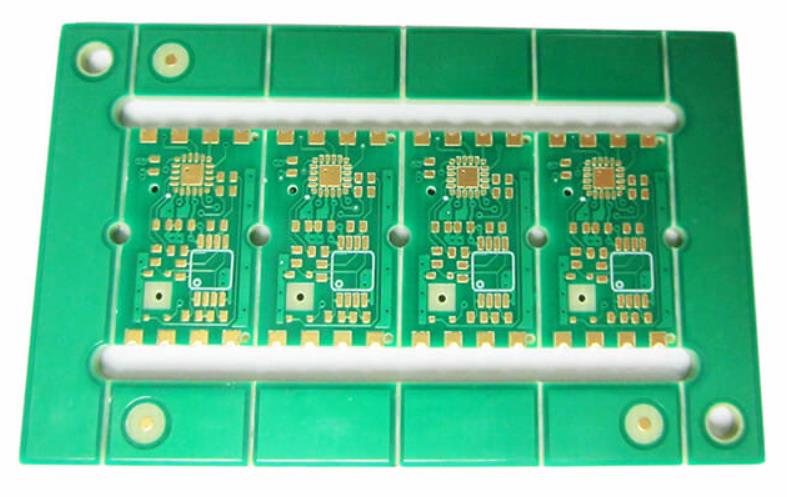
Quotes depend on material type, board size, layer count, impedance requirements, surface finish, testing, and quantity, so these figures should be used for budget planning rather than as fixed prices.
Material Selection Drives Most of the Cost
Material is the largest single factor in high-frequency hybrid PCB pricing. Rogers laminates such as RO4003C and RO4350B provide stable Dk, low loss, and good processability, but they typically add about 30% to 100% or more to the PCB cost compared with standard FR-4. PTFE materials offer very low dielectric loss but require specialized handling, plasma treatment, and careful lamination, making them more expensive.
FR-4 remains the most economical choice for digital, power, and general control areas. By using expensive high-frequency laminate only where the RF path needs it, the designer can achieve strong electrical performance without making every layer from premium material.
The correct material choice depends on operating frequency, temperature range, signal loss budget, mechanical reliability, and cost target. An experienced PCB manufacturing partner can advise on which hybrid combination is practical and cost-effective.
Rogers, PTFE, and FR-4 Hybrid Comparison
FR-4 boards are the lowest-cost option and are suitable for ordinary electronic products, but their dielectric loss and Dk stability are not adequate for many GHz-level RF circuits. Rogers-FR-4 hybrids provide strong RF performance at a cost that is normally 30% to 200% higher than FR-4, depending on how many layers use RF laminate.
PTFE hybrids offer outstanding microwave performance for satellite, aerospace, and high-end radar applications, but the price is typically higher than Rogers hybrids because PTFE is soft, expands with temperature, and needs more difficult drilling and plating preparation. Taconic and Isola materials offer additional choices for designers who need specific Dk, loss, and thermal performance.
The best approach is not to compare materials by price alone. The design should use a material that can meet the electrical and reliability requirements with the least waste of expensive area.
Layer Count and Stackup Complexity
Layer count directly affects high-frequency hybrid PCB cost because each additional layer increases material, lamination, drilling, plating, and alignment work. A two-layer RF board may be relatively economical, while a sixteen-layer hybrid with multiple RF zones requires precise control over different material coefficients of thermal expansion.
Mixed materials have different resin systems, mechanical properties, and thermal expansion behavior. If they are not matched correctly, the board can warp, delaminate, or develop registration problems during lamination. The stackup should be designed with the manufacturer so material thickness, prepreg flow, and layer order are realistic.
In general, eliminating unnecessary layers and separating the RF region from the digital region in a clear stackup can reduce cost while keeping performance. Early PCB design and layout review can help the design team choose the right number of RF layers before files are finalized.
Prototype versus Volume Price Differences
A high-frequency hybrid prototype carries many fixed engineering costs. The manufacturer must review the stackup, order special materials, qualify the material combination, calculate impedance, prepare process parameters, and verify RF test coupons. If only ten boards are made, those costs are divided among ten units and the per-board price may be very high.
Volume production spreads engineering, tooling, material purchasing, and test setup across thousands of boards. The same design can move from a high prototype cost to a much lower production unit price once the process is stable. Suppliers should provide price comparisons at multiple quantities so buyers can plan the transition from sample to mass production.
For an RF module that also requires soldering of high-frequency components, SMT PCB assembly should be evaluated together with board fabrication because assembly quality affects return loss and signal reliability.
Impedance control also adds complexity to hybrid boards. RF traces may need 50 ohm or 75 ohm targets with very tight tolerances, and the dielectric thickness between the signal layer and reference plane changes with the hybrid material stackup. The manufacturer must confirm the actual Dk of each material lot and adjust line widths so the finished board meets the requirement.
Manufacturing Factors That Add Cost
Hybrid lamination is more difficult than standard FR-4 processing because different materials expand and absorb resin differently. Temperature, pressure, heating rate, and vacuum conditions must be adjusted to prevent delamination and bow. Skilled process control adds engineering cost but reduces scrap.
Layer registration becomes stricter when RF materials are involved. Small misalignment can change the position of controlled impedance lines or create poor connections between the RF and FR-4 sections. The factory may use X-ray registration and more frequent dimensional checks.
High-frequency boards also require careful drilling and plating because PTFE and hydrocarbon materials behave differently from glass-filled FR-4. Surface preparation, plasma treatment, and hole wall quality are important for reliable plated vias.
Testing and Quality Requirements
RF boards usually need impedance testing, and many high-performance designs require TDR measurements, insertion-loss verification, microsection analysis, and electrical testing. Coupon-based impedance testing is common, while more advanced designs may require testing on the board itself.
Environmental reliability can also matter. Automotive radar and aerospace boards must survive thermal cycling, vibration, humidity, and long service life. Extra testing and documentation increase cost but protect the product from field failures.
A supplier with proven high-frequency capability and a complete PCB manufacturing capability range can define the appropriate test level for the intended application.
How to Reduce High-Frequency Hybrid PCB Cost
Use the expensive high-frequency laminate only where it is required. Keep FR-4 in the digital, control, and power regions. Minimize the number of RF layers and the total area of RF material. Standardize material choices where possible because specialized or low-volume materials create procurement cost and longer lead time.
Optimize layer count and stackup before sending files to the factory. Avoid unnecessary impedance requirements, blind vias, and extreme tolerances when a simpler structure can meet the electrical specification. Complete DFM review early reduces engineering queries and prototype cycles.
Plan production quantities realistically. Increasing order volume is one of the most effective ways to lower per-board cost after the design is verified, because fixed material and setup costs can be spread across more boards.
Choosing a High-Frequency PCB Manufacturer
Not every PCB factory can produce stable Rogers-FR-4 or PTFE hybrids. Review the supplier’s material handling, lamination, drilling, plating, impedance control, and RF test experience. Ask for examples of similar 5G, radar, or antenna boards and the test data associated with them.
The manufacturer should also provide engineering support for stackup optimization and material substitution. For products that include RF front-end assembly, an integrated relationship with telecommunications PCBA can simplify communication and improve consistency from bare board to finished module.
Conclusion
High-frequency hybrid PCB cost is driven by RF material content, layer count, hybrid lamination difficulty, registration control, and RF testing. Hybrid boards are more expensive than FR-4 but can be much more economical than full-Rogers or full-PTFE boards while still meeting demanding signal requirements.
With careful material selection, stackup planning, DFM review, and an experienced high-frequency manufacturer, design teams can control cost and move confidently from prototype to volume production.