PCB Insulation Material Guide: Types, Prices and Selection
Every printed circuit board starts with a base that does far more than hold components in place. The insulation layer system of a board separates conductors electrically, supports copper traces mechanically, and carries heat away from hot parts. When engineers talk about a reliable and reasonably priced board, they are really talking about the quality of its PCB insulation material. Laminate and prepreg choices influence signal performance, thermal limits, product lifetime, and a surprisingly large share of the final price. Because demand from automotive, aerospace, communications, and industrial automation keeps growing, buyers in 2025 and 2026 pay close attention to insulation systems that combine performance with sensible budgets.
This guide explains what PCB insulation materials are, why their prices vary so widely, how common materials compare, and how to choose the right grade without overpaying. It covers FR-4, polyimide, PTFE, and ceramic substrates, the factors that push their costs up or down, and practical purchasing strategies used by professional electronics teams.
What Is a PCB Insulation Material?
A PCB insulation material is the dielectric base that electrically isolates the conductive layers of a circuit board. In a rigid board, the insulation is usually a copper-clad laminate made of resin and reinforcing fabric, together with prepreg layers that bond the stack-up together during lamination. The material must withstand operating voltages, resist tracking and breakdown, handle soldering temperatures, and keep stable electrical properties such as permittivity and loss tangent across the working frequency range.
The choice of insulation affects nearly every downstream step. Drilling, plating, imaging, and lamination parameters are tuned around the substrate, and assembly reliability depends on how well the material absorbs moisture and handles thermal cycling. A material that is cheap per square meter but fails in the field costs far more than a slightly pricier grade that performs reliably, which is why procurement decisions are usually made together with design and manufacturing engineers.
Key Factors That Drive PCB Insulation Material Prices
Several forces determine how much a given insulation material costs at any moment. Raw material supply is the first: glass fabric and epoxy resin shortages push FR-4 prices up, while oversupply brings them down. Manufacturing complexity matters too, because high-temperature resins such as polyimide require longer cure cycles and more careful handling than standard epoxy. Dielectric performance is another major driver, with radio-frequency grades demanding tighter tolerances and more expensive raw chemistry.
Certification and compliance add a visible premium as well. Halogen-free laminates use more costly flame-retardant chemistry, and materials certified to UL-94 V-0 typically add about USD 0.5 to 1.2 per square meter compared with uncertified equivalents. Environmental regulations in different regions also influence formulation costs, so the same nominal grade can carry different price tags depending on where it is produced and sold.
Common PCB Insulation Materials and Typical Price Ranges
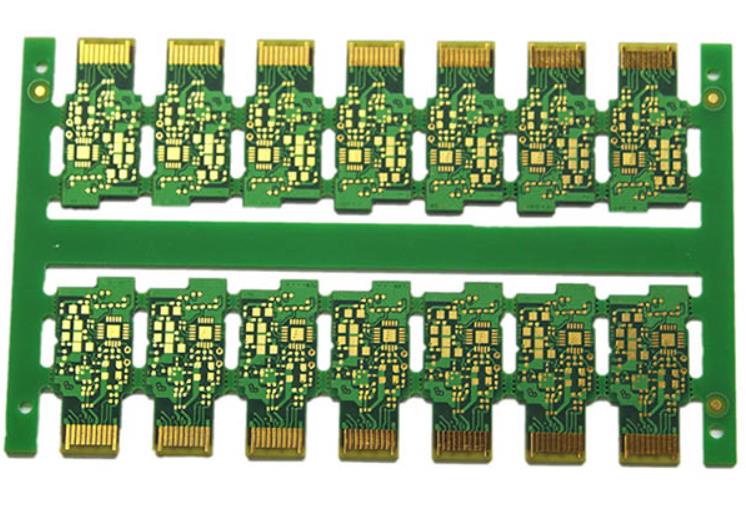
Most production boards use one of four insulation families. FR-4 remains the default choice for general electronics because it balances cost, strength, and electrical performance. Standard FR-4 laminates typically sell in the range of USD 6 to 12 per square meter, with high-Tg and low-loss versions priced at the upper end. For the majority of consumer, industrial, and communication products, FR-4 is the practical baseline.
Polyimide film and polyimide-based laminates serve applications that face extreme heat or repeated thermal shock. With prices around USD 18 to 35 per square meter, they cost noticeably more than FR-4 but tolerate operating temperatures that would degrade standard epoxy. PTFE materials, often sold under brand names such as Rogers or Taconic and used for high-frequency circuits, sit at USD 25 to 45 per square meter and deliver very low dielectric loss for RF and microwave designs. Ceramic substrates are the premium option at USD 60 to 120 per square meter, offering outstanding thermal spreading and stable dielectric behavior for power modules and demanding RF circuits.
Cost Comparison: From Budget-Friendly to High Performance
If the four families are ranked from best value to premium, FR-4 sits at the bottom of the price curve, followed by polyimide, then PTFE, with ceramic at the top. The spread is explained by process difficulty and material composition. Ceramics must be formed and sintered with precise control, which requires specialized equipment and slow, careful processing. PTFE is difficult to handle because of its softness and low surface energy, which complicate drilling, plating, and solder mask adhesion.
Polyimide costs about 25 to 35 percent more than an equivalent FR-4 grade. That premium buys a much higher continuous operating temperature and better resistance to solder heat, making it a rational investment for automotive engine compartments, aerospace electronics, and downhole instruments rather than for a consumer device that never gets hot. Understanding where each material fits prevents both over-specification and costly field failures.
How Applications and Industries Change Insulation Costs
Industry requirements translate directly into material bills. Automotive electronics often demand high-Tg FR-4 or polyimide to survive under-hood temperatures, adding roughly USD 3 to 5 per board compared with commodity material. Medical devices require certified, fully traceable laminates that pass biocompatibility and reliability documentation, adding about USD 2 to 4 per board. RF and 5G products move to PTFE or low-loss hydrocarbon laminates, which can add USD 8 to 12 per board, and industrial control systems that need long service life add roughly USD 1.5 to 3 per board for higher reliability grades.
The pattern is simple: the stricter the electrical, thermal, and safety requirements, the more insulation the application consumes and the more the material contributes to cost. Teams building rugged industrial PCBA products usually review laminate options early in the project, because changing material later means requalifying the whole board.
Regional Supply and Price Differences
Where a board is manufactured has a measurable effect on material cost. Chinese suppliers generally offer the most competitive pricing thanks to a mature laminate supply chain, with material costs averaging 10 to 25 percent below equivalent sourcing in North America. U.S. production tends to run 15 to 30 percent higher because of labor, environmental compliance, and smaller-scale material purchasing, while European manufacturers face strict environmental regulation that can push costs 20 to 35 percent above the Chinese baseline.
Freight adds another variable. Shipping laminate or finished boards typically costs USD 1 to 3 per kilogram depending on destination and mode, which is why global buyers often consolidate orders and choose nearby distribution points. For medium and large production runs, the combination of competitive material pricing and an established supply chain is the main reason many OEMs source insulation-heavy boards from Asian manufacturers.
Layer Count, Thickness and High-Tg Grades
The amount of insulation a board consumes grows with layer count. A two-layer board uses only one core laminate and minimal prepreg, keeping material cost near the baseline. Moving to six layers adds roughly 10 to 18 percent in insulation material cost, and ten layers or more pushes that to 25 to 35 percent because every additional pair of layers needs another prepreg bond and more process steps. Thicker boards and boards with heavy copper also consume more resin and glass per unit area.
High-Tg formulations change the calculation as well. Grades with a glass transition temperature of 170 to 200 degrees Celsius use modified epoxy or specialty resin systems that cost more to synthesize, typically adding USD 0.8 to 2.2 per square meter. The premium is worthwhile for lead-free assembly, power electronics, and any product that must survive repeated thermal cycling without delamination.
Advanced Insulation Technologies and Their Cost Impact
Newer laminate technologies are entering high-volume production as data centers and electric vehicles raise the performance bar. Low-Dk and low-Df dielectric systems keep high-speed signals clean at 25 Gbps and beyond, halogen-free epoxy meets environmental targets while retaining flame resistance, and high-Tg resin systems in the 170 to 200 degree Celsius range support dense power delivery. These advanced systems typically add USD 4 to 16 per board, which is easy to justify for AI servers, optical modules, and EV charging infrastructure where signal integrity or thermal stress decides product success.
Buyers should note that advanced does not always mean better for every project. A low-loss material on a board that carries only slow control signals adds cost without benefit. The smart approach is to match the dielectric system to the actual signal speed, temperature range, and reliability target of the product, which is exactly the kind of engineering review a good PCB manufacturing partner can support with measured data rather than marketing claims.
How to Reduce PCB Insulation Material Costs
Procurement teams have several proven levers for controlling insulation spend. Volume purchasing is the most direct: consolidated orders and annual agreements typically save 8 to 20 percent against piecemeal buying. Material substitution is next, where an engineer replaces an over-specified grade with a closely matched standard one after reviewing actual electrical and thermal requirements. Competitive bidding between qualified suppliers keeps prices honest, and using locally available materials cuts freight and lead time.
The most common mistake is specifying high-Tg, low-loss, or high-frequency material out of habit. Unless reliability testing or signal analysis proves the requirement, a standard FR-4 grade usually delivers the needed performance at a fraction of the cost. Reviewing datasheets, comparing real loss tangent and Tg figures, and testing prototypes before volume commitment keeps quality high without inflating the budget.
How to Evaluate a PCB Insulation Supplier
Price is only one dimension of a laminate supply decision. Responsible suppliers hold IPC-4101 certification, carry UL recognition for their material families, and can document dielectric property control with batch test data. Long-term relationships with base material mills matter because they smooth supply during shortages and give buyers access to the latest grades before they become general knowledge.
For the board fabricator, the equivalent questions concern process control: how consistently they handle moisture-sensitive laminates, whether they can produce controlled impedance layers, and how they document incoming material certificates. When boards carry safety-critical functions, traceable material records let a quality management system trace any field failure back to a specific lot, which is far more valuable than a small price saving on a single order.
PCB Insulation Material Price Outlook
Market signals for the coming year point to stability with a few clear trends. FR-4 prices are expected to remain steady as glass and epoxy capacity normalizes. Polyimide demand should keep growing at roughly 3 to 8 percent annually, driven by EV power electronics and industrial automation. Ceramic substrates face raw material constraints and are projected to rise 10 to 12 percent, while PTFE pricing is stabilizing as 5G infrastructure matures and production scales. Green, halogen-free insulation systems are growing fastest of all, pushed by European directives and corporate sustainability programs.
For planning purposes, buyers should lock annual volumes for commodity FR-4, hedge specialty materials with longer purchase cycles, and revisit specifications every product generation. Component and material availability changes quickly, and the teams that review their insulation choices regularly avoid both shortages and unnecessary premiums.
PCB Insulation Material FAQ
Q1: Why is ceramic insulation the most expensive? Ceramic substrates need precision forming and sintering at high temperature, slow and specialized processes that carry much higher equipment and energy costs than epoxy lamination.
Q2: Is polyimide worth the extra cost? For aerospace, EV, and industrial applications with proven high-temperature or thermal-cycling requirements, the premium pays for itself through fewer failures. For cool-running consumer devices it is usually unnecessary.
Q3: Do small orders affect insulation material pricing? Yes. Small-batch buyers typically pay 15 to 30 percent more per unit because laminate suppliers and fabricators spread setup and sourcing overhead across fewer boards.
Q4: Will insulation prices fall next year? Forecasts expect only limited declines, because semiconductor and electronics investment keeps demand high, while ceramic and specialty grades may continue rising.
Q5: How should I choose between FR-4 and high-Tg FR-4? Compare your maximum operating temperature, soldering profile, and thermal-cycling exposure against the material datasheet. Use high-Tg only where the analysis shows standard FR-4 is marginal.
Conclusion
PCB insulation material is a quiet but decisive part of every electronics budget. The right laminate keeps signals clean, survives heat and vibration, and protects the product through years of service, while the wrong one creates field failures that no assembly process can fix. Start from real requirements, compare FR-4, polyimide, PTFE, and ceramic on price and performance, and verify supplier credentials before committing large volumes. Working with an experienced fabricator that can advise on material grades, run prototype PCB assembly quickly, and document material traceability makes the whole process faster and safer for products of every size.