Bare Board PCB Price Guide: 2025 Cost Factors and Quotes
Bare board pricing is one of the first questions every hardware team asks, and for good reason. The bare PCB is the physical foundation of every electronic product, and its cost often represents a large share of the total manufacturing budget. Engineers, procurement professionals, and hardware startups all need to understand how much a bare board PCB price should be, why quotes differ so much between suppliers, and how to control costs without sacrificing quality. This guide explains what a bare board is, the factors that drive its price, typical 2025 price ranges, and practical ways to obtain accurate, competitive quotes.
What Is a Bare Board PCB?
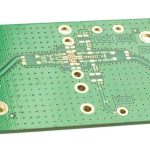
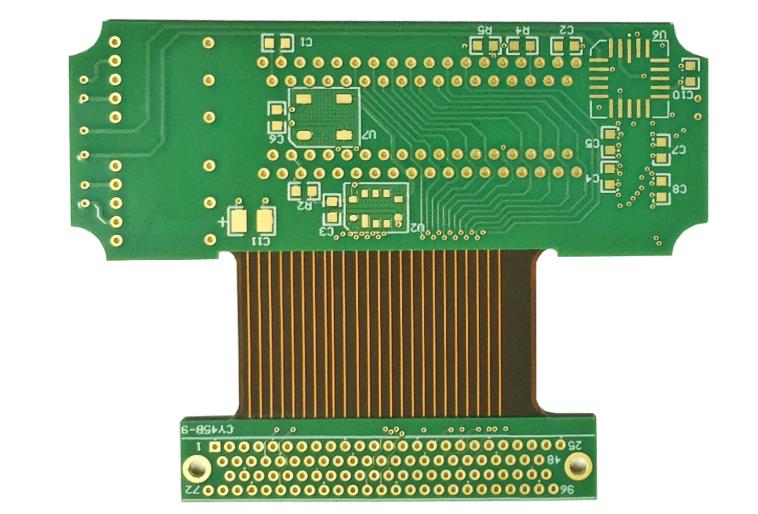
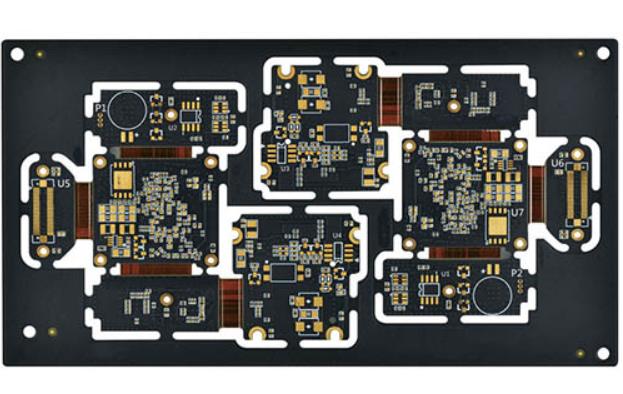
A bare board PCB is a fabricated circuit board before any electronic components are soldered onto it. It consists of an insulating base material such as FR-4 or polyimide, copper foil traces, plated holes, and a protective surface finish. The bare board is the skeleton of the final product: it mechanically supports components, routes electrical signals, and provides the foundation for assembly. Its quality determines how reliably the finished product will perform, which is why the lowest-priced board is not automatically the cheapest choice over the life of a product.
Understanding bare board pricing matters because fabrication cost depends on a long list of technical choices. Material type, layer count, copper thickness, surface finish, hole density, impedance requirements, quantity, and lead time all move the price in different directions. A team that knows how these variables interact can negotiate better quotes, avoid paying for unnecessary specifications, and budget accurately from the first prototype to volume production.
Main Factors That Determine Bare Board PCB Price
Several dimensions dominate fabrication cost. Material is the first: FR-4 is the most economical and common choice, while aluminum-based and polyimide materials cost more. Layer count is second, because more layers mean more lamination cycles, more drilling, and more process steps. Copper thickness also matters, since heavier copper consumes more material and takes longer to etch. Surface finish adds its own premium, with ENIG costing more than HASL or OSP.
Order quantity and lead time round out the list. Small batches spread tooling and setup costs over few boards, pushing the unit price up, while large orders amortize those costs and bring the price down. Express deliveries command a surcharge because they reserve production capacity and reorder the factory schedule. Every one of these levers should be visible in a detailed quotation, and buyers should compare quotes on the same specification rather than on price alone.
Typical Bare Board PCB Price Ranges in 2025
Market prices for standard fabrication give a useful starting point. One- and two-layer FR-4 bare boards typically cost about USD 0.8 to 1.5 per piece at moderate volume. Four-layer standard boards generally run from USD 3 to 5 per piece, while six- to eight-layer high-density boards land between USD 6 and 10 per piece. Quick-turn prototype services, which produce a small number of boards in a few days, are usually quoted per order rather than per piece, with typical prices of USD 25 to 40 per run for simple designs.
These figures shift with specification and region, but they establish a realistic reference for budgeting. A quote far below the range for a multilayer board deserves scrutiny, since corners are usually cut in materials, inspection, or copper quality. A quote far above it may simply reflect unnecessary requirements that can be redesigned away with the help of a fabrication review.
Price Differences by Application
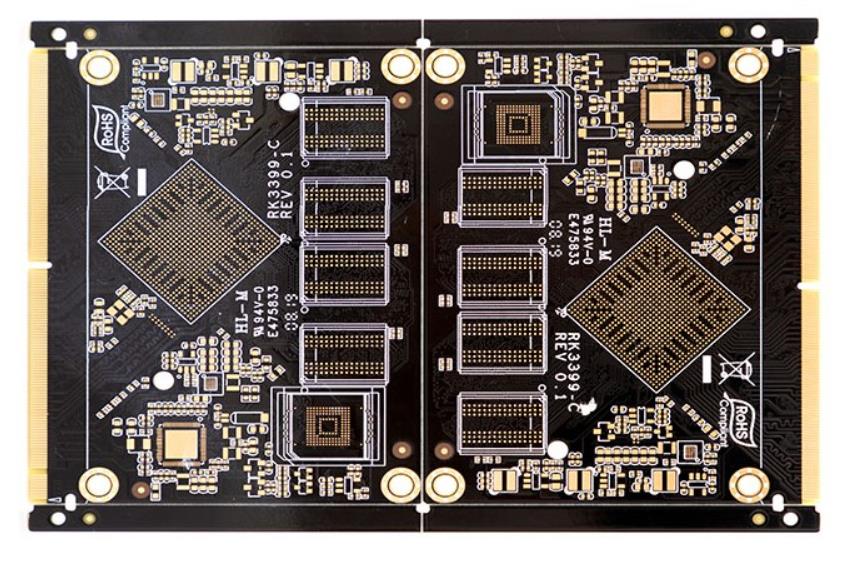
Application requirements translate directly into price tiers. Consumer electronics boards usually cost USD 0.8 to 2.5 per piece because they use standard FR-4, simple stack-ups, and commodity finishes. Automotive electronics boards run from USD 4 to 6 per piece when high-Tg materials and tighter reliability requirements are specified. Medical devices sit at USD 6 to 9 per piece thanks to strict quality control and traceability, and aerospace or defense boards range from USD 8 to 12 per piece because they demand special materials, controlled processes, and full documentation.
The pattern is consistent: every additional reliability requirement adds process steps and inspection, and those costs appear in the unit price. Teams working in regulated industries should expect this premium and plan for it, while teams in consumer markets should avoid inheriting unnecessary automotive or medical specifications that only inflate cost.
How Order Quantity Affects Price
Batch size is one of the strongest price levers in PCB fabrication. Prototype orders of one to ten boards typically carry a unit price 20 to 40 percent higher than the volume baseline because panel utilization, tooling, and setup are spread across very few pieces. Small-batch production of roughly 50 to 200 boards averages USD 2.5 to 4 per piece for a standard four-layer design. Volume orders above one thousand boards can push pricing below USD 1 per piece for simple constructions, since everything is amortized over a large panel count.
Buyers can capture some of these savings even at low volume by panelizing multiple designs onto shared panels, standardizing materials, and consolidating orders. Many fabricators offer staged pricing, so it pays to ask for the price break at 250, 500, and 1000 pieces even when the current order is small. Planning a product family’s boards together often unlocks quantity discounts that separate projects would never reach.
Regional Price Comparison: China, the US and Europe
Manufacturing location still shapes bare board costs. Chinese fabricators typically quote a four-layer standard board around USD 3.5 to 4.5, supported by automated lines, mature material supply, and fast delivery. US production averages USD 6 to 8 for the same board because of higher labor and setup costs, while European manufacturers quote USD 7 to 9 when strict certifications and local logistics are included.
The difference does not mean quality is higher in one region than another; modern Chinese factories operate to the same international standards and ship worldwide. Rather, the regional gap reflects labor rates, overhead, and supply-chain position. For cost-sensitive volume production, sourcing from Asia remains attractive, and for specialized military or regulated work, local fabrication may be mandatory regardless of price.
Materials and Surface Finishes: What They Add
Material choice is the largest single cost variable after layer count. Standard FR-4 boards typically cost USD 0.8 to 2 per piece, aluminum IMS boards for heat-sensitive LED and power designs run USD 3 to 5, polyimide flex circuits USD 4 to 7, and high-frequency Rogers laminates USD 8 to 12. Surface finish adds a smaller but visible premium: HASL is the economical default, OSP is a low-cost, environmentally friendly option, and ENIG adds roughly USD 0.3 to 0.6 per board in exchange for flat pads, corrosion resistance, and longer shelf life.
The right combination depends on the product’s environment and assembly process. A consumer board assembled within weeks can use OSP or HASL confidently. A board that must survive humid storage, fine-pitch assembly, or repeated rework justifies ENIG. High-frequency designs need laminates whose dielectric properties are controlled, and no amount of cost cutting should trade away the material the circuit actually requires.
Extra Costs to Expect in a Quote
Beyond the base price, quotations typically include several optional or process-driven charges. Drilling and plated through-holes add cost per hole, with complex backplane or microvia designs costing more. Non-standard solder mask colors or silkscreen logos carry small setup charges, usually USD 5 to 10 per order. Electrical test and AOI add about USD 0.05 to 0.15 per board, and international shipping plus duties vary with destination and service level.
Transparent suppliers list these line items so buyers can compare apples to apples. A quote that bundles everything into one number is harder to evaluate, and a quote that omits testing may look cheaper while delivering boards with undetected defects. Clarify exactly what is included in the price, especially whether electrical testing, impedance coupons, and material certificates are part of the standard offer.
How Fabricators Keep Prices Competitive
Cost control inside a factory follows predictable principles. Automated production lines reduce labor cost per board, and large-volume purchasing of laminate, copper foil, and chemicals lowers material spend. Efficient process flows shorten cycle time and raise yield, which reduces waste, and engineering support such as free DFM review catches design issues before they become scrap. These advantages show up in the quote as competitive pricing with reliable quality.
Buyers should look for the same signs when evaluating a supplier: automation, material partnerships, yield data, and DFM support. A fabricator that reviews Gerber files before production saves the customer money by preventing avoidable re-spins. Many manufacturers offer a PCB design layout review as part of the quotation process, which is a fast and free way to identify cost drivers in the artwork.
How to Reduce Bare Board PCB Cost Without Losing Quality
Most unnecessary cost is designed into the board before the quote arrives. Keeping layer count at the minimum that routing allows is the biggest lever, followed by using standard thicknesses such as 1.6 mm and standard copper weights. Specifying very tight line width and spacing tolerances only where real signals require them avoids expensive process constraints across the whole panel. Panelizing multiple designs together and ordering in round quantities reduce waste and setup charges.
Material substitution deserves attention as well. Standard FR-4 grades cover the majority of applications, and high-Tg, low-loss, or high-frequency laminates should be chosen only when electrical or thermal analysis demands them. Surface finish should match the assembly process and shelf-life needs instead of following habit. Taken together, these decisions routinely cut fabrication cost by 20 to 40 percent while leaving performance unchanged.
Quick-Turn vs. Standard Lead Times
Delivery speed is a direct cost factor. Standard production runs on a normal schedule of about 7 to 10 days at regular prices, while rapid prototype services can deliver in 24 to 48 hours for a premium of roughly 20 to 30 percent. Quick-turn pricing is attractive during development, when iteration speed matters more than unit cost, but it should not become the default mode for repeat orders.
Experienced teams separate the two channels: they use express prototyping for design validation and schedule volume orders on standard lead times. Combining the prototype and production order with the same PCB manufacturing partner also keeps stack-up, materials, and process parameters consistent between phases, which avoids the classic problem of a prototype that behaves differently from the production board.
Getting Accurate Quotes Online
An accurate quotation starts with complete information. Provide Gerber files with the layer count clearly documented, the board dimensions and thickness, the copper weight, the surface finish, the solder mask and silkscreen colors, and any impedance requirements. State the target quantity and the desired lead time, plus the destination for shipping. With this information, most manufacturers can quote a standard design within hours rather than days.
Many fabricators now provide online quotation tools that return prices instantly and allow side-by-side comparison of material, finish, and quantity options. Using such a tool to explore scenarios before contacting sales teams saves time and reveals which specification changes have the biggest effect on price. For complex boards, request a DFM review together with the quote, and ask whether the price includes electrical testing and shipping.
Bare Board PCB Price Outlook
Market trends point to gradual upward pressure through 2030. IoT and automotive electronics are increasing demand for higher-layer-count boards, and raw material price fluctuations are expected to raise laminate costs by roughly 5 to 10 percent over the next several years. Environmentally friendly materials are becoming mainstream as manufacturers invest in halogen-free production lines and cleaner processes, and these materials carry a modest premium that will narrow as volumes grow.
For buyers, the practical response is the same as always: lock in annual pricing with preferred suppliers, review designs for unnecessary specifications, and qualify multiple sources for critical materials. Companies that manage the relationship between design choices and fabrication cost will keep their hardware competitive even as the market price drifts upward.
Bare Board PCB Price FAQ
Q1: What is the minimum order quantity for bare boards? Many manufacturers accept as few as five pieces for prototyping, and most support small-batch orders between 50 and 200 pieces without major penalties.
Q2: How can I lower the cost of boards sourced from China? Simplify the design, stay with FR-4 and standard thicknesses unless analysis shows otherwise, and consolidate orders to reach higher quantity tiers.
Q3: What are typical prototype and production lead times? Rapid prototypes often ship in 48 to 72 hours, while volume production generally takes 7 to 10 days depending on layer count and quantity.
Q4: Are there hidden fees in PCB quotes? A transparent quote itemizes tooling, testing, and shipping. Ask explicitly whether electrical test, DFM review, and delivery are included before comparing offers.
Q5: Does a higher price guarantee better quality? Not automatically. Compare capabilities, certifications, test coverage, and references; the cheapest quote that still includes full testing is usually the best value.
Conclusion
The bare board PCB price is shaped by a handful of controllable decisions: materials, layer count, finish, quantity, and lead time. Teams that understand these levers can budget accurately, negotiate effectively, and avoid paying for specifications they do not need. Quality still comes first, because a cheap board that fails in the field is the most expensive option of all. Working with a transparent prototype PCB assembly and fabrication partner that offers DFM review, clear quotations, and consistent process control turns bare board sourcing from a gamble into a predictable part of the product plan.