PCBA Order Review Process: Verification and Quality Guide
The PCBA order review process is the technical and quality review completed before a PCB assembly order is released to production. During this stage, the manufacturer checks the process documents, hardware design, materials, equipment, and test plan against the customer’s requirements. Order review prevents ambiguous specifications and missing details from becoming production problems. It is often described as a rehearsal for the full build because the factory resolves as many risks as possible before the first board is assembled.
This guide explains the main verification points in PCBA order review and how they support a smooth manufacturing process.
Order review also creates a written record of decisions. If a question is answered during a phone call, the final review document should record the approved answer so the same question does not come up again during production.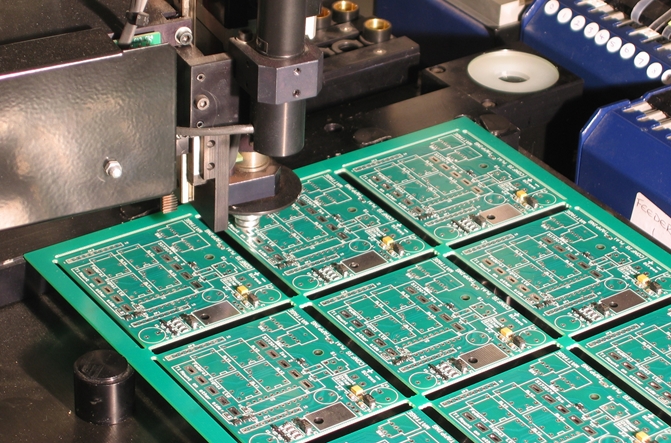
Why Order Review Matters
An order can be technically complete but still contain hidden risks. The BOM may list a long-lead component, the board design may require a process the factory has not qualified, or the customer’s quality standard may be different from the factory’s default.
Order review gives both sides a chance to identify and solve these issues before material is purchased or tooling is started.
When the review is thorough, production starts with clear instructions, approved files, and a realistic schedule. This reduces change orders, delays, and rework.
The document review should include the customer drawing, Gerber files, BOM, assembly drawing, special process instructions, and packing requirements. Every document must be controlled to the correct revision before it is used in production.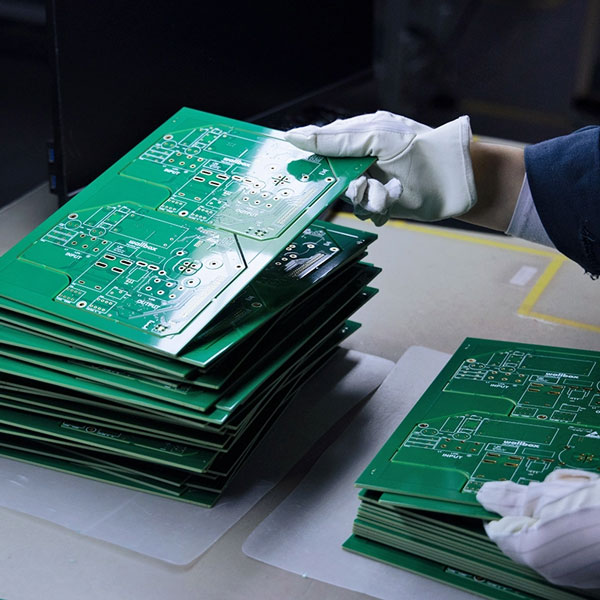
Reviewing Process Documents
The first verification point is the manufacturing process document. It defines how the PCB will be fabricated, assembled, tested, and packed. Any ambiguity in these instructions can cause the factory to make assumptions that do not match the customer’s intent.
The review should confirm process parameters such as soldering temperature, conveyor speed, solder paste volume, and surface finish. The chosen parameters must match the board material and component types.
Process flow should also be optimized for the specific board. A product with many fine-pitch BGAs may need a different inspection route than a simple through-hole board.
Standards should be understood as minimum requirements, not limits. A customer may need a stricter cosmetic class or a higher solder joint inspection level than the standard default. These details should be written into the order review document.
Aligning Standards and Requirements
The factory should align the order with international standards and any customer-specific quality, compliance, or delivery requirements. IPC-A-610 is commonly used for assembly acceptance, while IPC-6012 may apply to the bare PCB.
The customer may also require a particular cleanliness level, conformal coating, or test coverage. These requirements should be documented in the order review so there is no disagreement later.
Standards should be selected based on the product’s final application, not on the lowest manufacturing cost.
For complex products, the review may also include signal integrity checks. The placement of high-speed lines, ground references, and shielding should be evaluated before the board is released to the factory.
Hardware Design Verification
The hardware design is reviewed for manufacturability and performance. Component placement should consider heat, signal integrity, and mechanical assembly. High-power parts should not crowd sensitive analog or communication circuits.
DFM review checks pad size, component footprints, solder mask openings, and spacing. The goal is to ensure the board can be built efficiently with automated equipment.
DFT review verifies that test points and probe access are available for ICT and FCT. A design that cannot be tested will cause delays during quality control.
Panel layout is another DFM consideration. The number of boards per panel affects material use, cost, and the amount of edge waste. Order review should confirm that the panelization design supports both assembly and depaneling.
DFM Verification Points
Minimum trace width, spacing, via size, and annular ring should be within the factory’s process capability. Very fine traces may require special imaging equipment and higher inspection standards.
Component orientation should follow the assembly program, and polarity marks should be clear. Thermal relief is needed for connections to large copper planes to prevent soldering problems.
The board outline, tooling holes, and edge rails should support panelization and handling during production.
Test coverage should also consider firmware and boundary scan. If the board uses a JTAG chain, the review should confirm that all required devices are accessible through the test interface.
DFT Verification Points
Test points should be large enough for probes and placed at a consistent spacing. Components should not block access to pads that must be tested.
The review should confirm that the test strategy matches the product. A board with a microcontroller may need programming and functional test, while a passive board may only need ICT.
Test fixture design should be considered early, especially for high-volume products where fixture cost is significant.
Component packaging should also be checked. Tape width, reel size, and feeder compatibility affect placement efficiency. If a part is only available in a package the factory cannot feed, the review must identify it before the order starts.
Material Verification
Material reliability is a key part of order review. The PCB laminate, solder mask, surface finish, and components must meet the product’s operating environment.
For high-temperature products, the material Tg and thermal expansion should be verified. For outdoor or medical products, the finish and coating must provide the necessary protection.
The component supply should also be confirmed. Long-lead items, obsolete parts, and restricted materials should be identified before production.
Special processes such as press-fit connectors, selective coating, or conformal coating should also be validated. The supplier should confirm that these processes can meet the required tolerance and reliability.
Equipment and Process Capability
The factory must verify that its equipment can produce the board to the required tolerance. Placement machines, reflow ovens, solder printers, and inspection systems should be suitable for the design.
Equipment calibration should be current, and the process parameters should be validated with a profile or test run before the full order.
If the board requires a capability the factory does not have, the review should identify this early so the customer can adjust the design or choose another route.
Environmental and Reliability Simulation
For high-reliability products, order review may include environmental simulation. Temperature cycling, humidity, vibration, and thermal shock testing can reveal weak areas before production.
Simulation is not always destructive. Thermal analysis and process modeling can help predict behavior, while physical samples provide final proof.
The required reliability test should be defined in the order review so it is included in the quote and schedule.
Documentation for testing should include the pass and fail criteria, the test report format, and the sampling rules when full testing is not required. This prevents different teams from using different definitions of a passing board.
Testing Plan Confirmation
The testing plan should be confirmed before production. The customer should know which boards receive ICT, FCT, X-ray, burn-in, or environmental testing, and what test coverage is included.
Test programs and fixtures should be ready before the first assembled board reaches the test station. This prevents the production line from stopping while a test problem is solved.
When testing is clear, the customer can trust the final quality records and the factory can release boards without confusion.
An effective review is also a communication tool. The engineering, quality, purchasing, and production teams should all confirm that the order is complete before it enters the schedule. Missing approval from one team can create a problem later.
When the review is complete, the approved package should be frozen for production. Any later change should require the same review process so the factory does not accidentally build to an outdated version.
How Order Review Supports Zero Defects
Most defects can be traced to information, design, material, or process problems that existed before assembly. Order review is the best time to find them because nothing has been committed to production yet.
By combining DFM, DFT, process validation, material checks, and test planning, the factory reduces the risk of batch defects and field failures.
This early effort also shortens the overall project schedule because production is less likely to be interrupted by engineering queries.
Choosing a Partner with Strong Order Review
Ask the supplier what it checks during order review and how it documents the results. A capable partner will identify real risks instead of simply accepting the files.
The review should include clear communication with the customer about any recommended design changes. A reliable PCB design and layout team can help optimize the board before assembly.
For full support, the manufacturer can combine order review with PCB manufacturing, SMT PCB assembly, and PCBA testing to verify the project from design through delivery.
Order review is not a formality that should be completed in a few minutes. It should receive enough time and expertise to protect the full production investment.
Conclusion
The PCBA order review process is a critical step between quotation and production. It verifies process documents, design quality, material readiness, equipment capability, and test coverage.
When order review is performed carefully, the factory can avoid unnecessary change requests, reduce production risk, and deliver reliable PCBA products on schedule.