SCADA PCB Guide: Industrial Circuit Boards for Control Systems
The Quiet Workhorse of Industrial Automation
SCADA, or supervisory control and data acquisition, is the nervous system of modern industry. It links remote sensors, controllers, and operators across power plants, water systems, pipelines, and factories, collecting thousands of measurements and acting on them in real time. Every RTU, PLC, gateway, and HMI in that chain relies on a scada pcb, an industrial-grade circuit board engineered to measure precise analog signals, communicate over noisy networks, and survive decades in hostile environments. This guide explains how SCADA boards are designed, what separates them from consumer electronics, and what they cost when specified and built correctly.
What a SCADA PCB Does Inside the System
SCADA architectures divide work between a central control center and distributed field equipment. Remote terminal units and programmable logic controllers sit near the process, reading sensors and driving actuators, while communication gateways move data back to operators over serial, Ethernet, or wireless links. The scada pcb in each device hosts the microcontroller, analog input conditioning, digital I/O drivers, communication transceivers, and the power supply that keeps everything stable. Because these boards run continuously in electrical cabinets, substations, and pump houses, their design priorities are precision, isolation, immunity, and reliability rather than speed or cost per square millimeter.
Surviving Heat, Cold, Humidity and Vibration
Industrial environments punish electronics. Enclosures bake in the sun and freeze at night, humidity condenses on boards, vibration loosens connectors, and power surges ride in on every cable. A scada pcb answers with high-Tg FR-4 or higher-performance laminates that hold dimensional stability across wide temperature swings, wider clearances and creepage distances for voltage isolation, and robust solder joints with adequate annular ring. Conformal coating is standard for humid and corrosive sites, protecting traces and components from condensation and chemical attack. Components are chosen with industrial temperature ratings, and the whole assembly is designed to meet surge, ESD, and fast-transient immunity requirements such as IEC 61000-4 series tests.
Precision Analog Design for Real Sensors
SCADA accuracy begins at the board level. Field signals arrive as 4-20 mA current loops, thermocouple and RTD voltages, or millivolt-level strain measurements, and the front-end circuitry must condition them without adding offset, noise, or drift. That means precision op-amps, tight-tolerance reference circuits, and careful layout that separates the sensitive analog section from switching digital noise. Analog and digital grounds need a deliberate return strategy, ADC references need clean supply decoupling, and every input should tolerate wiring faults and overvoltage. A well-designed scada pcb turns a noisy industrial signal into a trustworthy number the control room can act on.
Isolation, Protection and EMC
Field wiring connects directly to SCADA boards, which makes isolation and protection a design discipline rather than an option. Galvanic isolation through optocouplers, isolated DC-DC converters, and isolated transceivers prevents ground loops and protects control electronics from faults on the process side. Surge protection devices, TVS diodes, and series resistance clamp the energy that lightning and switching transients inject into long cable runs. On the emissions side, layer stack planning, filtering, and shielding keep switching regulators from contaminating measurement channels. Creepage and clearance are sized for the working voltage, and the layout is reviewed against EMC standards before the first prototype, because fixing immunity problems in firmware is usually impossible.
Communication That Survives the Factory Floor
SCADA nodes speak many dialects: RS-485 and RS-232 for legacy fieldbus, CAN for machine networks, and Ethernet for modern industrial protocols. Each physical layer has board-level requirements. RS-485 transceivers need termination planning and common-mode protection; CAN needs careful stub routing between nodes; industrial Ethernet magnetics and PHYs need isolation and controlled impedance. Antenna and radio sections, where wireless RTUs are used, add controlled-impedance traces and clean grounding so range and reliability stay predictable. A partner experienced with Industrial PCBA understands that the communication section is often where marginal designs fail first.
Manufacturing and Testing Standards
SCADA boards are usually built to IPC Class 2 with Class 3 features where the application demands extra margin, and to IPC-6012 for bare-board quality. Surface finish is typically ENIG for flat, corrosion-resistant pads on fine-pitch controllers and connectors, with lead-free HASL acceptable on simpler boards. Assembly quality is verified with automated optical inspection, in-circuit testing of every net, and functional testing that exercises analog channels, I/O, and communication ports. High-potential testing confirms isolation integrity on power and field sections, and temperature cycling or burn-in screens early failures. These test steps are what make field reliability predictable, and they are worth every dollar of the modest cost they add.
Cost Drivers and Realistic Ranges
The cost of a scada pcb scales with channel count, isolation requirements, and reliability margin. A simple RTU or gateway board in four to six layers with basic isolation typically costs USD 4-12 per bare board and USD 15-40 assembled at moderate volume. A channel-dense analog acquisition board with precision components, multiple isolated inputs, and heavy transient protection can run USD 25-80 assembled, while complex multi-protocol gateway or controller boards with high-Tg laminates, coating, and extended testing reach USD 60-150. Prototype runs add engineering charges, so first articles commonly cost USD 150-500 before per-unit pricing applies. Certification testing, where required, is budgeted separately but protects the product schedule.
Choosing a SCADA PCB Manufacturer
Evaluate suppliers on engineering support and process discipline, not just price. Ask for evidence of industrial and control electronics experience, review their handling of isolation, coating, and testing, and confirm they can scale from prototype to volume without changing quality systems. A full-service manufacturer that combines PCB manufacturing, PCB assembly, conformal coating, and PCBA testing under one roof gives you a single point of accountability for the board that your plant depends on.
Scaling From Prototype to Volume Production
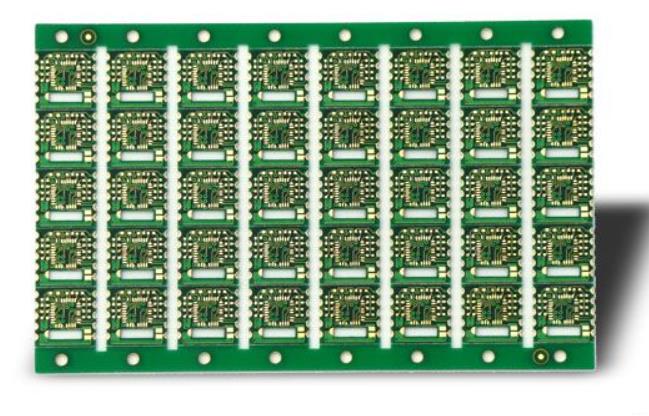
SCADA products move from field trials to full deployment faster than most industrial electronics, so choose a partner that can scale without re-qualification. The prototype that validated your design should be built on the same line, with the same materials, coating, and test fixtures as the production batch, otherwise field behavior can change mysteriously. Lock the specification with the factory: layer stack, materials, finish, coating thickness, test coverage, and acceptance criteria all belong in a written agreement. Volume pricing for a scada pcb improves with panel optimization and stable BOMs, and early involvement of the manufacturer’s engineering team in design-for-manufacture review reduces surprises.
SCADA PCB FAQ
Q1: What makes a PCB suitable for SCADA use? Industrial temperature ratings, wide isolation clearances, transient protection, precision analog layout, robust materials, and documented testing.
Q2: Do all SCADA boards need conformal coating? Not all, but humid, dusty, and chemical-exposed sites should coat the assembly to prevent corrosion and leakage paths.
Q3: How accurate can a SCADA analog input be? With precision references and careful layout, 16-bit and higher conversions are routine; field accuracy depends on sensor calibration and wiring as well.
Q4: What is the typical lead time? Prototypes usually ship in one to two weeks and production orders in two to four weeks depending on layer count and coating requirements.
Conclusion
A scada pcb earns its place by measuring accurately, communicating reliably, and surviving conditions that would defeat ordinary electronics. Specify the environment honestly, protect the signal chain, and test like the field depends on it, because it does. With the right manufacturing partner, industrial teams get control boards that run for years between service visits and report data operators can trust.