SMPS PCB: 2026 Cost Guide for Switch Mode Power Supply Boards
What a Power Supply Board Costs
Switch mode power supplies are the standard way modern electronics convert and regulate power, appearing in industrial controls, communications equipment, electric vehicles, medical electronics, LED drivers and power adapters. The circuit board inside, the smps pcb, carries MOSFETs, PWM controllers, transformers, inductors, rectifiers, filter capacitors and EMI components under real switching stress. Its price is not fixed: layer count, material, copper weight, power level, thermal design, quantity and assembly all move the quote. This guide explains 2026 pricing for SMPS PCBs, the factors behind it and how to reduce cost without weakening a power design.
What an SMPS PCB Must Handle
Unlike linear supplies, switch mode converters switch at high frequency, so the pcb must carry high current, hold high efficiency, spread heat well, control EMI and respect safety spacing. A typical SMPS board includes power MOSFETs, PWM control chips, a high-frequency transformer, inductors, rectifier diodes, filter capacitors and EMI filtering. Because switching creates noise and heat, manufacturing and materials requirements are stricter than for ordinary boards. Common applications include industrial power modules, AC-DC and DC-DC converters, LED drivers, battery chargers, medical equipment power, communication power and automotive electronics.
2026 Price Ranges
Pricing falls into clear bands by order size and power class. For custom SMPS boards, prototype runs typically cost USD 50-500 per design, small batches of ten to fifty boards USD 10-50 each, batches of one hundred to one thousand USD 2-15 each, and volumes above five thousand pieces roughly USD 0.1-5 each. Special designs cost more: high-power SMPS boards run USD 10-50 per board, aluminum-base switch power boards USD 8-40, and high-frequency switch power boards USD 20-100 or more for communication and RF power systems. As an example, a 100 by 80 mm two-layer SMPS board may cost about USD 100 as a sample and fall to USD 1-3 each at ten thousand pieces.
How Layer Count Affects Price
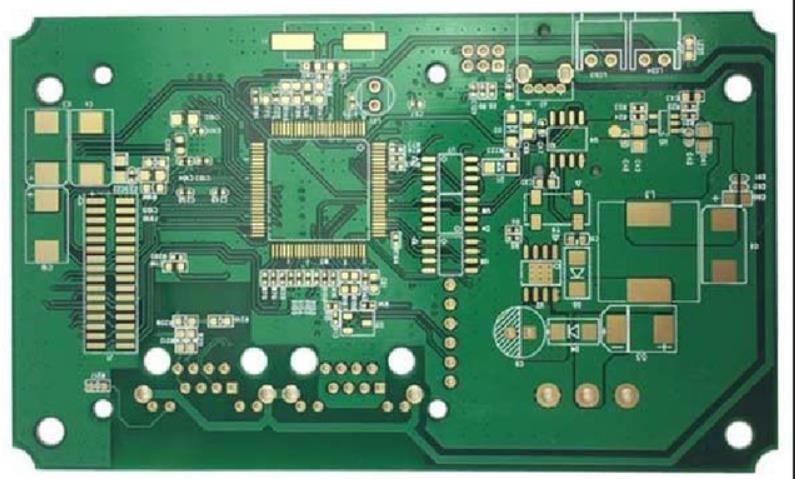
Layer count is a major price driver and follows power architecture. Two-layer SMPS boards are low cost, fast to produce and suited to simple power designs such as small adapters, LED drivers and consumer products, running about USD 0.1-5 per board in volume. Four-layer boards improve current distribution, lower EMI and spread heat better, suiting industrial power, communication equipment and high-reliability electronics at roughly USD 2-20 per board. Six-layer and higher constructions appear in high-power converters, avionics and premium energy systems, priced from USD 10-100 and above.
Material Cost Analysis
Material choice follows power level and environment. FR-4 is the most common SMPS board material because it is economical, mature in processing and electrically stable, with typical pricing from USD 0.1-10 per board for ordinary AC-DC supplies, industrial control power and consumer electronics. High-Tg FR-4 adds heat resistance, dimensional stability and longer life for industrial equipment and long-running power systems, typically adding 10-30 percent over standard FR-4. Aluminum-base or IMS boards deliver fast heat conduction, lower component temperature and higher reliability for high-power LED power, motor control and large conversion modules, priced around USD 5-40 per board. The rule is to match the material to the real thermal and reliability need instead of over-specifying.
Copper Thickness and Current
Because SMPS boards carry real current, copper weight is a central design and cost decision. 1 oz copper serves ordinary circuits, 2 oz suits medium and high current applications, and 3 to 6 oz serves high-power stages. Moving from 1 oz to 2 oz typically adds 10-20 percent cost, 3 oz adds 20-40 percent, and 6 oz can add more than 50 percent because etching and plating become harder. Thick copper buys current capacity, heat spreading and reliability, which is why high-current smps pcb designs usually combine thick copper on power paths with standard copper elsewhere, or split power onto a separate board where practical.
Prototype vs Volume Economics
Quantity changes the cost structure completely. Prototype work carries engineering fees, file processing, setup and manual inspection, which is why samples typically run USD 50-500 per design. As volume grows, unit cost falls quickly because engineering and tooling spread across more boards and panel utilization improves. A design that costs about USD 100 per sample can reach USD 1-3 per board at ten thousand pieces. For long-running products, consolidating orders and freezing the design is the single most effective way to lower PCB, processing and scrap cost.
Assembly and Test Costs
Complete SMPS PCBA adds component, placement and test cost on top of the bare board. Components, including MOSFETs, controller ICs, transformers, capacitors, resistors and protection devices, typically run USD 1-50 or more per board depending on power level. SMT placement carries engineering fees of about USD 50-300 for samples and can fall to USD 0.05-0.50 per board in volume. Power products also need high-voltage testing, functional test, burn-in and safety inspection, adding roughly USD 0.1-5 per board. Those tests are not overhead; they are what keep a power supply from failing in the field.
How to Reduce SMPS PCB Cost
Cost reduction follows design logic. Right-size the layer count, because a simple low-power supply works on two layers while a high-reliability industrial design earns four. Choose the material the application truly needs, using FR-4 for ordinary work, high-Tg for industrial environments and aluminum for high heat. Complete DFM optimization with the factory to improve line width, spacing, component layout and panelization, cutting scrap, rework and risk, and increase order quantity where the program allows. A partner providing PCB manufacturing with SMT assembly and PCBA testing can review the whole power board, thermal design and EMI plan before production, which is where most savings actually come from.
Safety and Isolation Design
Power boards carry mains or high DC voltage, so safety geometry is part of the design, not an afterthought. Creepage and clearance distances between primary and secondary circuits must follow the working voltage and the applicable safety standard, and slots or barriers are used where clearance is tight. The high-voltage area needs clear physical separation from low-voltage control and communication circuits, with proper spacing on every layer, not only the top. Fuse and protection components belong on the input path, and thermal relief and venting should be reviewed for high-current traces. These requirements affect board size, layer count and testing, so confirming the safety class with the factory during DFM prevents costly re-spins after safety testing.
Choosing an SMPS PCB Supplier
Supplier selection should verify power-specific capability: multilayer PCB production, thick copper processing, high-Tg material handling and aluminum-base board manufacturing, plus PCB assembly. Confirm quality certifications such as ISO 9001, UL and RoHS compliance, and look for engineering support that reviews the design for thermal, EMI and cost improvements. Lead times are also part of the decision: PCB prototyping typically runs seven to fifteen working days, small batches ten to twenty days, and volume production three to six weeks, so plan accordingly.
SMPS PCB FAQ
Q1: How much does an smps pcb cost? Standard boards run about USD 0.1-20 per board in volume, with samples USD 50-500 per design and high-power versions USD 10-100 or more.
Q2: Why do power boards cost more than ordinary PCBs? Thick copper, better heat spreading, EMI control, safety spacing and stricter manufacturing requirements all add cost.
Q3: Which material is best for a switch power board? FR-4 for ordinary supplies, high-Tg FR-4 for industrial environments and aluminum-base for high-heat products.
Q4: How long does SMPS PCB production take? Prototypes about seven to fifteen working days, small batches ten to twenty, and volume production three to six weeks.
Conclusion
The smps pcb is where efficiency, heat and reliability are won or lost in modern power design. Pricing reflects power level, materials, copper, layers and quantity, and the cheapest board is rarely the cheapest product once field failures are counted. By right-sizing layers and copper, matching material to environment and testing honestly with a capable manufacturer, power supply teams get boards that run cool, pass safety and last.