OSP PCB Cost Guide: 2026 Price and Selection Advice
What an OSP PCB Costs in 2026
An osp pcb uses an organic solderability preservative as its surface finish, a thin organic film that protects bare copper from oxidation while keeping pads solderable. OSP offers low cost, a very flat surface and good SMT compatibility, so it appears throughout consumer electronics, industrial control, automotive electronics, communications equipment, LED products, power hardware and high-volume PCB assembly. In 2026, ordinary OSP PCBs typically price from about USD 0.20 to USD 8.00 per board, with a standard two-layer FR-4 board in large volume often below one dollar. Multilayer, HDI, high-frequency, thick-copper and tight-impedance boards run higher, and the finish itself is rarely the dominant cost factor; material, layers, size, copper weight, feature size, hole diameter, quantity and special requirements usually move the quote far more.
Why OSP Is a Popular Surface Finish
Unlike HASL, ENIG or immersion silver, OSP does not deposit a thick metal layer on the copper. It applies a very thin organic film that prevents oxidation between fabrication and assembly, which keeps the surface flat and the solder joints reliable. OSP suits consumer products, industrial electronics, automotive boards, communication hardware, LED circuits, power supplies, computer hardware and large SMT programs that chase a balance of board cost, solderability and flatness. Flatness is the feature that makes OSP attractive for fine-pitch parts: there is no solder-coating buildup, so BGA and QFN pads sit on a level surface.
Reference Price by Layer Count
Layer count is a major price driver because every added layer brings inner layer imaging, lamination, drilling and plating cost. Two-layer OSP prototypes typically run USD 1.50-8.00 at five to twenty pieces, USD 0.80-2.50 around one hundred, and USD 0.20-1.20 at one thousand or more. Four-layer OSP boards cost about USD 1.50-4.50 per board at one hundred pieces and USD 0.50-2.00 in volume. Six-layer OSP boards run roughly USD 3.00-7.00 at small and medium quantity and USD 1.00-4.00 in volume. Eight-layer OSP boards sit around USD 4.00-10.00 or more at one hundred pieces and USD 1.50-5.00 at one thousand. These bands assume standard FR-4 and ordinary processing; HDI, blind and buried vias, microvias, impedance control and low-loss materials push every figure upward.
Prototype vs Volume Pricing
Order quantity has an outsized effect on per-board price because fabrication carries fixed costs: CAM engineering, material cutting, process preparation, tooling, drilling programs, test setup, line changeover and machine tuning. A design built at ten pieces carries all of that cost on ten boards, while the same design at ten thousand pieces spreads it thinly. That is why a simple 50 by 50 mm two-layer FR-4 OSP board can fall to a few cents over a dollar per piece in large volume, while a sample of a complex multilayer or HDI board stays at several dollars. Evaluate any OSP quote at the production quantity you actually intend to buy.
Finish Cost Compared With Alternatives
OSP is normally cheaper than ENIG because it skips the electroless nickel and immersion gold baths entirely, and it also tends to beat immersion silver on process simplicity. Compared with HASL, OSP costs similarly or slightly more in small lots but offers flat pads, which HASL cannot guarantee on fine-pitch designs. The choice is not purely price: ENIG earns its premium for fine-pitch reliability, corrosion resistance, metal contact surfaces and certain high-reliability applications, while OSP wins for cost-sensitive SMT boards without gold fingers, wire bonding or repeated mechanical contact. For a typical consumer or industrial SMT board, the flatness and cost of OSP make it a strong default.
OSP Advantages in Production
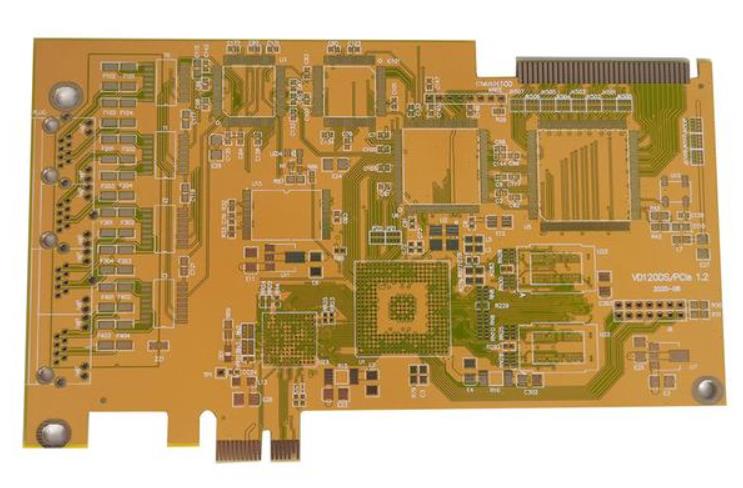
OSP boards deliver a flat, uniform pad surface that improves solder paste printing and fine-pitch placement consistency. The finish is lead-free by nature, which suits modern RoHS-compliant SMT lines, and the process is simpler than nickel-gold systems, giving standard projects a real cost advantage. Because the film is thin, board geometry stays close to the design value, which helps impedance-controlled and high-density boards hold tolerance. High-volume consumer and computer hardware has used OSP for decades precisely because it combines low cost with dependable soldering when the assembly process is controlled.
OSP Limitations to Plan Around
OSP film is thin, so the board is more sensitive to handling and storage than ENIG or HASL products. The factory must use proper vacuum or moisture-protective packaging, and the customer should store boards in a dry, temperate environment and assemble them within the manufacturer’s shelf-life guidance. Multiple reflow passes need validation against the specific OSP chemistry, solder paste and reflow profile. OSP is also not the right finish when pads must serve as long-term mechanical contacts or electrical contact surfaces, where ENIG, hard gold or another metal finish is more appropriate.
When OSP Is the Right Choice
Choose OSP when the product is price sensitive, assembled by SMT, produced in volume, needs good surface flatness, uses BGA or QFN devices, runs on standard FR-4 and follows lead-free reflow. Avoid it when the design has gold fingers, needs wire bonding, requires repeated mechanical contact or will sit unassembled for a long period without controlled storage. A consumer electronics manufacturer building hundreds of thousands of units a year is the classic fit: with no metal contact surfaces required, OSP controls board cost while SMT performance stays high.
Selecting an OSP PCB Supplier
Supplier selection for an osp pcb should not stop at unit price. Look for stable OSP finish quality, consistent solderability, controlled copper thickness, precise drilling, AOI inspection, electrical test, impedance verification, RoHS-compliant material, traceability and dependable lead time, plus sample-to-volume consistency. The practical test is whether the supplier can move from prototype to small batch to mass production without drifting finish quality. Partnering a fabricator with PCB manufacturing and SMT assembly under one quality system removes storage and handling risk between board delivery and placement, with PCBA testing confirming solderability end to end.
OSP PCB FAQ
Q1: How much does an OSP PCB cost? Ordinary boards run about USD 0.20-8.00 each in 2026 depending on size, layers, quantity and features, with simple two-layer boards below USD 1 in volume.
Q2: Is OSP cheaper than ENIG? Usually yes, because OSP does not require electroless nickel and immersion gold layers.
Q3: Is OSP good for SMT? Yes; its flat surface and solderability make it a common finish for SMT boards.
Q4: Can OSP be used for BGA? Yes, the flat surface suits fine-pitch devices, but fabrication and assembly must be controlled.
Q5: How long can OSP boards be stored? Shelf life depends on chemistry, packaging and storage conditions; sealed packaging in a dry environment keeps oxidation risk low.
Estimating Your OSP Price
The fastest way to a realistic estimate is to hand the manufacturer a complete set of inputs instead of asking for an OSP finish price alone. Provide the Gerber files, board dimensions, layer count, base material, copper weight, minimum trace and space, minimum hole size, impedance requirements, surface finish specification, order quantity and test requirements. From that data the factory can price material, processing steps, panel utilization and test coverage accurately. A board quoted only as an osp pcb with no layer and quantity information will always return a wide range, because the finish contributes a small share of cost while the rest of the design determines the real number.
Conclusion
OSP remains one of the most cost-effective PCB finishes in 2026, combining low price, flat pads, lead-free compatibility and strong SMT performance. A two-layer FR-4 OSP board can cost under one dollar in volume, while multilayer, HDI, high-frequency and thick-copper versions cost more. Judge the finish by the whole manufacturing picture, size, layers, material, copper, features, quantity and testing, and it will serve cost-sensitive electronics well.