BOM Sourcing and Part Substitution
Why the BOM Decides the Project
A bill of materials looks like a list, but it behaves like a schedule. Every line carries a part number, a package, a tolerance, a temperature grade and a supplier, and any one of those fields can stop a build. Sourcing is therefore not a purchasing task that happens after design; it is a design constraint that runs in parallel with the schematic. The projects that ship on time are usually the ones where someone treated the BOM as an engineering document and reviewed it line by line before the first purchase order.
What Belongs in the BOM
A production BOM has to be more than a shopping list. Each line should carry the manufacturer part number, the manufacturer, a description, the reference designators, the quantity per assembly, the package, the tolerance and the temperature range, and a note on whether the part is critical. A line with only a distributor part number is a line that will break when that distributor changes its stock. Where a part is available from several manufacturers, listing the approved alternates in the same row removes a decision from the shop floor and gives purchasing room to manoeuvre.
MPN, AVL and the Difference
The manufacturer part number identifies the exact device. The approved vendor list, by contrast, records which manufacturers are acceptable for a given function and which alternates have been qualified. Confusing the two leads to trouble: a buyer who substitutes a part that meets the electrical description but not the qualified source is making an engineering decision without the data. The useful rule is that the BOM names the primary part and the AVL names the substitutes, and a substitution is allowed only when the alternate appears in the AVL and the change is recorded.
Substitution and Form, Fit and Function
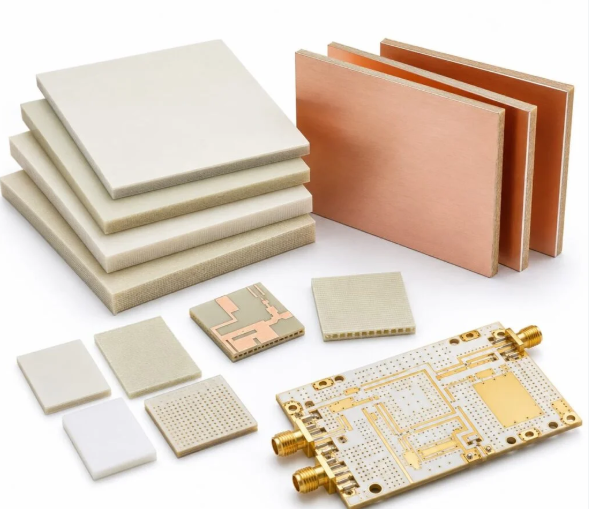
Most substitutions are safe and some are not, and the difference is usually form, fit and function. A resistor that differs only in tolerance may be interchangeable; a capacitor that differs in dielectric, voltage rating or equivalent series resistance may not be, even when the capacitance and the case size match. Regulators differ in transient response, connectors differ in plating and mating cycles, and crystals differ in load capacitance and stability. The evaluation should ask what the part actually does in the circuit, then confirm that the alternate does the same job across the full temperature range and not only at room temperature. A substitution that is only checked in a bench prototype may fail in the field.
Second Sourcing Without Losing Control
Second sourcing is the practice of qualifying more than one manufacturer for the parts that matter, and it trades a small amount of qualification work for a large reduction in supply risk. The parts worth second sourcing are the long lead time items, the single sourced devices and anything with a history of allocation. The trap is that a second source qualified on paper is not a second source in practice: the alternate has to be built and tested, its process window checked and its reliability data reviewed. Where the alternate is qualified only by datasheet comparison, the first production build becomes the experiment, which is the outcome second sourcing was meant to avoid.
Obsolescence and Last Time Buys
Parts do not last forever. A device reaches end of life, a wafer fab closes, and a part that was in stock last quarter becomes a last time buy with a deadline. The defence is an early warning system: a lifecycle status on every BOM line, monitored rather than checked once, and a review that flags any part entering the last time buy window with enough time to qualify a replacement. Where a last time buy is unavoidable, the quantity has to cover the production plan plus the projected service demand, and the storage conditions have to match the part, because a moisture sensitive device bought today and stored badly will not survive until the day it is needed.
Lead Time, MOQ and Price Breaks
Sourcing decisions are shaped by lead time, minimum order quantity and price breaks, and those three interact. A part with a long lead time can sometimes be replaced by a slightly more expensive one that ships in a week, and the saving in schedule is usually worth more than the difference in unit price. A price break can push a buyer to purchase more than the build needs, which turns into inventory that may itself become obsolete. The practical approach is to price the schedule as well as the part, and to treat expediting fees, air freight and the cost of a line stoppage as part of the total cost rather than as exceptions.
Keeping the BOM Under Control
A BOM drifts unless it is governed. Change is normal, but an unrecorded change is a defect waiting to happen, so every substitution, every quantity change and every reference designator move should carry a revision, a reason and a date. Where the same product is built at more than one site, the BOM and the AVL have to be identical at both, otherwise the two lines produce different assemblies that carry the same part number. A periodic review that reconciles the BOM against the schematic, the AVL and the physical build is cheap insurance, and it catches the small errors that grow into a scrapped lot.
FAQ
What is BOM sourcing? The work of turning a bill of materials into parts that can actually be bought, qualified and built, including lead time, availability and second sourcing.
Is substitution always allowed? No. A substitute must be qualified for the function it performs, not merely match the description, and the change must be recorded.
What is the difference between MPN and AVL? The MPN identifies an exact device; the AVL lists which manufacturers and alternates are approved for a function.
When should a part be second sourced? Whenever it is long lead time, single sourced or historically allocated, and before the problem appears.
How do I handle obsolescence? Track lifecycle status on every line, act on last time buy notices early, and store bought-out parts to their required conditions.
Conclusion
Sourcing is a design discipline: qualify alternates, keep the AVL current, watch lifecycle status and price the schedule as well as the part. A BOM that is governed will build; one that is merely stored will surprise someone. Material planning connects to PCB manufacturing, the build itself sits in PCB assembly, and initial qualification belongs to prototype PCB assembly. Supplier quality is part of quality management in 2026.