Electronic Product Development Partners: Three Models Compared
Choosing an electronic product development partner looks like a procurement decision and behaves like an engineering one. The candidates may all be able to draw a schematic, and the difference only becomes visible once the requirements are unclear, the first prototype misbehaves, or the product has to move into production without losing its documentation.
That is why the useful comparison is not a list of past projects. It is a set of questions about how the partner handles the three phases where projects actually fail: turning an idea into an executable specification, closing problems found in the prototype, and handing the design to a factory.
Three Models, Three Fits
The first model is the individual engineer or very small studio. Response is fast, the commercial arrangement is flexible, and it suits a project that needs one function validated or one board designed from a complete specification.
The second is a hardware and firmware team. It suits products where the boundary between the two is where the risk lives: a device that must meet a timing requirement, a communication protocol that has to be implemented on both sides, or a user interface that depends on how the firmware uses the hardware.
The third is a partner that carries the design into manufacturing. It suits companies that know what the product should be but do not want to manage a chain of suppliers through prototype iterations, and it is usually the right choice when the program has a production date rather than only a proof-of-concept milestone.
Phase One: Can the Requirements Become a List?
A partner that quotes immediately from a paragraph of description has not understood the job. Requirements definition means establishing the use case, the interfaces, the supply and communication architecture, the mechanical envelope, the environmental conditions, the target cost and the expected volume, and writing down which of those are fixed and which are still open.
The deliverable of this phase is a clarification list and a staged delivery plan. The partner does not have to design the product for free, but it should be able to say which conditions are unconfirmed, which risks affect the schedule, and how each stage will be accepted.
Where the product still needs market validation, this phase can be split deliberately. Starting with a requirement review and a functional prototype keeps the initial scope controlled and postpones the manufacturing decisions until they can be made with real data.
Phase Two: Can Prototype Problems Be Closed?
Few product developments succeed on the first build. The first prototype usually exposes something about power stability, interface compatibility, thermal behaviour, immunity or mechanical fit, and the question is who owns the investigation.
Prototype problem closure means that failures are diagnosed to a cause, that the fix is coordinated across hardware, firmware and layout as needed, that the change is recorded in a version history, and that the corrected build is retested and documented. A partner that delivers files without participating in bring-up leaves the customer to do that work with less information than the designer had.
For a program heading into production, bring-up, the open issue list, the version changes and the retest evidence should all be inside the agreed scope, because they are the material that the production documentation is built from.

Phase Three: Is Manufacturing in the Design?
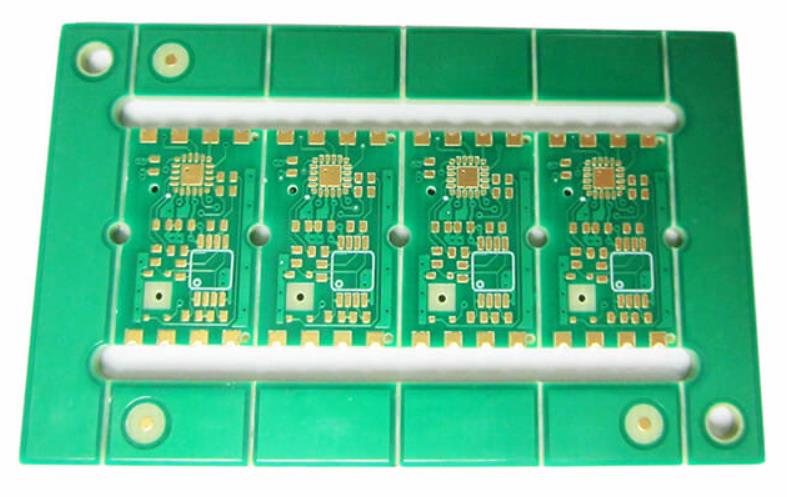
A design that runs on a bench is not yet a product that can be built repeatedly. Footprint data, substitution policy, test point access, programming method, panelisation and the production test plan all affect cost and lead time, and each of them is decided during design or paid for afterwards.
Design for manufacturability at this stage is not a review meeting with a checklist. It is a set of decisions made with the factory in view: choosing packages that the line places reliably, defining test points that a fixture can reach, keeping the panel compatible with the printer, and confirming that the critical components can be sourced for the planned volume.
Where the same partner handles PCB design and layout and the later prototype PCB assembly, those decisions are made once, by people who will have to live with them. Where the partner also runs components procurement, the availability question is answered before the design is frozen rather than after the first batch is delayed.
What to Confirm Before Signing
- The requirement specification and the version both sides have agreed.
- Whether schematics, layout source files and production data are delivered, and in what formats.
- Whether firmware source, build environment and programming instructions are included.
- The bill of materials scope, the substitution rules and the risks attached to key components.
- Bring-up records, the open issue list and the change history.
- Intellectual property, confidentiality and the boundary of post-delivery support.
Those items convert an open-ended development relationship into a series of stages with defined outputs, which is what allows a program to be managed rather than hoped for.
Comparing Quotations on Scope, Not Price
Two development quotations can differ by a factor of two and describe almost the same work. The difference is usually in the boundaries rather than in the engineering: who owns the prototype assembly, who writes the test procedure, who pays for a second iteration, and what happens if a component disappears.
A useful comparison therefore normalises the scope first. List the stages, mark which are included in each quotation, and price the exclusions separately. The cheapest proposal frequently becomes the most expensive once the bring-up support, the test fixture and the second prototype are added back.
It also helps to ask what evidence is delivered at each stage. A stage that ends with a working unit but no record is harder to hand over than one that ends with measurements, an issue list and a revision note.
Where the product will eventually be produced in volume, the production handover should be visible in the proposal. Planning for turnkey PCB assembly at the design stage is not a commitment to buy; it is a decision to keep the data usable by whoever does. The same applies to verification, since defining PCBA testing early tells the designer which signals must be reachable and which test points must survive the mechanical build.
Finally, treat the schedule as part of the scope. A proposal that names the review points, the deliverables and the decision dates can be tracked; one that names only a finish date cannot.
FAQ
Should the whole development be quoted at once? It is better to stage it. A requirement review followed by a prototype phase gives both sides the information needed to price the rest realistically.
What if the internal team can do firmware? That is common and workable. The key is to write the hardware and firmware interface down, including timing, register maps and fault behaviour, so that neither side waits for the other.
How is a partner evaluated without giving away the product idea? Ask for the process: how requirements are clarified, how problems are tracked, how revisions are recorded, and how production is prepared. Process descriptions do not require confidential content.
What is the most common cause of a stalled program? An undefined interface, whether between customer and supplier or between hardware and firmware.
Summary
Electronic product development is a staged process, and each stage has an output that the next one depends on. Choose a partner whose requirements definition is real, whose development process closes prototype problems with records, and whose production transition plan is written before the design is frozen. Compared with the cost of a late discovery, that structure is cheap.