Mass Production Readiness: Preparing a Hardware Product to Scale
A product that works on a bench is not yet a product that can be built a thousand times. The gap between the two is not one big problem; it is a collection of small ones, each of which is cheap to solve during design and expensive to solve during a ramp.
Mass production readiness is the discipline of finding those problems early. It is less about testing the design and more about testing the assumption that the design, the documentation and the supply chain are all pointing at the same product.
Stage One: Confirm That the Prototype Proves the Right Thing
Prototype validation is often treated as a single event. In practice it produces several kinds of evidence, and they are not interchangeable.
Functional evidence shows that the product does what it should. Margin evidence shows that it still does so when the supply voltage is at its limit, when the temperature is at the edge of the range, and when the components are at the tolerance extremes. Manufacturing evidence shows that the process can produce the same result repeatedly.
A prototype that has been hand assembled and manually tested provides functional evidence and almost nothing else. Before a ramp, the same design should be built on a real line, with the real stencil, the real program and the real test fixture, because that is the only way the manufacturing assumptions get tested.
Stage Two: Close the Design for Manufacturability Gaps
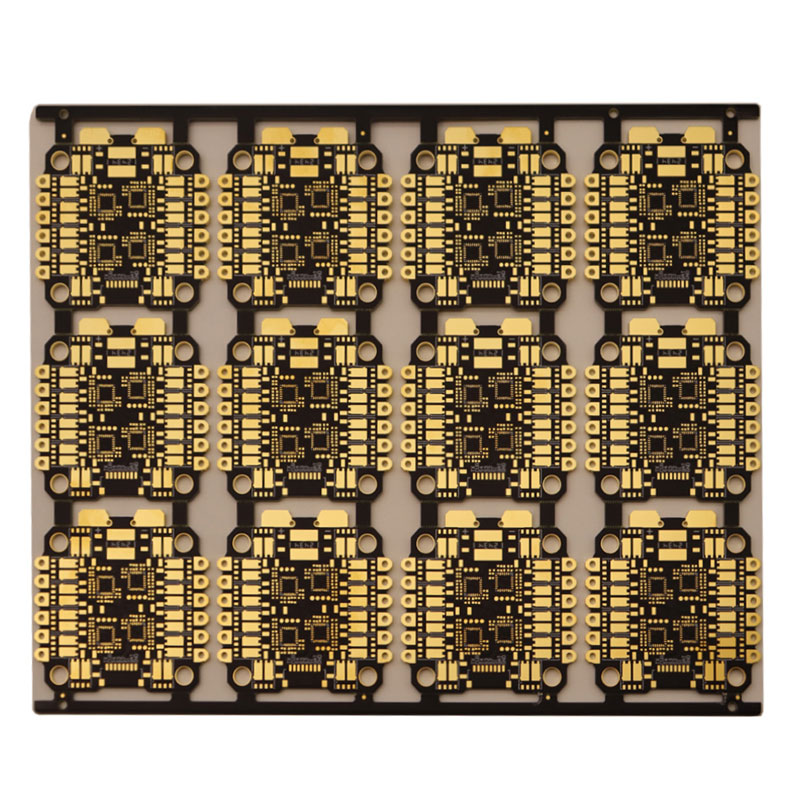
Design for manufacturability at this stage is about the decisions that were deferred during development. Component packages that are difficult to place reliably, test points that cannot be reached after assembly, connectors that need hand soldering, and a panel layout that wastes material all raise the cost of every unit that follows.
The review should involve the people who will build the product, not only the people who designed it. A footprint that the assembler has seen a hundred times is a lower risk than one that is theoretically correct but unfamiliar on the line.
Where the design is heading into high volume PCB assembly, the same review should confirm that the test strategy survives the increase in quantity. A fixture that takes ten minutes per unit is acceptable for twenty boards and impossible for two thousand, so the test plan has to be designed for the volume it will serve.
Stage Three: Produce Documentation That Can Be Followed
Production documentation is what allows a product to be built by someone who did not design it. The package should include the controlled revision of the schematic and layout, the stackup and impedance specification, the bill of materials with approved alternates, the assembly data, the test specification and the inspection criteria.
Just as important is the record of what has changed. A revision history that names each change, the reason and the verification performed is what prevents a later build from unknowingly reverting to an earlier behaviour.
The documentation should also state which decisions are fixed. A supplier that knows which parameters may be adjusted and which may not will make better choices when a component is unavailable, and the customer will not have to re-verify the product because of an unrecorded substitution.
Working with a partner that runs prototype PCB assembly and production under the same quality system makes this stage shorter, because the documentation is already how work is handed between stages rather than something created for the benefit of a new supplier.
Stage Four: Fix the Supply Chain Before the Ramp
Supply chain planning is where readiness is most often overstated. A design with a single-source component, an eight week lead time and no approved alternate is not ready for volume, regardless of how well it performs.
The review should classify every part by risk: lead time, lifecycle status, number of sources, minimum order quantity and the consequence of a shortage. High-risk parts need an approved alternate or a commitment from the supplier before the ramp is scheduled.
Where the assembler manages components procurement, that analysis can be produced from the bill of materials before the first production order, which is far cheaper than discovering the constraint during it.
Packaging and logistics belong to the same discussion. A product that is fragile, orientation sensitive or requires a specific moisture barrier needs the packing specification written before the first shipment, not after the first damage report.
Stage Five: Define What Acceptance Means
The last piece of readiness is agreement on what a good unit is. That includes the functional limits, the cosmetic criteria, the handling of a unit that fails, and the reporting that accompanies each batch.
Without that agreement, the first production run becomes a negotiation about whether a deviation is acceptable, which slows the ramp at precisely the moment when speed matters. With it, a deviation is a decision made against a rule.
A partner whose production documentation and inspection records are part of the normal flow will usually raise these questions before the customer does, which is a reasonable sign that the ramp will be uneventful.
Stage Six: Treat the First Production Build as a Rehearsal
The first volume build is a rehearsal whether it is planned as one or not. Its purpose is to exercise the material flow, the line setup, the inspection gates and the test coverage at the quantity the product will actually be made in.
Several things become visible only at that point. Kit completeness across a larger bill of materials, the time taken by the first article, the behaviour of the test fixture when it is used repeatedly, and the packing process all behave differently at production scale.
If the build is treated as a rehearsal, its output includes a list of open items with owners and dates. If it is treated as simply the first shipment, those items become surprises attached to later deliveries.
Where Programs Usually Slip
The first source of delay is a change that arrives after tooling. A component substitution, a mechanical correction or a late requirement forces the process back a stage, and each return trip costs more than the one before.
The second is an unverifiable claim. A design that has never been tested at the temperature extremes, or a test plan that has never been run against a known-bad unit, leaves the ramp without a baseline.
The third is ownership. When the design, the assembly and the test belong to three companies, a problem that crosses a boundary tends to be passed rather than solved, and each handover loses a little context.
None of these is exotic, and all of them are cheaper to prevent during preparation than to resolve during delivery. That is the whole argument for treating readiness as a stage of development rather than an administrative step before the purchase order.
FAQ
When should readiness work start? At the same time as the second prototype. Waiting until a purchase order exists removes the opportunity to change the design cheaply.
Does every product need a pilot run? Any product with a new assembly process, a new test method or a new supply chain benefits from one. A mature design that is being reordered may not need a full repeat.
What is the most common readiness failure? A part that cannot be supplied at the planned volume, discovered after the schedule has been committed.
How much documentation is enough? Enough that a competent supplier who has never seen the product can build, test and inspect it without asking a question that the designer would have to answer personally.
Summary
Mass production readiness is a checklist of assumptions rather than a single milestone. Prove the design with margin, close the manufacturability gaps with the people who will build it, write the documentation that a third party can follow, fix the supply chain before the ramp and define acceptance in advance. Bringing the design for manufacturability review forward, and keeping supply chain planning attached to the bill of materials, is what turns a successful prototype into a product that can be delivered on a schedule.