Ordering PCBs With Gerber Files Only: What Else Matters
Gerber files describe the copper, the solder mask, the silkscreen and the outline. They are the core of a fabrication order, and they deliberately say nothing about why the board was drawn the way it was. That silence is the source of most of the questions that slow an order down, and of most of the variation between one build and the next.
Ordering with Gerber files only is not wrong. It is incomplete, and the missing information is usually supplied later at a cost: either as a clarification during production or as a deviation discovered after delivery.
What Gerber Data Does and Does Not Carry
The format carries geometry. Every feature on each layer is described in coordinates, which is exactly what a photoplotter needs and exactly what a fabrication engineer has to interpret.
What it does not carry is intent. The Gerber file has no opinion about whether a dielectric thickness matters, whether a trace width was chosen for impedance or for current, whether a copper pour is a ground plane with a return path requirement or simply a filled area.
Everything that a fabricator might reasonably change to make the board easier to produce falls into that gap. The choice of material, the layer arrangement, the copper weight on each layer, the hole structure and the surface finish can all be varied within the geometry, and each variation changes the electrical behaviour of the finished board.
That is why the practical question is not whether Gerber files are enough to order a board. It is whether they are enough to order the right board.
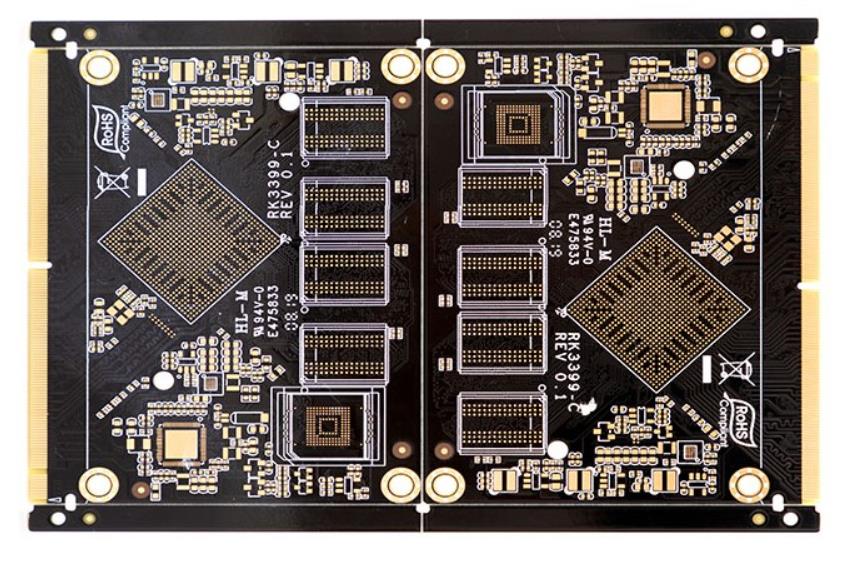
<img src="https://www.gopcba.com/wp-content/uploads/2026/08/PCB-Board-Prototyping.jpg" alt="PCB fabrication data package” />
Stackup and Drill Details Are Part of the Order
Drill and stackup details are the first omission that causes trouble. A drill file tells the fabricator where the holes are, and it does not say which of them must be plated, which are part of a sequential lamination, or how tight the registration has to be.
The stackup is the second. Without a defined arrangement, the shop will use a standard build that hits the finished thickness and the layer count, and the resulting dielectric thicknesses may be different from the ones the design assumed. On a board with controlled impedance, that change alters the impedance of every signal referenced to a plane.
A defined stackup also protects the mechanical behaviour. The distance between a signal layer and its reference, the symmetry of the layup and the placement of heavy copper layers affect warp, registration and reliability, and those properties are chosen by the fabricator when the customer does not choose them.
The practical minimum for a controlled order is a stackup table with materials, dielectric thicknesses, copper weights and the finished thickness, plus a statement of which holes are plated and which structure is expected.
Impedance Requirements Cannot Be Implied
Impedance is the clearest example of intent that geometry cannot express. Two traces of identical width on identical layers can have different impedance if the dielectric thickness differs, and the same stackup can produce different values if the material changes.
A target impedance should be stated with a tolerance, a measurement method and the net or net class it applies to. Where the design requires a specific geometry, the customer should say so, and where the customer only requires the electrical result, the fabricator should calculate the geometry from the actual material and confirm it.
The failure mode when this is left implicit is subtle. The boards arrive within the fabrication tolerance, the prototype works, and the second order built on a slightly different material behaves differently. Adding a coupon measurement to the order is a small cost that removes the uncertainty.

Design Intent Notes Worth Writing Down
A short set of design intent notes removes most of the remaining ambiguity. They do not need to be long, and they should be attached to the fabrication data as part of the same revision.
The notes should say which parameters are critical: the controlled impedance nets, the current carrying traces, the thermal paths, the isolation distances and the board features that interact with the enclosure. They should also name the acceptance criteria, such as the test method, the reports required and the finish thickness specification.
It is equally useful to state what is flexible. A fabricator that knows a copper weight may be reduced or a mask colour changed will propose those options instead of asking for a decision during the build.
A fabrication data package that includes these notes and the stackup is a different document from a folder of Gerbers, and it is the document that makes PCB manufacturing repeatable rather than interpretive.
What the Assembly Stage Needs From the Same Data
If the boards go straight into assembly, the Gerber data is only half of what the assembler needs. Placement coordinates, a bill of materials with packages and reference designators, an assembly drawing with orientation notes and the panel requirements all come from the same design revision.
Keeping those files together is what allows the fabrication and the assembly to be built from one revision instead of two. It also makes the drift visible: when a coordinate file and a layout no longer match, the mismatch is detectable in review rather than on the line.
Where the same partner provides SMT PCB assembly and components procurement, the data package is checked once against the parts that will actually be placed, which is the point at which a missing footprint or an obsolete part is easiest to fix.
Keeping Reorders Consistent
Reorder consistency depends on the record, not on the memory of the person who placed the first order. A build file that names the stackup revision, the material grade, the copper weights, the drill schedule, the finish, the impedance targets and the measured results allows the second order to repeat the first.
That record should also state which deviations were accepted. If a substitute material was used on the pilot, the fact belongs in the file, because the next order will otherwise assume the original was used.
A supplier that retains these records and refers to them when a repeat order arrives is providing something that a Gerber-only quotation cannot: a build that is the same product as the one that was validated.
Working With the Fabricator on the First Order
The first order is where the package is tested. Send the data, then read the response: a fabricator that returns questions about dielectric thickness, registration, material availability or the drill schedule is reading the design rather than filing it.
Ask for the engineering review in writing, including the assumptions the quotation is based on. If the price depends on a specific material grade or a particular panel arrangement, that condition should be visible before the order is confirmed rather than discovered when a substitution is proposed.
Finally, keep the reviewed package as the reference for the next order. The clarification answers, the approved substitutions and the measured results are all part of the build file, and together they turn a folder of Gerber data into a manufacturing specification that can be repeated.
FAQ
Can a board be fabricated from Gerber files alone? Yes, for a standard design with conventional parameters. The risk rises with layer count, impedance requirements and material selection.
Which file is most often missing? The stackup, followed by the drill schedule and the impedance specification.
How much documentation is enough? Enough that the fabricator does not have to make an electrical decision on the customer behalf.
What does a reorder need? A reference to the previous build file plus any approved change, so that the process is repeated rather than reinterpreted.
Summary
Gerber files are necessary and not sufficient. Add the drill and stackup details, the impedance requirement with a measurement, and the design intent notes that tell the factory which parameters matter. Keep that package under revision control, and reorder consistency stops being a matter of luck.