Should You Attend Training Before Applying for a Hardware Design Job?
Every graduation season the same decision appears for students of electronics, automation and communications: apply directly, or spend several months on training first. For anyone aiming at hardware design the question matters more than for most roles, because the technical bar at the entry level is higher and the evidence employers ask for is specific.
What the Market Is Asking For
Demand for hardware engineers is steady and spread across several industries: electric vehicles and energy storage, industrial control, medical equipment, communications and consumer products. The supply of graduates is large, and the supply of graduates who can be given a board and return something usable is small.
That gap shows in the way entry-level requirements are written. A hardware design job advertisement typically asks for familiarity with analog and digital circuit design, the ability to draw a schematic and a board in a professional tool, some exposure to embedded development, and – the item that carries the most weight in screening – evidence of project experience.
The reason project experience dominates is that it is the only item on the list that cannot be acquired by reading. Two candidates with the same coursework are separated by whether one of them has taken a design from a requirement through to a board that works.

When Training Helps
There are situations where a structured course is the efficient route, and they are specific.
The first is when the coursework was theoretical. Many programmes teach analog and digital analysis thoroughly and give little opportunity to build a complete piece of hardware. A student who has studied but never designed knows the concepts and lacks the operations: choosing parts, drawing a schematic that survives review, laying out a board, getting it built and bringing it up. A course is a reasonable way to close that gap quickly, provided it includes the whole cycle.
The second is when the resume has nothing on it that a screener can evaluate. If the only entries are courses and grades, a project completed during a training programme gives a screener something to ask about in the interview, which is the purpose of the resume at that stage.
The third is a change of field. A graduate of a related discipline – physics, automation, mechatronics – can use a structured course to acquire the specific vocabulary and habits of hardware design faster than by working it out alone.
When Training Does Not Help
The same decision goes the other way in several common situations.
If you already have projects from competitions, from a student team or from an internship, the marginal value of a general course is small. What is missing is depth, not breadth, and the money is better spent on a focused subject or on materials for another board.
If the goal is to enter a specific speciality such as high-speed layout, power conversion or radio frequency, a general programme will be too shallow to matter. A targeted course on that subject, taken after the foundations are in place, is more effective.
If the decision to enter hardware design is not yet made, a course is a poor place to find out. Building one small board – a supply, a microcontroller with a sensor – costs a fraction of a course and answers the question directly.
Alternatives That Produce the Same Evidence
Training is one route to project experience, and it is not the only one. A competition entry, a personal project that was designed, built and brought up, a contribution to an open hardware design, or three months as an intern in a design team all produce the same thing: a design that exists and a story about how it was made.
Of these, the personal project has the best ratio of cost to value, provided it is finished. A board that was designed but never built teaches half of the subject, because the failures that matter occur during bring-up. A board that was built, debugged and measured can be described for an hour in an interview, and every one of those details is evidence.
How to Judge a Programme
If training is the chosen route, the criteria that matter are not the length of the course or the size of its advertisement.
Does the material explain principles, or only operations? A programme that teaches the tool leaves you able to use the tool; a programme that explains why a rule exists leaves you able to make decisions when the rule does not fit the situation.
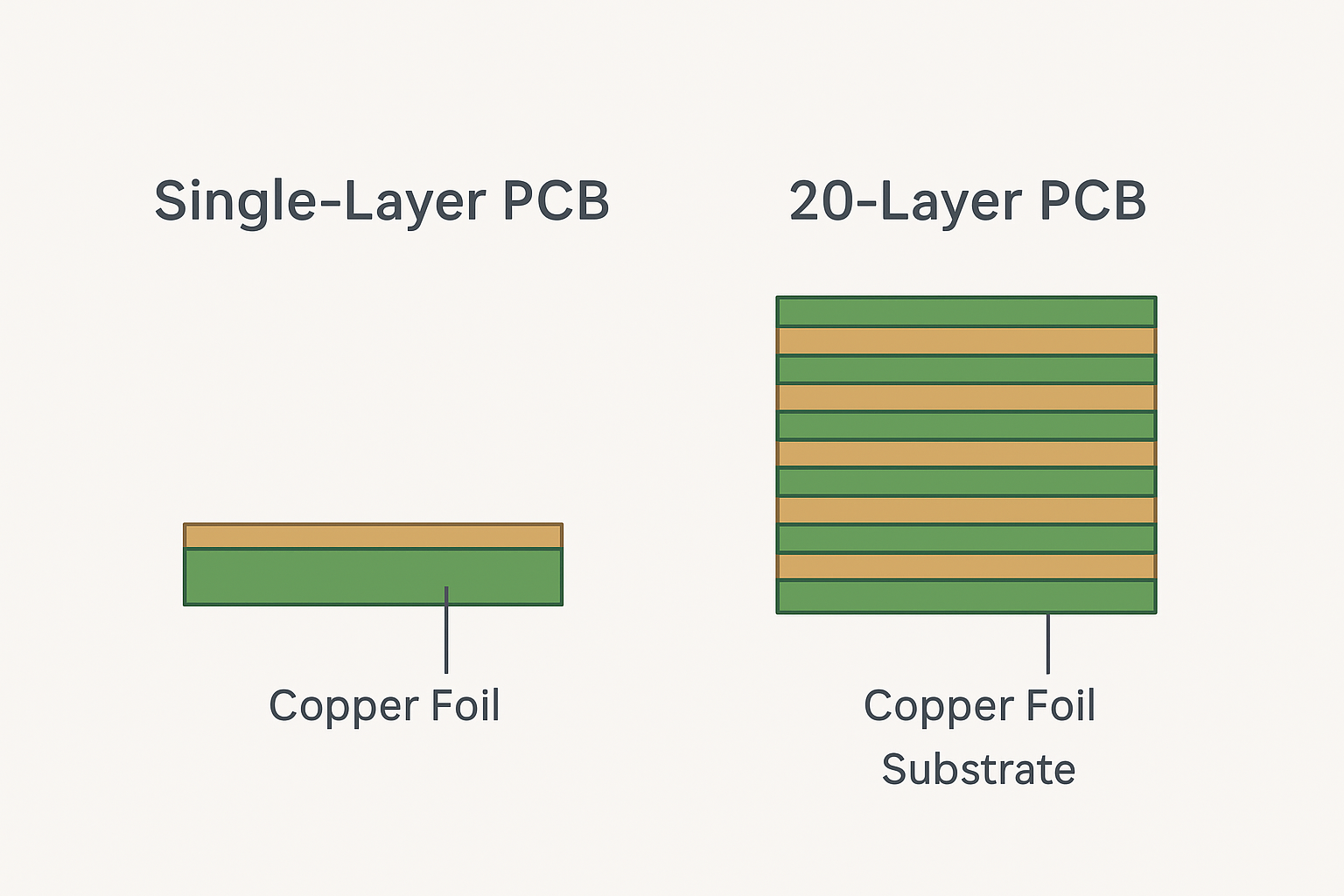
Are the projects real? A two-layer board with discrete parts is a starting exercise, and a design that includes a multilayer stack, a high-speed interface or a ball grid array package is training for the work that will actually be assigned.
Is the work reviewed? A course in which someone examines your schematic and your layout and tells you what is wrong teaches more than one that only delivers lectures.
Is a framework built? A structured body of knowledge allows a new problem to be placed and analysed. A collection of disconnected topics does not.
And is the outcome visible? A programme that can show what its students built, and where they went afterwards, is describing a result rather than a promise.
Presenting Yourself Afterwards
Whatever route was taken, the interview is won with specifics. Describe a project in terms of the requirement, the decisions taken and the measurements made: why this converter was chosen, why the layout put the ground plane there, what the measured ripple was, what the first prototype got wrong and how it was found.
Those answers are what an experienced engineer is listening for, and they cannot be produced without having done the work. Our design and layout team reviews designs from engineers at every level, and the difference between a review that goes well and one that does not is almost always whether the designer can explain the reasoning behind the choices. Familiarity with how boards are actually built helps as well, and the constructions that entry-level designers should be able to discuss are set out on our PCB capabilities page.
What Employers Actually Test
The interview for an entry-level hardware role is usually a conversation about one of your projects, and the questions go deeper than the summary. Which component did you choose, and why. What did you measure, and with what instrument. What failed on the first board, and how was it found. What would you change in a second revision. A candidate who can answer those questions about one modest board is more convincing than one who can describe five projects in general terms. The same standard applies in a design review, which is why our design review asks for the reasoning rather than the result.
FAQ
How long should training be? Long enough to complete a real project from requirement to working board and to have it reviewed. Anything shorter produces familiarity rather than capability.
Is a certificate useful? It may pass an automated screen. It is the project behind it that decides the interview.
What if the budget is limited? Build one board yourself, get it fabricated and assembled through a prototyping service, and bring it up. That is the same evidence at a lower cost.