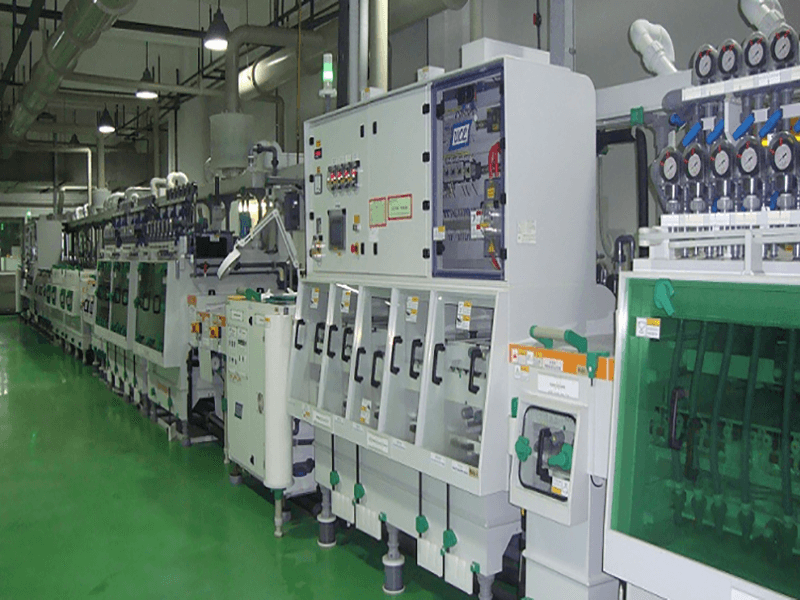
On-Site Design Engineers at the Customer Facility
An internal layout team can be busy with several projects and short of hands during a peak, and hiring takes longer than the peak lasts. A complex board may need experience the team has not built up yet. A project may be sensitive enough that the design files are not allowed to leave the building, and a programme may need an engineer sitting with the hardware, mechanical and firmware groups rather than answering messages from a distance. On-site design is the arrangement that answers those cases.
When the Model Fits
The first case is a peak that is shorter than a recruitment cycle. Bringing in a layout engineer for a defined period adds capacity without adding a permanent headcount, and the arrangement ends when the peak does. The second case is a board type outside the team range, where high speed, high layer count or high density interconnect work needs someone who has already done it.
The third case is confidentiality. Where a project carries technical information the customer does not want outside its own site, the work is done at the customer premises and the files never travel. The fourth is a programme with a high density of coordination, where hardware, structure and firmware have to be aligned face to face, and a remote exchange of documents costs more time than it saves. The fifth is a customer who needs the engineer present for a design review, for training or for building a process.
All of this runs under a signed confidentiality agreement and a service contract. The engineer follows the customer’s rules on attendance, security, information systems and secrecy while working on site, and the agreement states what is provided, for how long, at what cost and with what obligations on each side.
<img src="https://www.gopcba.com/wp-content/uploads/2023/05/2.jpg" alt="layout engineer working at a customer facility” />
What the Engineer Brings
More than fifty designers work with us, and those who go on site are selected for project experience as well as for technical skill. Five years or more of layout work is the normal background, with strength in high speed boards, multilayer and high density interconnect designs, radio frequency work and power boards.
The design tools in use include the mainstream packages, and an on-site engineer can work inside a customer’s own licensed environment or bring a licence, depending on what the customer prefers. Experience across communications, medical, automotive, industrial and consumer work is common, and the design volume of more than two thousand boards a year keeps the experience current rather than theoretical.
How the Engagement Runs
A request starts with a conversation about the type of project, the technical difficulty, the duration, the number of engineers and the start date, after which a plan and a quotation are issued. A suitable engineer is then matched to the requirement, and the customer can interview that engineer technically before confirming the selection. Three to five working days is the usual time to have someone on site for an urgent programme.
The contract and the confidentiality agreement are signed before the work begins. The engineer then works at the customer site on the customer’s schedule while retaining access to the support of our own back office, so that a difficult question can be taken to the wider group instead of being resolved alone.

What It Compares Against
Face to face working removes much of the delay that comes from a question being written out, read and answered, and it removes the misreading that accompanies it. The confidentiality is stronger by construction, since the data do not leave the premises at all. The engineer becomes part of the customer’s project reviews, which is how the product requirement is understood rather than interpreted. And the progress is under the customer’s direct control, which simplifies the overall schedule and the risk planning.
Against that, remote PCB design outsourcing costs less and suits projects whose data may be released and whose communication needs are moderate. The two are not in competition so much as suited to different conditions, and both are available, so the choice is made on the project rather than on the supplier.
Fees and the Wider Offer
Charging is per engineer per month. The level of the engineer, the duration, the number of engineers and the technical area all affect the figure, and a long engagement is priced differently from a short one. A project lasting three months or more, several engineers on the same site, or a specialised area such as high speed or radio frequency each change the quotation, so the estimate is produced from the project rather than from a list.
Our PCB design and layout group provides both the on-site arrangement and the remote alternative, and the same group carries a design through to PCB manufacturing and turnkey assembly when the customer wants the build handled as well.
Preparing an Engineer to Work on Site
An engineer who is technically strong and unprepared for the environment is not useful on the first day. Before a placement begins, the customer’s rules on attendance, security, information systems, document control and secrecy are explained, and the engineer confirms that they have been understood. Where the customer uses a controlled drawing system, a release process or a design checklist of its own, the engineer learns it rather than importing a different habit.
The technical handover matters as much. The product description, the interfaces, the stack-up, the mechanical constraints, the component library in use and the review process are gathered at the start, because an engineer who begins by drawing without knowing what the board has to fit inside will produce work that has to be redone. Where the customer has an existing library and a preferred set of rules, using them is faster than establishing a new set.
A short written note of the arrangement is also worthwhile: who assigns the work, who reviews it, how the progress is reported, and what happens at the end of the engagement. Those details are small, and they are the ones that decide whether a placement runs smoothly or becomes a negotiation.
Review as Part of the Engagement
An on-site engineer is also available for the checks that a customer might not otherwise schedule. A schematic review before the layout begins, a placement review before routing, and a routing review before the files are released each catch a different class of problem, and the cost of the check is small next to the cost of a respin.
Where the customer already has a review process, the engineer works inside it. Where there is none, the review is introduced as part of the engagement so that the checks continue after the placement has ended, which is the difference between solving a peak and improving the process.
Some projects also need the layout to be prepared for manufacture while it is being drawn: the panel outline, the fiducials, the tooling holes and the impedance requirements are settled with the fabricator rather than after the files are released. Our rapid PCBA prototyping route is used where the customer wants the first boards built as soon as the design is released.
FAQ
What is the shortest engagement? One month is the normal minimum, with shorter weekly arrangements available for an urgent short project.
Can the engineer use our design tools? Yes. Working in the customer’s own licensed environment is the usual arrangement where the customer prefers it.
What happens if the engineer cannot continue? A replacement at the same level is arranged as quickly as possible, with a proper handover, because the schedule is what the arrangement exists to protect.