Selective Conformal Coating for Industrial Display Boards
An industrial display board carries a display interface, keys, a buzzer, communication terminals, the main controller and the power circuit, and a customer may ask for a coating so that the board survives the environment it will be installed in. The request is easy to state and easy to get wrong, because coating is not a matter of covering everything. A connector that has to make contact, an adjustable part, a test point, a programming header, a switch contact, a heat sink surface and any point that will be earthed or assembled later all have to be considered individually.
What Has to Be Agreed Before Production
When the coated area is not confirmed before the run, the board can look completely covered while the coating has in fact reached a place where it prevents the product from being tested, assembled or serviced. That is the failure mode that matters, and it is invisible in a photograph of a finished board.
Alongside the Gerber data, the bill of materials, the placement coordinates and the assembly drawing, the project needs a drawing of the coated region, the keep out area where no coating is permitted, the material required, the thickness or the appearance by which it will be judged, and a decision on whether the test points have to remain accessible. Where no such drawing exists, a clear image of the board can be marked to show three things: the area that must be coated, the area where coating is acceptable, and the area where it is forbidden.
A board with several connectors and a display ribbon interface cannot be described by a sentence saying that the whole board is to be coated. The evaluation of the masking, the spray path and the inspection method is made from the drawing and the acceptance criteria, and no assumption is made about which interface may safely be covered.
The sequence also has to be decided. Where the board is to be programmed or functionally tested, the question of whether the test happens before or after the coating changes the contact points of the fixture and the shape of the masking, and it is much cheaper to answer it at the quotation stage than after the coating has cured.
Why the Board Is Checked Before Coating
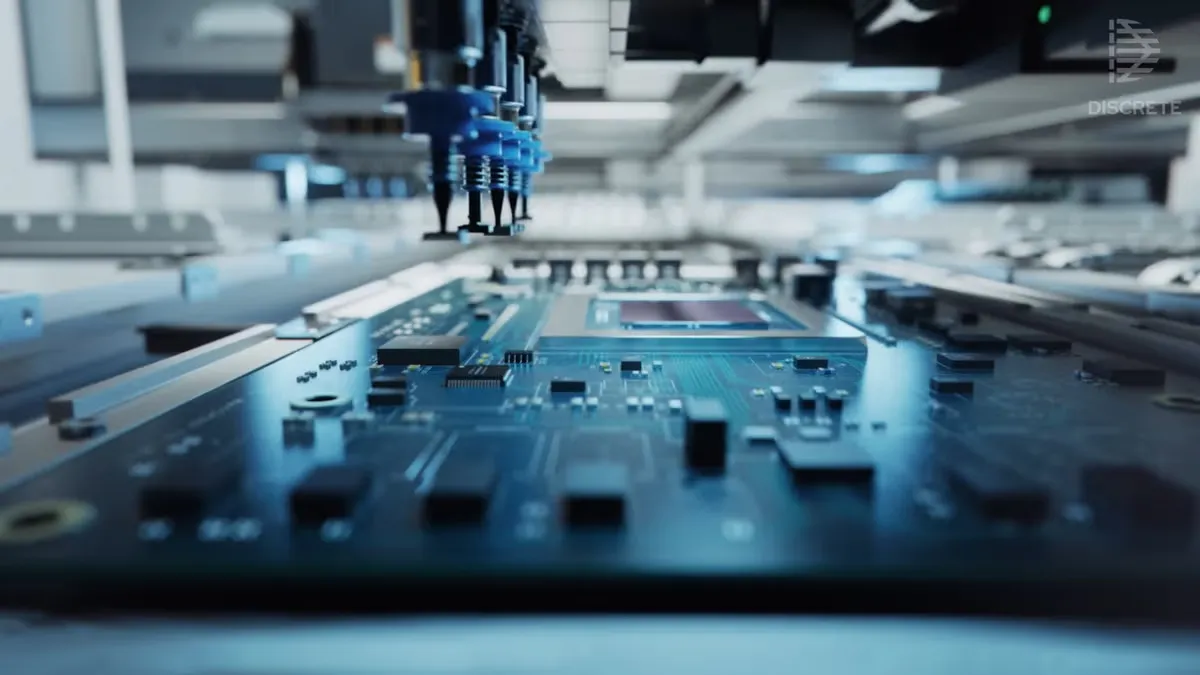
A coating covers the joints and part of the surface of the components, so any defect that is under it becomes much harder to correct. Visual inspection and optical inspection therefore run before the coating, and so does the functional test where the sequence allows it. A bridge or an offset that is found after coating means removing material, repairing and restoring the coating, which is a longer operation than the one that would have prevented it.
The cleanliness of the board is assessed in the same step. Flux residue, dust, oil or moisture trapped under the coating can affect the adhesion and the appearance, and whether a cleaning step is needed, and which one, depends on the soldering material, the customer requirement and the components fitted. Applying one cleaning process to every board is not a controlled method.
Handling matters as well. A board that has been carried by hand across the region that is to be coated may no longer accept the coating properly there, so the connectors, the display interface and the sensitive parts are masked or protected by a fixture according to the drawing rather than by habit.
How Selective Spraying Keeps the Boundaries Clean
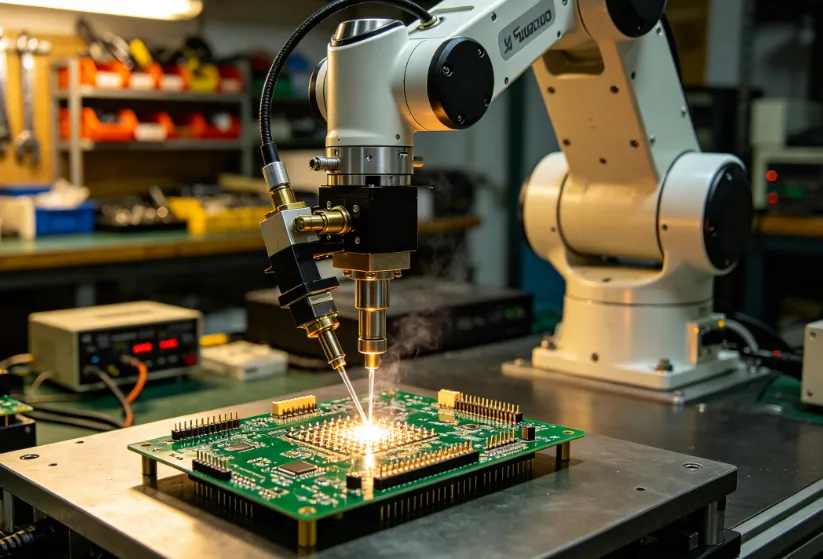
A selective conformal coating machine follows a programmed path, which is what makes the process repeatable, but the programme still has to match the actual board, the panel orientation and the height of the components. Passing the nozzle close to a tall part means planning the clearance and the spread of the atomised material, and every boundary near a connector has to be set deliberately rather than left to the operator.
Before production the first article confirms the path, the continuity of the coverage and the state of the forbidden regions. A programme that was written for an earlier revision of the board cannot simply be reused, because a connector that has been moved or a test point that has been added will otherwise be sprayed over.
Judging the Result
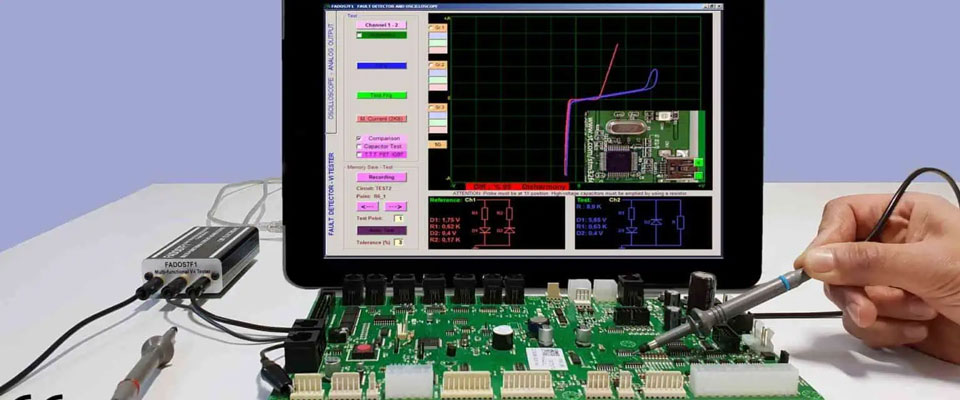
Some materials can be examined under a specific light source, which helps to see where the coating has landed, but the judgement is still made against the appearance and the acceptance criteria the customer defined. The items worth listing are missed areas, bubbles, accumulation, runs, contamination of a connector and the position of the boundary at a forbidden region.
Coverage can break down around a large component or where the surface changes height sharply, because the spray is shadowed by the part in front of it. When the same region is repeatedly left uncovered, the answer is to adjust the path, the angle of the nozzle or the orientation of the board rather than to rely on a person touching it up by hand, which is not repeatable and which leaves no record.
More material is not automatically better. A pool of coating next to an interface can flow towards the contact area, and a locally thick layer extends the time needed for the material to cure. The quantity applied, the speed of the nozzle and the curing conditions are set from the material data sheet and the customer requirement rather than from a general setting.
Rework After Coating
If a component proves faulty after coating, the scope of the repair, the method used to remove the material and the effect on the neighbouring parts are decided first. Once the repair is complete, the joints are inspected again, the local coating is restored as required and the functional test is repeated.
Solvent is not chosen freely. Different coating materials respond differently, and the wrong solvent damages the components, the legend or the surface of the laminate. Without the material information, the removal method is a guess with a board behind it.
The delivery record states the board revision, the coating state, the program state and the test result, so that when a customer later fits the enclosure or connects the ribbon cable, it is clear which areas are protected and which remain accessible. Our conformal coating service works from the customer drawing, and the assembly that precedes it is handled by the same SMT assembly group, with the records held under quality management.
Materials and Their Selection
`r`n
The material is chosen from the environment the product will see rather than from what happens to be in the machine. Acrylic materials are easy to apply and easy to remove, which suits a product that may need repair; silicone materials tolerate a wider temperature range and stay flexible, which suits thermal cycling and vibration; polyurethane resists solvents and abrasion. Each choice carries a consequence at the repair stage as well as at the protection stage, and both belong in the decision.
FAQ
Should the whole board be coated? Rarely. Connectors, test points, programmable parts and any surface that has to make contact or conduct heat are normally excluded, and the exclusions are defined before production.
Can the coating be applied after testing? Yes, and for many products that is the preferred order, because a board with a defect should be corrected before it is covered.
What happens if a coated board needs repair? The material is removed by a method suited to that material, the repair is made, the joints are re-inspected, the local coating is restored and the functional test is repeated.