Turnkey SMT Service With Component Procurement
Buying the components and getting the board assembled are two separate problems that both consume attention. The parts have to be sourced from a supplier that can be trusted, the prices compared, the material verified, and the assembly then has to be tracked through the line. A delay in either one moves the project, and coordinating them across two companies usually doubles the number of conversations rather than halving the work.
What a Turnkey SMT Order Includes
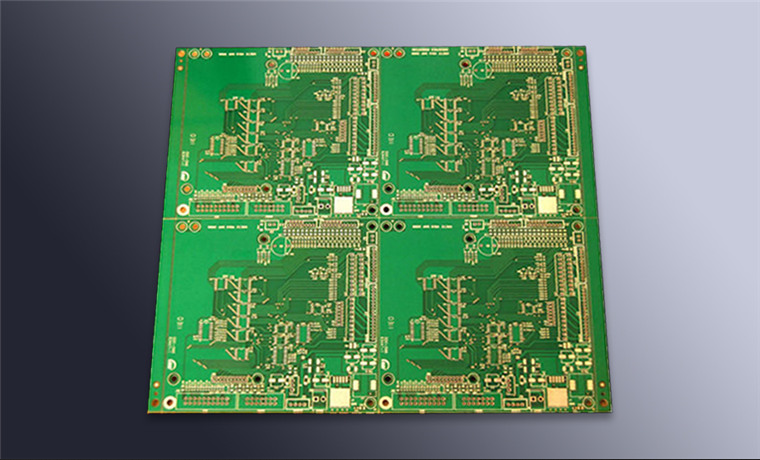
On a turnkey order the factory takes responsibility for the whole chain. The components are purchased against the bill of materials, including resistors, capacitors, integrated circuits and connectors, from the manufacturer or through an authorised distributor. The bare board is produced in house, covering anything from two layers to thirty, including high density interconnect and aluminium backed boards. The stencil is made in laser cut or electroformed form according to the packages on the board.
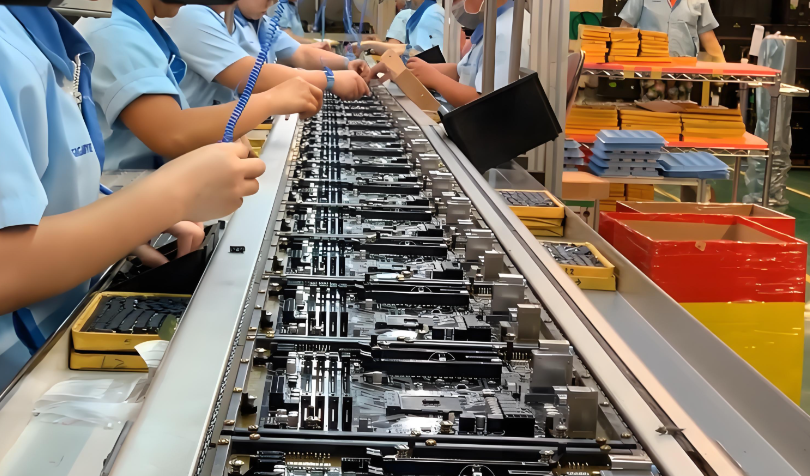
Assembly follows on thirty six automatic lines that place components from 01005 up to connectors and ball grid arrays. Through hole parts are wave soldered or hand soldered, inspection runs through paste measurement, optical inspection, X-ray and functional test, and the finished boards are packed in antistatic material with the trays or vacuum packing the customer requires. All of the customer has to provide is the design data.
Three Ways to Work
Under a full turnkey arrangement the factory buys everything and builds everything. The customer has one contact, one responsibility for quality and the least administrative work, which suits a new project or a team that does not have the people to manage purchasing.
Under a partial arrangement the customer supplies some of the material and the factory buys the rest and carries out the production. This suits a customer who has a preferred source for a critical device or who obtains a particular part more cheaply itself. The bill of materials is marked to show which lines come from whom, so that neither side is waiting for the other to notice a missing item.
Under a customer supplied arrangement the customer provides all the material and the boards, and the factory provides the stencil, the assembly and the inspection. This suits a customer with an established supply chain, and it shifts the material responsibility for the parts onto the customer while the process remains with the factory.
The choice is not about which is better in the abstract. It is about where the customer’s own advantage lies and how much administration it wants to carry.
Where the Benefit Comes From
The first benefit is time. Purchasing the parts and fabricating the board can proceed in parallel, so a week is not lost waiting for one stage to finish before the next begins. The second is cost. A factory buying continuously has better prices than a customer buying for one project, and the cost of the customer’s own purchasing, stores and material losses disappears from the calculation, which usually outweighs the difference in unit price.
The third is that responsibility is unambiguous. When the factory buys the parts and builds the board, a quality problem has one owner, and the question of whether it was the material or the process is answered inside the factory instead of between two companies. The fourth is focus: product definition, development and the market are where a small team’s advantage lies, and purchasing is not.
How the Supply Chain Is Controlled
Parts are purchased from the manufacturer or through an authorised distributor, and material of unknown origin is not used. Where a customer needs it, the documentation that traces a device to its source can be provided, which matters most on the higher value devices.
Shortages are dealt with early. The bill of materials is checked for availability as soon as it is received, and any part with a long lead time or no stock is raised while there is still time to act, together with a proposed substitution of equivalent performance for the customer to approve. Raising it at the point of ordering is what prevents the discovery that a part cannot be obtained from arriving on the day the line is ready.
Incoming inspection covers the part number, the specification, the quantity and the packaging, and the batch of a key device is recorded before the material enters the store. The evidence that a device is what it claims to be is established when it arrives rather than when a board fails.
What the Customer Should Send
The bill of materials in a spreadsheet and the board data are the starting point. The bill of materials carries the part number, the package, the reference designator and the quantity, and it marks any part that must not be substituted. Where a partial arrangement applies, it also shows which lines the customer supplies.
Where the order includes assembly only, the placement coordinates and the stencil data are wanted. Where it includes testing, the test specification, the supply conditions and the acceptance criteria come with the order rather than after it, since a test that is defined late holds up a delivery that would otherwise be finished.
A quotation is issued within one to two working days of receiving the data and lists each element separately: the board fabrication, the material, the stencil, the engineering and placement charge, and the test where it applies. Every item is visible, which is what allows a customer to compare one quotation with another on the same basis.
Where the Volume Sits
The service runs from a single prototype to a production quantity. A prototype of one piece is built on an engineering fee basis; a small batch of tens or hundreds of boards follows the same route as a volume order but with the engineering charge spread over fewer units. An ordinary order takes roughly seven to fifteen days in total, with board fabrication and purchasing running in parallel, and a simpler board with material in stock moves faster than that.
The value of a turnkey arrangement also extends backwards. Because the same group carries out design, the manufacturability of the board can be reviewed, the bill of materials can be optimised and substitutes can be proposed before the design is frozen rather than after the order is placed. Our turnkey PCB assembly service and component procurement cover this work, PCB manufacturing produces the board, and the records are held under quality management.
What Happens When Something Changes
`r`n
A change arriving after the order has been placed is normal, and the cost of it depends on when it arrives. A change to the material before purchasing starts costs a conversation. The same change after the parts have been bought leaves the factory holding material that the design no longer uses, and that is a cost the customer has to carry either way. Stating the intended revision clearly at the start, and marking any line that may still change, is what keeps that cost at the level of a conversation.
FAQ
What is the minimum quantity? A single board is accepted at the prototype stage, and quantities from tens to hundreds follow the same flow as volume work.
How long does a turnkey order take? About seven to fifteen days in total, since fabrication and purchasing run in parallel. Material in stock and a simple board reduce it.
Can part of the material be supplied by the customer? Yes. The bill of materials marks which lines the customer provides and which the factory buys.