First Article Approval: What It Confirms Before Production
The first article approval is the point at which the production setup is confirmed against the product, and it is the cheapest defect-removal mechanism in the whole process. Everything that is wrong at that moment is still cheap: a stencil can be replaced, a programme can be corrected, an orientation can be fixed, and none of it has consumed a full batch of material. Once the approval has been given and the run has continued, the same faults have become a quantity of boards.
What Is Examined
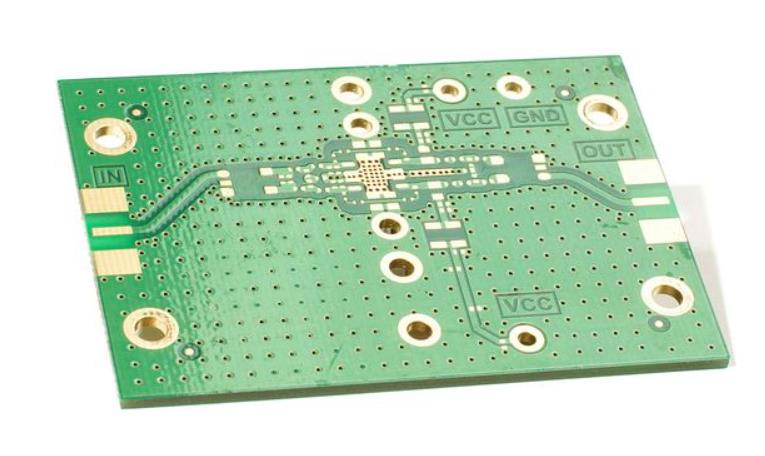
The first board or panel is compared against the assembly drawing and the bill of materials rather than against the memory of the person who set up the line. The reference designators and their positions, the part numbers and their packages, and the orientation of every polarised device are confirmed. The assembly drawing is the authority for that comparison, because the legend printed on the board may be obscured by the component that has been placed over it.
The paste condition is reviewed against the print specification. Where the deposit has been measured, the values are compared with the limits; where it has not, the deposit is examined for the shortfall or the excess that would indicate a stencil or support problem.
The joints are examined on the visible parts of the assembly, and the devices whose joints are not visible are identified so that the corresponding X-ray examination is arranged. A first article that confirms only what the optics can see has confirmed a part of the assembly rather than the assembly.
What the Approval Confirms
The approval confirms that the stencil, the placement programme, the reflow profile, the material and the fixture are correct for the revision being built. It is a statement about the process rather than about one board, and that is why the record is retained: it establishes what the process was when the product was known to be correct.
Where the order includes programming and testing, the approval continues into those stages. The programme is written, the revision or the checksum is read back, and the basic functional verification is completed. A board that has been placed perfectly and cannot be programmed has not passed its first article, because the product it forms does not work.
Where the order includes a separation step, the approval tests it. The intended method is used on the first panel and the separated boards are examined at the tab and the routed edge, because a separation method that damages the circuit is a method that fails regardless of how well the assembly was placed.
<img src="https://www.gopcba.com/wp-content/uploads/2026/08/20L-4阶HDI-无镍-钯金PCB.jpg" alt="first article inspection before a production release” />
What the Approval Does Not Confirm
It does not confirm that the process is capable of repeating the result. One acceptable board demonstrates that the setup can produce an acceptable board; it does not demonstrate that it will do so on the two hundredth. The evidence for that comes from the measurements across the batch and from the first volume run being compared with the baseline.
It does not confirm the design. A first article confirms that the board matches the documentation; where the documentation itself contains an error, the first article will confirm a board that matches an incorrect drawing. That is why the design review happens before production rather than during it, and why the first article is not a substitute for it.
And it does not confirm that the product works in its application. The acceptance criterion for the finished product comes from the customer’s specification, and the functional test confirms what that specification requires. A first article confirms that the assembly was built as documented.
When the Approval Is Refused
A first article that does not pass is a normal event and not a failure of the process. The setup is corrected, the correction is verified and the approval is repeated. What matters is that the batch is held while that happens, because a batch that continues to run while the first article is being discussed is a batch that is producing the fault that has just been identified.
The distinction between a first article finding and a design problem belongs in the record. A coordinate that is wrong is a data correction; a footprint that does not match the component is a design revision; a paste problem is a process correction; a component whose package differs from the specification is a material question. Classifying the finding determines where the correction is applied and prevents the same finding from recurring on the next order.
The production release follows the approval, and the record of both travels with the work order. Our assembly operation performs the approval on every order through SMT assembly, the prototype builds that establish the settings run through rapid PCBA prototyping, the inspection is recorded under quality management, the electrical verification sits with PCBA testing and the material is confirmed through component procurement.
The Approval as a Gate Rather Than a Formality
The value of the first article is realised only if it is treated as a gate. In an operation where the approval is a form that is signed after the fact, the batch runs while the approval is pending and the approval records a result that has already been produced. In an operation where the approval gates the run, the batch waits for a short time and the fault, if there is one, is caught on a single board.
The difference in cost is not close. A first article takes minutes and the material it consumes is one panel. A fault discovered after a full run costs the whole batch, the material, the labour and the schedule, and in the worst case it reaches the customer and costs more still. The gate is not a bureaucratic delay; it is the cheapest insurance in the process.
Where the same product runs repeatedly, the approval is still performed, though it may be reduced in scope. A repeat order uses the recorded setting from the previous run, and the approval confirms that the stencil, the programme and the material still correspond to that record. A setup that has not changed still has to be confirmed, because the assumption that nothing has changed is exactly the assumption that fails.
Getting the Most From the Record
The record of the approval is worth more than the approval itself when it is compared across orders. A finding that appears on the first order and again on the third is a finding that was never closed, and the pattern is only visible if the findings are classified rather than merely noted. A finding is a data error, a design error, a material question or a process correction, and the classification determines whether the response belongs with the file, the layout, the supplier or the line.
The record also shortens the next approval. Where the previous first article is available, it establishes which positions required attention and which parts of the setup were critical, and the next approval can be aimed at those rather than performed as a general survey. The record is therefore not an archive; it is an instrument that makes the following order faster and safer than the one before it.
FAQ
Is the first article a quality inspection? It is a confirmation of the production setup against the documentation, which is a different thing from inspecting finished product.
Does it prove the design is correct? No. It proves that the assembly matches the documentation; an error in the documentation produces a first article that passes and a product that does not work.
What happens if it fails? The batch is held, the cause is classified and corrected, and the approval is repeated before production continues.