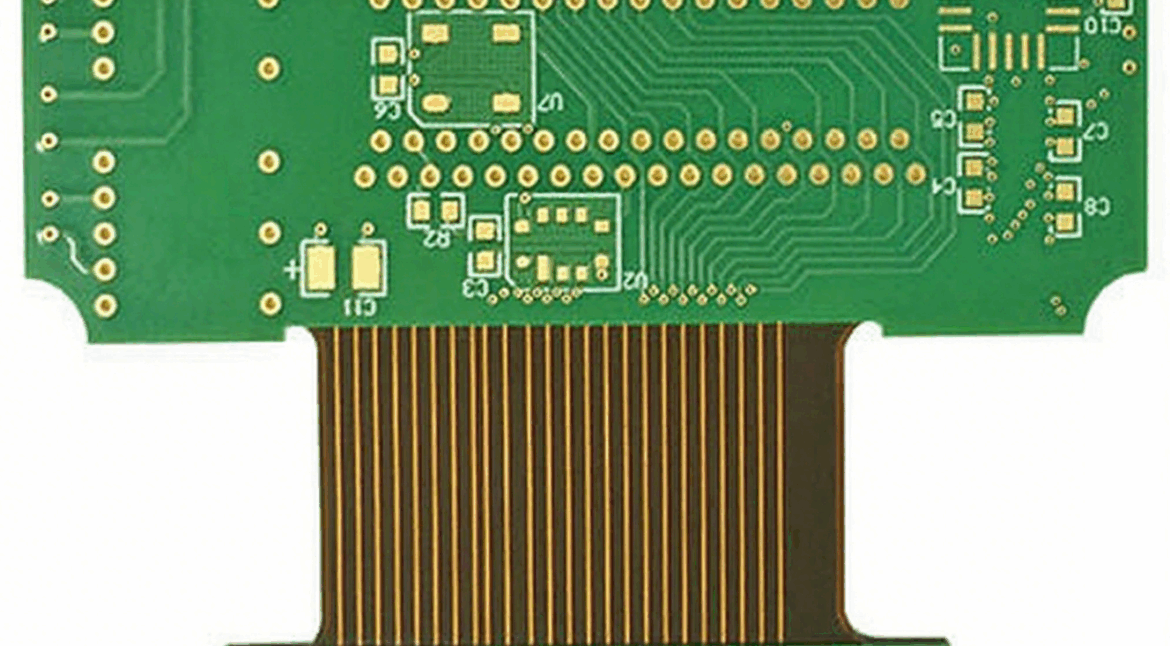
Consigned Material SMT Assembly: Preparing the Parts
In consigned material assembly the customer buys the parts and the factory provides the process. It is the natural arrangement for a company that already has reliable supply channels, or for a product whose main controller must come from a specified source, and it shifts the risk of material availability back to the customer in exchange for removing the purchasing margin.
What it does not do is remove the preparation. A consigned order is not ready simply because a carton of parts has arrived; it is ready when the data, the material and the version relationships have been reconciled, and the single most common cause of a stalled consignment order is one missing device that stops the entire batch.
The Data That Accompanies a Consignment
The customer supplies the fabrication data, the bill of materials, the placement coordinates and the assembly drawing, together with the quantity, the side to be populated, and whether the order includes pin-in-hole work, programming or functional test.
The bill of materials carries reference designators, complete part numbers, packages, quantities and manufacturer names. Where a position may accept more than one device, the substitution rule is written into it. The fabrication data, the bill of materials and the coordinates are kept at the same revision, and a change to one of them is reflected in the others, because a batch assembled from a mixed revision is a batch whose behaviour cannot be predicted from any single document.
A delivery note travels with the goods, listing the part number, the actual quantity, the packaging method and the project it belongs to. Material for different products or different revisions is packed separately, and devices that look alike are never combined in one bag. This costs a few minutes at the customer’s warehouse and saves a great deal of time at the machine.
Why the Quantity Cannot Be the Theoretical Figure
Placement consumes material beyond the number of boards. Pick-up losses occur on every machine, and they are concentrated on the smallest parts — 0201 chip components, small diodes, LEDs and compact integrated circuits. If an order needs a thousand of a device and a thousand are supplied, the batch is one reel splice or one run of empty pockets away from being incomplete.
The loss allowance is therefore calculated from the package type, the packaging method and the order quantity. Tape and reel material needs enough leader to be threaded into the feeder; short cut strips, loose parts and components whose orientation is no longer consistent all add handling time and reduce the efficiency of the line.
Tray and tube devices are best kept in their original packaging. Moisture sensitive parts keep their sealed bag, desiccant and humidity indicator card, and where the packaging has been compromised the need for a bake is assessed before the parts are used rather than after a defect appears.
Incoming Verification on Arrival
The incoming verification compares what arrived with the bill of materials and the delivery note: part number, quantity, packaging and appearance. A shortage, a mismatched part number, a deformed lead or packaging that cannot be fed to the machine is raised with the customer as an exception, and the exception is resolved before the batch is scheduled.
The check also confirms that the boards, the stencil and the critical devices are all present. It is a mistake to populate the material that has arrived while the main controller is still outstanding: the partial assemblies have to be unloaded, stored and re-loaded later, which adds setup time, storage risk and a version management problem for an order that was going to wait anyway.
Partial consignment is possible where the customer supplies only the critical devices and the factory purchases the standard passives and packages. In that case the purchasing responsibility is divided on the bill of materials before the order is accepted, so that nothing falls between the two parties.
Keeping the Wrong Part Off the Board
Once the material is complete it is assigned to the feeder setup defined by the placement programme. Loading checks the part number, the station, the package and the orientation, which is the point at which visually similar devices are most likely to be confused.
The first assembled board is confirmed against the bill of materials, the coordinates and the assembly drawing, with particular attention to the orientation of integrated circuits, diodes, electrolytic capacitors and connectors. Only after that confirmation does the run continue. Optical inspection then covers missing parts, displacement, reversal, bridging and joint defects, and any pin-in-hole, programming or test work follows the customer’s documentation.
<img src="https://www.gopcba.com/wp-content/uploads/2025/08/19.png" alt="leftover material and balance list after a consigned SMT run” />
Handing Back the Leftover Material
When the order is complete, unused material is returned as agreed, together with a balance list, and the packing method for leftovers is settled when the order is placed rather than at the end. Specified devices, expensive parts and customer-specific material are the ones where this matters most, because they are the ones the customer will need again.
Material that is found to be defective on arrival is not passed to the line; it is quarantined and reported. Boards that have been reworked are re-inspected and re-tested rather than returned to finished stock, and the record of what was consumed, what was lost and what was returned is what allows the customer to plan the next order with a realistic quantity.
The operations involved sit with SMT assembly, and where the customer would rather have the material sourced for them the same work runs as turnkey assembly through component procurement. Pin-in-hole parts are handled through through-hole assembly, and programming and verification through PCBA testing.
Storage, Handling and Scheduling Around Customer Material
Consigned parts are the customer’s property and are treated as such. Sensitive devices are held in their sealed packaging in a controlled area, opened when the run begins and returned to sealed storage if the run is interrupted. Boards supplied by the customer are stored flat and dry, and both boards and components stay associated with the project they belong to rather than being pooled with general stock.
The schedule is planned around the customer’s delivery dates for material, because the assembly date depends on the day the last item arrives rather than on the day the order was placed. Where that path needs to be shortened, the useful measure is to ship the long lead devices first: the stencil and the programme can be prepared while the passives are in transit, so that the run starts on the day the controller lands rather than several days afterwards.
Parts that arrive damaged, or that have been stored in a way that invalidates their moisture condition, are reported before they are used. A supply question handled at that point is straightforward; the same question handled after the devices have been through reflow is not.
FAQ
How much extra material should be supplied? It depends on the package and the packaging method; the allowance covers pick-up losses, splicing and the leader that a feeder needs, and it is agreed per part rather than as a blanket percentage.
Can assembly start before all the material arrives? It is possible but usually unwise, because partly built assemblies must be unloaded, stored and reloaded, which costs more than waiting for the last device.
What happens to unused material? It is returned with a balance list, using the packing and handover method agreed when the order was placed.