Firmware Programming and Functional Test on PCBA
On a board that carries a microcontroller, the assembly is not finished when the last joint has been reflowed. The device still has to be programmed, and the product it forms still has to be verified — and both of those steps depend on decisions made at the very beginning of the project, when the data package is reviewed.
Preparing firmware programming after the boards have been built is where most of the avoidable delay in this part of the process comes from: an interface that does not match the tooling, a file whose revision cannot be identified, or a fixture that was never built because nobody knew it would be needed.
Why Programming Belongs in the Data Review
The programme should be confirmed together with the fabrication data, the bill of materials and the coordinates, not after the last panel has come off the line. Reviewing it early allows the programmers, the adapters and the test fixture to be prepared while the boards are still being made, so that assembly, programming and test run as one continuous flow instead of three separate waits.
An early review also exposes the questions that are cheap to answer at that point and expensive later. Which interface is used, whether the device is programmed before or after it is placed, whether configuration data is written separately from the application, and whether every board receives a unique identifier are all decisions that affect the tooling rather than only the file.
What the Customer Provides
The final programme files are supplied together with the file format, the device they are intended for, the programming software or tool, the interface definition and the supply requirements. Where the image consists of a bootloader, an application and a configuration block, the writing order and the address ranges are stated.
Where a product exists in several hardware revisions, the file names distinguish them and a mapping between hardware and firmware is provided. Names such as “latest” or “final” make it impossible to tell whether a file sent later is different from the one already running on the line, and a batch programmed from an ambiguous file is a batch whose behaviour cannot be reproduced.
A checksum or equivalent verification is supplied so that the integrity of the transfer can be confirmed. It is also worth nominating one verified board as a reference: the programming and start-up sequence is proved on that board before the batch is released, which converts an assumption into a demonstration.
When a Programming Fixture Is Needed
A single-board programmer and a cable are adequate for a handful of prototypes. As the quantity rises, connecting each board by hand becomes slow, and the results begin to depend on how the operator positioned the connector. That is the point at which a programming fixture, or a multi-position fixture, becomes worth evaluating from the structure of the board.
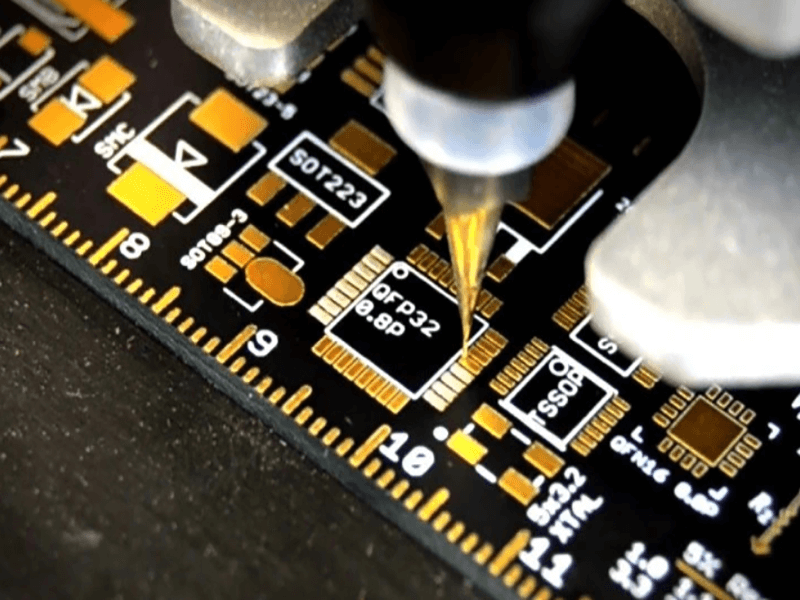
A fixture normally contacts programming pads through probes. When the board is being designed, it is worth keeping stable, accessible test points and providing their definition, because a pad that is too small, sits between components or is shadowed by a tall part is difficult to contact reliably and adds cost to the tooling.
Before a batch is programmed, the fixture is proved on a known-good board: the supply, the contact and the communication with the device are all confirmed. Where the customer supplies the fixture, it is best delivered before production is scheduled, so that the boards do not wait for it at the end of the line.
Version Control in the Programming Area
The most damaging failure in batch programming is a mixture of versions. The programme files are frozen before the run, and the file name, the time of the update, the hardware revision they apply to and the checksum are recorded. When a programme is updated, the reference board is re-verified; it is not acceptable to replace the file on the production station and continue.
After programming, the board number, the programme version and the result can be recorded according to the project’s requirement. Where the product uses a serial number, a MAC address or another unique value, the rule for generating it, writing it and preventing duplication is defined before the run rather than discovered when two units turn out to carry the same address.
Boards waiting to be programmed, boards that have been programmed, boards that failed and boards awaiting rework are held in separate areas. A board whose controller has been replaced during repair is programmed again before it returns, because a repaired board that was never re-flashed is a board that will fail in the field for a reason nobody will expect.
What the Functional Test Has to Establish
A successful write proves that data reached the device. It does not prove that the assembly works. The functional test exercises the supply current, the regulated outputs, the communication interfaces, the sensor inputs, the relay or motor actions and any other function the product defines.
The customer supplies the test procedure and the acceptance limits: the input voltage, the normal current range, the indication states, the expected communications responses and the way an abnormal condition is judged. An instruction that states only that the board should power up correctly produces different decisions from different operators, and it cannot be repeated.
When a board fails, the cause is separated into a programming failure, a poor fixture contact, a soldering fault and a material question before anything is repaired. After repair, the board goes through the complete functional test again, and the final result is retained.
Joining Programming and Test to Production
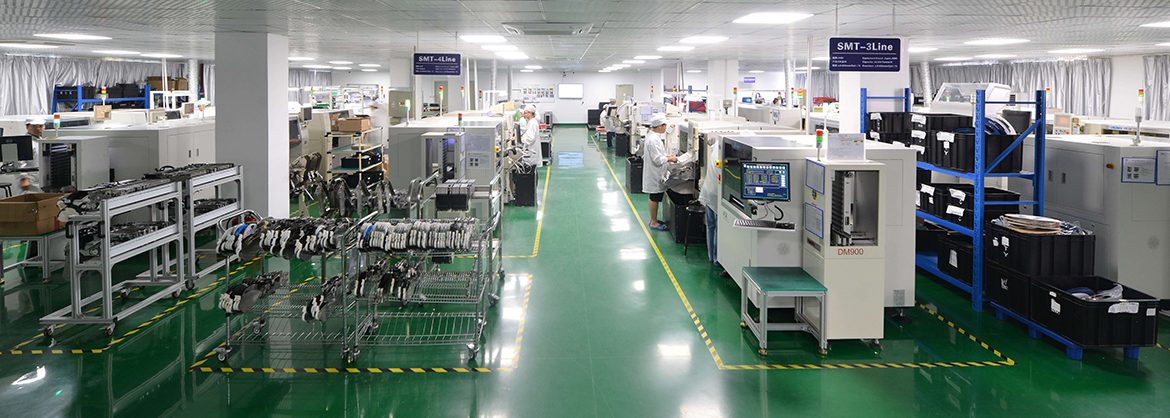
The programming and test stations sit after the surface mount stages and the optical inspection, and after any pin-in-hole soldering the product requires. Where the firmware supports the functional test, programming comes first; where some device must be programmed before it is placed, that is stated at the data review stage.
In volume, the boards move through the states — waiting to be programmed, programmed, tested, awaiting rework — rather than being stored together, and the cleaning, coating or unit assembly steps follow only behind boards that have passed. Where the order requires it, the hardware revision, the programme version and the quantity are marked on the packaging or in the record, and the frozen data and tooling are reused for the next order so that the batches remain comparable.
The assembly stages are handled through SMT assembly and through-hole assembly, the programming and verification through PCBA testing, the criteria behind the inspection through quality management, and a product that is assembled into its enclosure through box build assembly.
Planning Test Point Access Early
A large part of what testing costs is decided during the layout. A board that carries a set of accessible test points, defined in a table and placed clear of tall components, can be verified by a simple fixture on a short cycle. A board with no dedicated test points has to be tested through its connectors, which is slower, wears the connectors, and depends on the right cable being available at the station.
Where a product will be built in volume, the fixture is worth designing alongside the board rather than after it. The fixture definition — which points are contacted, what supply it applies and which signals it reads back — comes from the same test procedure the operator would otherwise follow, and deriving it that way ensures the manual test and the fixture test verify the same behaviour.
A fixture also makes the result repeatable. Manual testing depends on an operator connecting the correct cable to the correct point in the correct order, and a fixture removes that variability from the process. Where the quantity does not justify the tooling, the written procedure should still specify the connections and the sequence precisely enough that two operators reach the same conclusion on the same board.
FAQ
When should the firmware be shared? With the initial data package, so that the tooling and fixtures can be prepared while the boards are being built.
Why appoint a reference board? So that the programming and start-up sequence is demonstrated on a known board before the batch is released; it also becomes the check performed whenever the programme changes.
Does successful programming replace the functional test? No. Programming confirms that the data was written; the functional test confirms that the assembled board behaves as the specification requires.