Automotive PCBA: Planning Test and Reliability Work
An automotive PCBA is not necessarily a difficult board to assemble. What distinguishes it is where it ends up: inside a vehicle or a charging installation, where a fault is expensive to diagnose, difficult to reach and impossible to dismiss as a one-off. That changes the priorities of the assembly programme, moving the emphasis onto consistency between batches, onto the evidence that the assembly was built as specified, and onto the verification that has to be planned before the first board is produced rather than after.
Version Control Across Three Stages
Automotive projects tend to pass through a prototype, a pilot that the customer fits into their own product, and then a production release, with design adjustments at each step. The fabrication data, the bill of materials, the coordinates and the programme all move during that journey, and if they are not held at a single revision the batch that finally goes into production is assembled from documents that never existed at the same time.
The difficulty is sharpest where one hardware platform serves several customer configurations. The board is the same, the firmware and the population differ, and the difference has to be carried by an identifier that survives every stage: a version control convention for the board, the bill of materials, the programme and the test specification, applied from the pilot onwards.
It also helps to state which changes are permitted inside a revision. A device that can be exchanged without consequence is a different case from a device whose parameters affect the behaviour of the product, and the assembly house needs to know which is which before material is ordered rather than when a shortage appears.
Critical Material
The components that carry the automotive character of the product are the connectors, the transient suppressors, the fuses, the relays, the power devices, the communications devices and the sensor interfaces. Their temperature range, voltage rating, current capability, package and lot stability are all part of the specification, and a substitution that was not assessed can affect electrical performance, mechanical fit or long term behaviour.
Where the customer supplies a list of approved alternatives, the list is applied as written. Where a part is unavailable, the difference is presented for a decision, together with what it changes, and the decision is recorded. What the assembly operation should not do is treat a matching footprint as evidence of equivalence, because the footprint describes the mechanical interface and nothing else.
Process Discipline
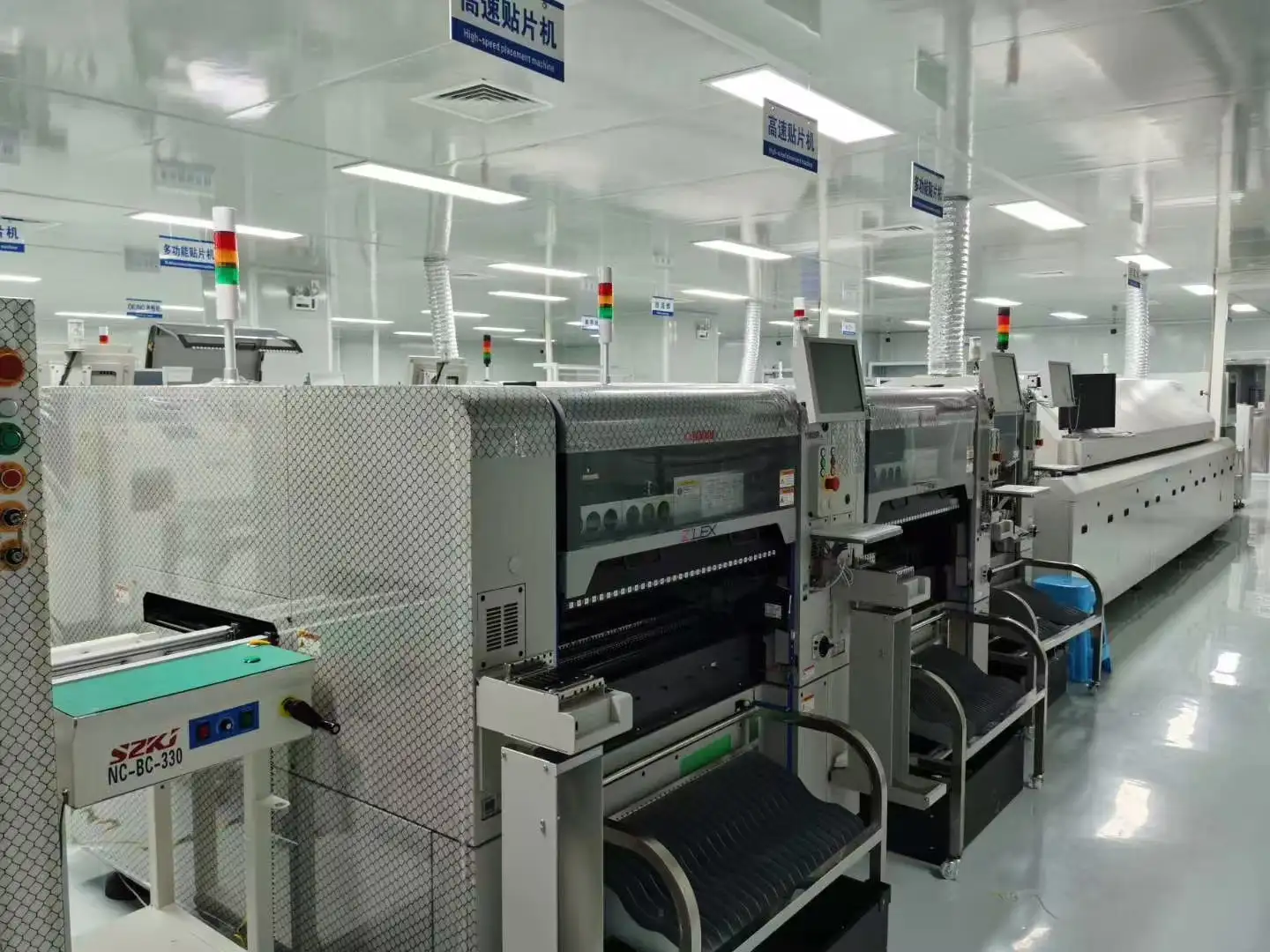
The boards carry fine pitch devices, small passives, communications devices and power management parts. Paste printing, placement accuracy, the reflow profile, optical inspection and the first article confirmation are all performed as they would be for any dense assembly, and the first article is not skipped because a similar board was built before.
Joints that are incomplete, bridged or misplaced are more than a quality statistic in this context. A defect that reaches the test stage turns a verification programme into a fault-finding exercise, and in a product that is being qualified for a customer, that costs time in a way that a re-soldered board does not.
Test Planned Before the Build
The functional test covers the power input and output, the communications interfaces, the sensor signals, the relay or output actions, the programming, the indication states and the protection functions. On a prototype this can be done manually; as the quantity rises, a test fixture and a written procedure are what keep the results comparable between boards.
Making the test repeatable is the point. A procedure that asks whether the board operates correctly produces a different answer from each operator, and an acceptance that rests on a judgement cannot be compared between batches or defended to a customer. The written procedure states the supply, the connections, the sequence and the acceptance values, and where a fixture is supplied by the customer it is proved before the batch is scheduled.
<img src="https://www.gopcba.com/wp-content/uploads/2025/05/会议一角.jpg" alt="test fixture and reliability verification of an automotive PCBA” />
Reliability Verification
Not every product requires an extensive programme, and the right scope follows the application. A board destined for a vehicle, a charger or a long-running installation is the kind that warrants attention to ageing, temperature rise, vibration, damp heat, connector cycling and the protection of the assembly, while a short-lived accessory does not.
The assembly stage supports this kind of work in a specific way: by ensuring that the boards used for verification are built under the same conditions as the boards that will be delivered, and by checking their state before and after the test. A verification result obtained from boards that were hand-built for the occasion says very little about what the production line will produce.
Where the customer runs the reliability programme themselves, the value the assembly can add is the record of what each board was, how it was built and how it tested before it was handed over. Without that, a failure in the test can be attributed to the design, the material or the process with equal plausibility.
Electrostatic Protection and Packing
The boards carry sensitive devices, so handling, testing and packing all take place under electrostatic protection: grounded stations, antistatic trays, bags and containers. Physical protection matters as much as the electrical kind, because connectors, relays and terminals that take the load in a stacked carton arrive deformed, and a deformed connector becomes an assembly fault at the customer’s line.
Batch Record
Automotive work tends to be verified and reordered over a long period, and a customer needs to know what each delivery contained: which material lots were used, which versions were built, how the boards tested and when they were shipped. When something does go wrong, that record is what allows the question to be answered as a material issue, a process issue, a test issue or a design issue within a short time instead of a long argument.
The operations are performed as SMT assembly, with pin-in-hole positions through through-hole assembly, verification through PCBA testing, protection where required through conformal coating and the governing criteria under quality management.
Change Control After the Release
Once a product is in production, the changes that matter most are the small ones: a device that has become unavailable, a firmware revision that fixes a field issue, a connector that its manufacturer has superseded. Each is routine on its own, and each invalidates part of the evidence that the product was validated.
The workable rule is that no change reaches production without a decision, and that the decision is recorded against the batch. A device change is assessed for its electrical and mechanical consequences; a firmware change is proved on a reference board before it goes near the line; a connector change is checked against the harness it has to mate with. Boards built before the change stay identifiable, because a customer who receives two versions of the same product without knowing it will eventually ask a question that nobody can answer.
That discipline is what makes the batch record useful rather than decorative. A record showing what was built and when, together with the changes applied and the reason for them, turns a potential investigation into a lookup.
FAQ
Why plan the test before the build? Because a fixture, a test procedure and the acceptance values take time to prepare, and a test invented after the boards exist cannot produce comparable results.
Can a substitute device be used if it fits? Only if the difference has been assessed against the function; the footprint confirms the mechanical interface and nothing more.
What does the batch record contain? The material lots, the versions built, the test results and the shipping details, which is what makes a later question answerable.