SMT Supplier Evaluation: From Trial Batch to Volume Delivery
Once a prototype has been confirmed, the next decision is less technical than it looks: who will build the boards, and will that relationship still be the right one when the quantity rises. A first batch of a few dozen boards can be produced almost anywhere, and the differences between suppliers only become visible when the product moves towards repeat orders, when the data changes, and when the delivery date has a consequence attached to it.
A useful supplier evaluation therefore looks past the quotation and the placement count to the things that determine what the relationship will be like in a year: whether the data is reviewed before production, whether questions are raised early, whether a batch can be repeated, and whether the service continues as the quantity grows.
What Changes as the Quantity Grows
A first batch is usually a handful of boards used for debugging and demonstration. The second is a few dozen for a customer to evaluate, and the third may be several hundred that go into equipment. The technical work is similar in each case, but the consequences of an error are not.
That progression is what makes continuity valuable. Where the same supplier builds all three, the stencil, the placement programme, the process parameters and the test method accumulate, and each batch begins from a known position. Where the supplier changes between stages, that information has to be rebuilt, and the rebuilding is usually done while the schedule is running.
It also changes what the customer can ask for. By the third batch there is a history to compare against, and questions about consistency have an answer rather than an opinion.
Data Review Before Production
The first visible difference between suppliers appears at this stage. A supplier who reviews the fabrication data, the bill of materials and the coordinates, and who comes back with a question about a footprint, an ambiguous orientation or a part that cannot be bought, is doing work that the customer would otherwise discover later.
The questions themselves are the evidence. A review that produces no question on a first-article order is not necessarily a sign of a clean design; it may be a sign that nobody looked. The useful review is specific: this connector is specified by height but the drawing does not show which side it mates on, this part number appears in two packages, this test point is under a component.
For the customer, the practical consequence is time. Each of those questions is a message at the enquiry stage and a stopped line if it is found later, and the difference between the two is a day in one case and a week in the other.
Engineering Support and the Speed of a Reply
The second difference appears during the run. Technical questions do not stop at the enquiry stage: a substitution is proposed, a limit in the test procedure is ambiguous, a component arrives in a package that differs from the one specified. What matters is whether there is an engineer who can answer, and whether the customer has a person to talk to directly.
A relayed question is the expensive kind. Where the message has to travel from the line to an account manager to the customer’s purchasing contact and then to an engineer, the machine waits for the answer to complete a journey that ought to take minutes. A direct technical channel between the two engineering teams removes most of that delay, and it is worth more to a schedule than any amount of expediting once a problem exists.
It also changes the quality of the decisions. An engineer who understands the purpose of the board can propose a substitution that is genuinely equivalent, rather than one that merely looks similar.
<img src="https://www.gopcba.com/wp-content/uploads/2026/08/高温.jpg" alt="quality control checks on a small SMT batch” />
Quality Control That Can Be Described
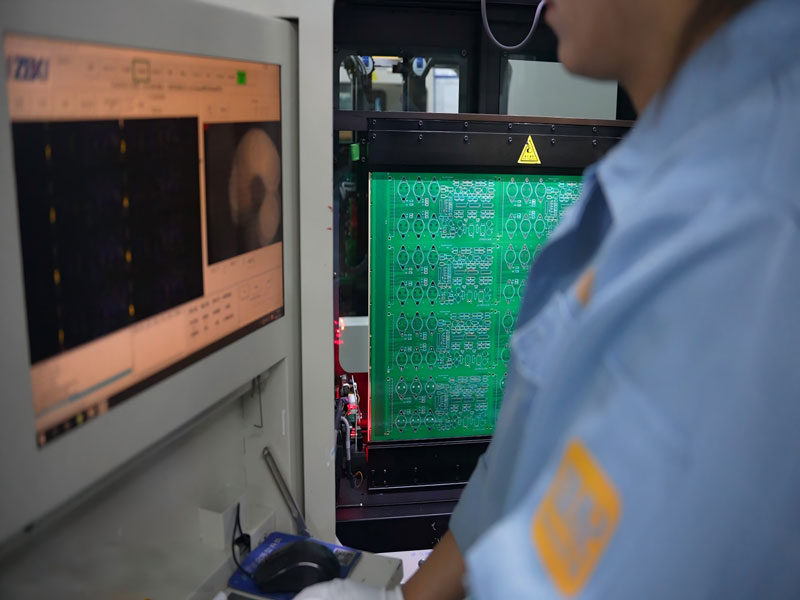
Quality is easy to claim and easy to check. The checks that matter on a small batch are printing inspection, a first article verification, optical inspection after reflow, a defined recheck of the inserted joints and a functional test where the product requires one.
The test of whether a process is real is whether it can be described concretely. Which positions are inspected, what limit defines a pass, what happens to a board that fails, whether a repaired board is retested and whether the results are recorded. A supplier who can answer those questions without preparation is describing a process; one who answers in general terms is describing an intention.
For a product that will be reordered, the record matters as much as the checks. The batch revision, the material used, the substitutions agreed and the test result are what allow the next delivery to be compared with the last, and no inspection can substitute for that comparison.
What a Trial Order Reveals
A small-batch trial is a cheap way to see how a supplier behaves under the conditions that a long relationship will create. The order is small enough that the cost of a mistake is limited, and large enough that the process has to be organised rather than improvised.
The observation is straightforward. Did the data receive a technical response before production started, or only an acknowledgement? Were queries raised in one message with the reasoning attached, or one at a time as the work progressed? Was the first article reported, or merely performed? Did the delivery arrive on the date that was given, and did the quantity, the packing and the identification match what was described?
Those answers predict the next order far better than a quotation does. A supplier who raises three concerns at the enquiry stage and answers them in a day will handle the second revision of the product in the same way, and a supplier who accepts files without comment will continue to accept them.
The trial also establishes the working relationships that make the rest of the project efficient: who answers a technical question, how quickly a substitution can be approved and who confirms a delivery date. Those contacts are worth more than the prices in either quotation, because they are what the schedule depends on when something unexpected happens.
Continuous Service From Trial to Volume
The last consideration is whether the supplier can follow the product. A small order needs flexibility and quick response; a repeat order needs consistency and a stable process; a larger batch needs capacity and material planning. They are different requirements, and a supplier who handles one of them well does not automatically handle the others.
The way to establish this is to ask what happens at each stage rather than to assume that capability at one stage implies capability at all of them. Where the answer describes the same process at increasing volume, the transition will be uneventful; where it describes a different arrangement, the customer will be repeating the evaluation later.
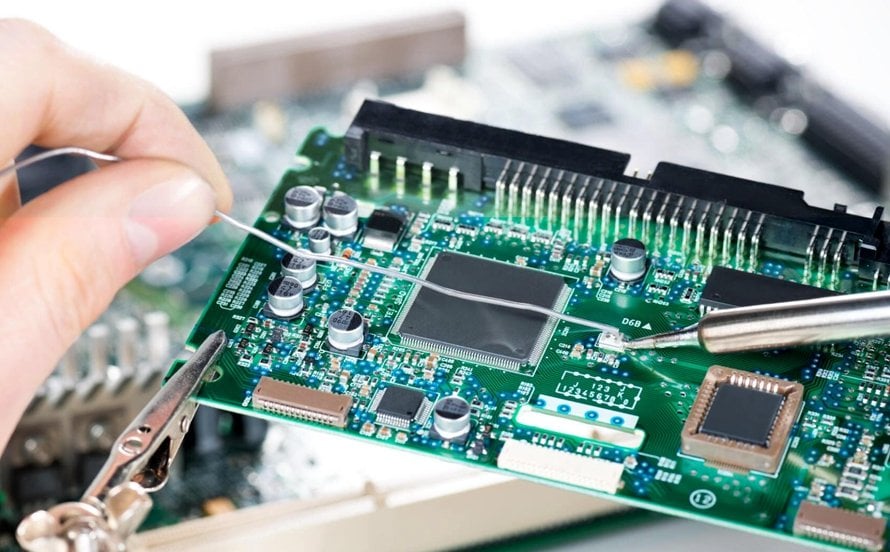
The operations involved are the familiar ones: SMT assembly for the placed devices, through-hole assembly for inserted parts, PCBA testing for verification and the controls that keep a batch comparable under quality management.
FAQ
What is the most useful question to ask a new supplier? What concerns would you raise about this design before building it. The answer shows how carefully the data has been read.
Does a small trial order predict how a larger one will go? It predicts the quality of the communication and the care taken with the data, which is usually what decides larger orders.
Why does continuity matter if the process is standard? Because the stencil, programme, parameters and test definitions accumulate into a repeatable batch, and rebuilding them costs the time that continuity saves.