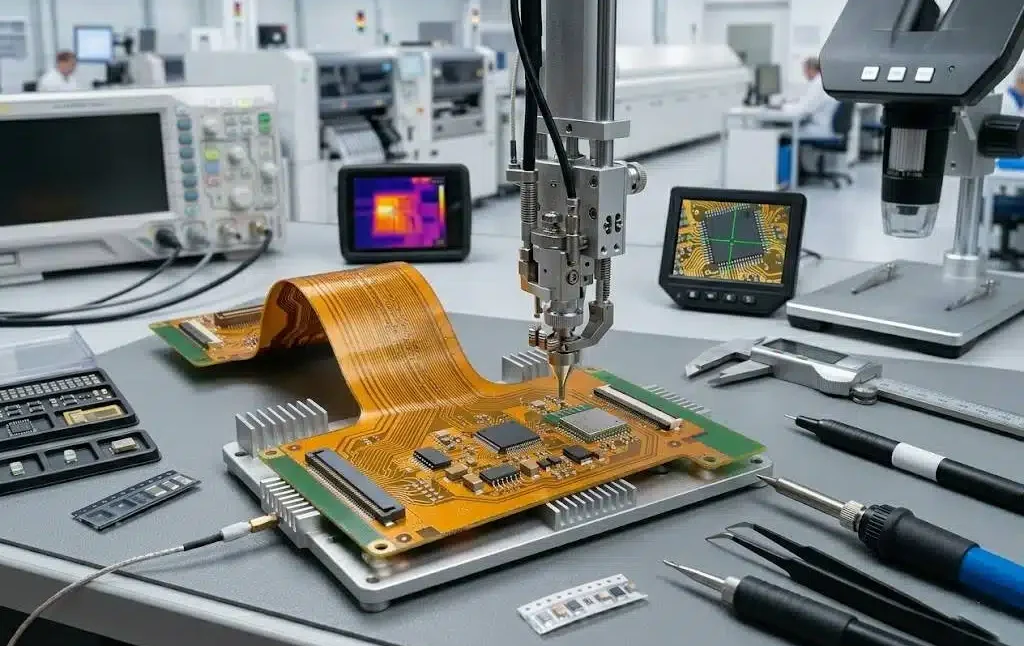
PCB Calibration Schedule for Equipment: Keeping the Instruments True
Electronics manufacturing has become a discipline of small details. Solder paste volumes, placement accuracy, temperature profiles and inspection limits all add up to the final result. This guide looks at PCB calibration schedule for equipment from the perspective of a PCBA factory floor, covering keeping equipment calibrated and the checks that turn a capable line into a predictable one.
1. The Order We Follow
Every job that leaves the factory passes through the same sequence. The order matters because each stage depends on the one before it, and a shortcut at the front shows up as a defect at the back.
1. Engineering review of the data package, including the notes that decide PCB Calibration Schedule for Equipment and the features that will need special attention on the line.
2. Tooling and program preparation, with the stencil, the fixture and the placement data checked against the drawing.
3. First article run for keeping equipment calibrated, measured and signed off before the rest of the lot is allowed to continue.
4. Production with in process checks, so the trend is watched while there is still time to correct it.
5. Final inspection, packing and delivery, with the inspection record travelling alongside the boards.
2. What PCB Calibration Schedule for Equipment Means in Practice
Which instrument is calibrated, how often and against which standard.
3. Why It Matters
A reading from an uncalibrated instrument is an opinion rather than a measurement.
4. Doing It
The schedule is kept on the equipment and the certificates are filed with the records.
5. Running the Build on the Line
The result depends on the whole chain, not on any single machine. The board design fixes pad sizes and spacing, the printer controls the solder volume, the placement machine positions every component and the reflow oven forms the joints. Each step feeds the next one, which is why SMT PCB assembly should be reviewed as one complete process instead of a collection of separate operations. Pairing that view with turnkey PCB assembly gives the team a shared reference for every change, from a stencil tweak to a new component.
6. Quality Checks That Keep Defects Away
Inspection catches defects before they leave the factory, but its real value is the feedback it gives. When a solder joint fails, the engineer learns whether the paste print, the placement or the reflow profile caused it, and that closed loop between inspection and process control is what pushes defect rates down month after month. Boards that pass visual checks still need electrical verification, because a cracked joint or a wrong component only shows up under power; functional test, in-circuit test and burn in each add confidence, and that is exactly what a structured PCBA testing program delivers.
Reliability does not come from one lucky batch, it comes from repeatability. Parameters are recorded, machines are calibrated, operators are trained, and the same result is produced on Monday and on Friday. Buyers should ask for process documentation, inspection data and test reports, because those records show whether a real quality management system exists in practice or only on paper.
7. Where These Boards Are Used
Application experience also matters for manufacturability. A factory that has built similar products for PCB quality, equipment and calibration already knows the typical failure modes, the component pitfalls and the customer questions. That knowledge shortens the DFM review, avoids repeated trial batches and makes the transition from prototype to volume production much smoother for the buyer.
8. Frequently Asked Points
A few questions come back in nearly every discussion about PCB Calibration Schedule for Equipment. The answers below are the ones we give on the factory floor rather than in a brochure.
1. Which finish should be chosen? The one that suits the assembly process and the storage conditions. PCB Calibration Schedule for Equipment behaves differently on each finish, so the choice is made together with the assembly house rather than after the boards are already made.
2. How long does it take? Standard work is quoted in days from data release. Anything that needs new tooling or a special material is quoted with the tooling time shown as a separate line.
3. Is the data kept? Yes. The working files, the stack and the inspection record are kept against the part number, so a repeat order is built from exactly the same starting point.
9. Choosing the Right Manufacturing Partner
A dedicated line only pays for itself when it runs constantly, and keeping process data, calibration records and quality documentation current takes engineering time that is easy to underestimate. Most product companies therefore choose a partner that spreads its equipment investment over many customers and offers services such as component procurement service and PCB assembly under one roof.
When factories are compared, the price per board should never be the only number. Process controls, inspection equipment, component sourcing and communication decide the real cost, and a partner that reviews files before production, reports risks honestly and keeps its delivery promises will always be cheaper in the long run than one that quotes low and surprises later.
10. Details That Are Easy to Overlook
Communication decides how well keeping equipment calibrated matches the product intent. When the buyer shares the operating environment and the reliability target, and the factory answers with concrete process choices and test plans, small process changes are approved before they become quality incidents. Regular reporting during production keeps both sides aligned from prototype to volume, and a written summary of every change gives both parties a record they can trust at the end of the program.
11. How gopcb Supports Your Build
Customers who compare suppliers often ask how we handle certificate, and we answer with data from real builds and a delivery record rather than a brochure.
gopcb runs SMT lines supported by solder paste inspection, automated optical inspection and functional test in one facility. Our engineers review your Gerber files and BOM before production, discuss the process options, and ship boards with test records that give you confidence in the field.
If you are planning a new product or moving an existing design to volume production, send gopcb your design files and requirements. You will receive a DFM review, a clear quotation and a schedule you can plan around – and boards that work the way they should.
Collecting data about keeping equipment calibrated pays for itself quickly. Print reports, placement statistics, oven profiles and test results cost little to record, yet they turn arguments into decisions: when a customer complains, the batch record shows what actually happened, and when a process drifts, the trend line reveals it before scrap grows. Factories that treat records as part of the process rather than paperwork tend to find problems while they are still cheap to fix, and their customers see the difference in delivery performance and defect rates over time.
Conclusion
Put simply, PCB Calibration Schedule for Equipment is not one decision but a series of small ones running from the first drawing to the shipping carton. Each of them is ordinary on its own, and taken together they decide whether the boards reach the assembly line ready to use. Handling them in order, with the numbers written down, is what separates a stable supply from a permanent firefight.
That covers everything in “PCB Calibration Schedule for Equipment: Keeping the Instruments True”. If you need layout design, PCB fabrication, SMT assembly, component sourcing, stencil making, conformal coating, box build or functional testing, our engineering team can review your files and quote the work. Send your design data to gopcb and we will return a manufacturability review, a clear price and a firm delivery date.