IPC-A-610 and J-STD-001 Acceptance Criteria Compared
Two documents govern most electronics assembly work, and they are frequently confused. IPC-A-610 describes what a finished assembly should look like, while J-STD-001 describes how it should be made. One is an inspection standard and the other is a process standard, and knowing which one applies to a question saves a great deal of argument on the shop floor. This guide explains how gopcb applies both, and where customer requirements take over.
What Each Standard Covers
IPC-A-610 is the acceptability standard for electronic assemblies. It defines visual criteria for solder joints, component placement, cleanliness and mechanical condition, and it is written to be used by an inspector looking at a board. Its language is descriptive: a joint is acceptable, acceptable with conditions, or defective.
J-STD-001 is the requirements standard for soldered electrical assemblies. It covers materials, equipment, process control, operator qualification and verification, and it expects the manufacturer to demonstrate control of the process, not only the appearance of the output. Inspection criteria are referenced, but the emphasis is on how the work is performed.

The Three Product Classes
Both standards recognise three classes. Class one covers general electronic products where the primary requirement is function. Class two covers dedicated service products where continued performance and extended life are required, and interruptions are not desirable. Class three covers high performance products where equipment downtime cannot be tolerated and the end use may be life critical.
The class changes the criteria, not the process. A fillet that is acceptable in class two may be a defect in class three, and inspection frequency and documentation expectations rise with the class. The class should be stated on the drawing and the purchase order, because assumptions about it are a common source of disputes. The same joint can pass on one program and fail on another without anything changing on the line, which is why the class belongs on the drawing rather than in someone memory.
Acceptance Criteria for Solder Joints
Solder joint criteria cover wetting, fillet shape, voiding, surface appearance and the amount of solder present. Each class sets different limits. Class two tolerates slightly less than ideal wetting on some joint types, while class three expects full wetting and a fillet that indicates good intermetallic formation across the whole joint.
Criteria also define what is not acceptable in any class. A cracked fillet, a disturbed joint or a cold joint with poor wetting fails regardless of the product class, because those conditions indicate the connection itself is unreliable. Our notes on solder defects describe how those conditions arise.
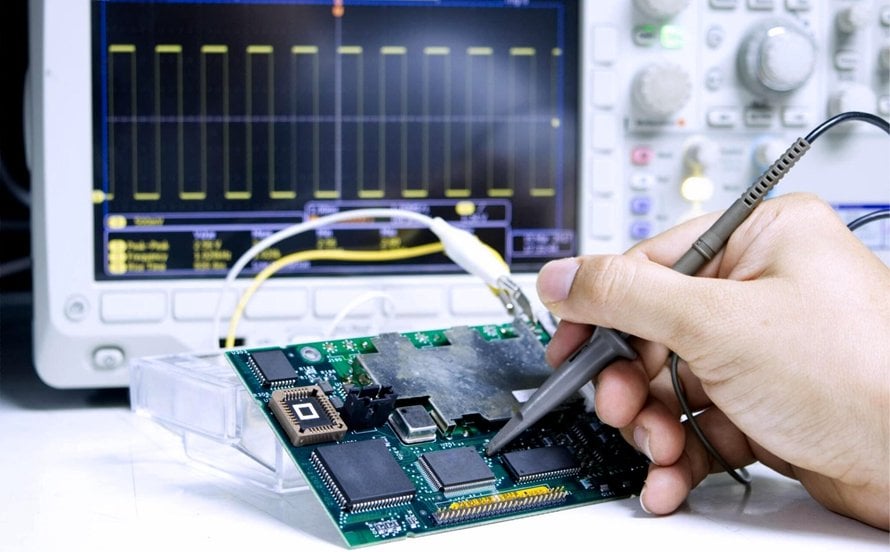
<img src="https://www.gopcba.com/wp-content/uploads/2020/12/curve_overlay_big.png" alt="J-STD-001 workmanship reference chart used on an assembly line” />
Process Requirements in J-STD-001
J-STD-001 requires documented process controls: material specifications, storage conditions, equipment calibration, solder temperature limits and operator training records. It also requires that the manufacturer select and validate the process for the specific assembly, rather than assuming that a previously qualified process will suit a new product.
Verification is part of the requirement. The standard expects inspection, test and, where necessary, destructive analysis to confirm that the process is producing acceptable work. That expectation is what turns an assembly house into a controlled process rather than a workshop, and it is the reason customers ask for J-STD-001 compliance when they ask for anything at all.
Class 3 Consequences for Design and Cost
Class three certification is not limited to the assembly line. It pushes back into the design, because tighter criteria on annular ring, fillet and voiding require more process margin. Pads may need to be larger, stencils thinner and profiles more carefully validated, and the yield loss during ramp is higher.
The cost consequence should be discussed before the design is released. A product built to class three with a layout designed for class two will generate unnecessary rework, and the blame usually falls on the assembly process rather than on the mismatch. The design release checklist is the right place to confirm the class and its implications.
Documentation and Traceability
Both standards expect records. Training certificates, calibration records, material certificates, process parameters and inspection results all form part of the evidence that the standard was followed. Traceability should link a finished board to the materials and processes that produced it.
Records also make investigations faster. When a defect appears in the field, a manufacturer with complete records can identify the material lots and process conditions used for that board and compare them with a known good batch. The production process flow documentation supports exactly this kind of review.
Training and Certification
Certification is personal as well as organisational. Inspectors are trained and certified to IPC-A-610, and operators to the J-STD-001 requirements that apply to their tasks. Certification must be renewed on a defined cycle, and expired certification is treated as no certification by most customers.
Training should be practical rather than theoretical. The most useful sessions use real boards from production, including marginal examples, so that inspectors calibrate their judgement against the standard rather than against habit. A common failure is a team that has been trained once and has drifted in its interpretation ever since. Records of who is certified, for which standard and until when, should be kept where production can see them, so that a supervisor never assigns an operator with expired certification to a critical task.
When Customer Specifications Override
Customer requirements take precedence when they are stricter than the standard. Many aerospace, medical and automotive customers publish their own workmanship documents, and those documents may tighten criteria, add inspection steps or require specific materials. The assembly house must read them and flow the requirements into its work instructions.
Conflicts should be resolved before production, not during it. If a customer document contradicts the drawing or is silent on a point that the drawing controls, that should be clarified in writing. Undocumented assumptions about acceptance criteria are the most common cause of rejected shipments. Where a customer document is silent on a criterion, the default is normally the referenced IPC or J-STD requirement, but that assumption should be confirmed in writing.
Using Standards Without Over-Specifying
Applying class three criteria to a consumer product adds cost without adding value, because the extra inspection and tighter limits do not change the way the product is used. The class should follow the application, and the application should be stated honestly. The cost of over-specification is paid twice, first in tighter process limits and then again in the inspection time required to prove that those limits were met.
Equally, a design should not be built to class two simply because the customer did not specify. The correct approach is to state the class, build to it, and document the decision. That record, together with the inspection evidence, is what allows a manufacturer to demonstrate consistent PCB quality when it is questioned.
FAQ
What is the difference between IPC-A-610 and J-STD-001? IPC-A-610 is an acceptability standard used to judge finished assemblies by inspection, while J-STD-001 is a requirements standard for the soldering process, materials and operator qualification. One defines what good looks like, the other defines how to achieve it.
Which class applies to my product? Class one covers general products, class two covers dedicated service products and class three covers high performance or life critical equipment. The class should be agreed with the customer and printed on the assembly drawing so that inspection criteria are unambiguous.
Do I need class three for automotive or medical boards? Not automatically. Many automotive and medical products are class two, with additional customer specific requirements layered on top. The right answer comes from the customer specification and the risk assessment, not from the industry label alone.