Manufacturability Review Before the Data Is Released
A design review that happens after the data is released is an inspection, not a review. The manufacturability review is the step where the drawing, the process and the volume are compared while a change still costs a revision rather than a batch.
What the Review Covers
The review compares the design against the capability of the shop that will build it, not against a general standard. Capability differs between shops and it is the binding constraint.
The scope is the whole flow: imaging, etching, plating, drilling, mask, finish, assembly and test. Each step has limits, and a design that is comfortable in one step can be marginal in another.
Inputs and Timing
The inputs are the fabrication drawing, the stackup, the assembly drawing, the bill of materials and the volume forecast. Without the volume, the review cannot judge whether a marginal feature is worth tooling for.
The timing that matters is before the order. A review that arrives with the purchase order becomes a list of waivers, and each waiver is a risk that has been accepted without being priced. Our design release notes describe where the review sits in the flow.
Feature Checks
The minimum line width and spacing are checked against the copper weight, because the two interact: a heavier copper layer etches with more undercut and needs a wider tolerance. Annular ring and hole size follow the same logic.
The aspect ratio connects the hole diameter to the board thickness and decides whether the plating reaches the middle of the barrel. Our aspect ratio notes describe the limit and how it is verified.
Assembly Checks
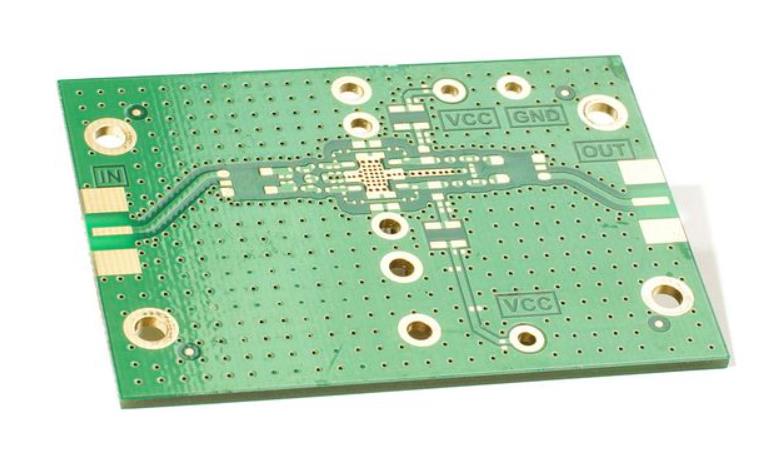
Component spacing, courtyard clearance and the distance from the board edge to the nearest part decide whether the board can be placed, reworked and depanelised without damage.
The thermal profile is part of the same check. A board with a thick copper plane and a small component on the same side does not heat evenly, and the difference should be identified before the profile is written. Our thermal notes describe the analysis.
Test and Inspection
Every design needs a way to prove that it works. The review should confirm that there is access for the probes, that the test points are on a grid, and that the fixture can hold the board while it is probed.
Inspection coverage should be checked in the same pass. A joint that cannot be seen by the optical system and cannot be reached by a probe is a joint whose quality is assumed. Our inspection notes describe the coverage that the programming can achieve.
Cost and Yield Drivers
The review should name the features that drive cost, because those are the ones worth changing. Layer count, panel utilisation, finish, tolerance class and inspection method are usually the largest contributors.
Yield drivers are different from cost drivers. A feature that is cheap to build but has a low first pass yield costs more in the end, and the review should distinguish the two.
Recording the Outcome
Each finding should be recorded with the decision taken and the reason, so that the same question is not reopened at the next build. The record also shows the customer or the auditor that the review was performed rather than claimed.
Where a finding is accepted without a change, the acceptance should be explicit and the risk should be named. Our component selection notes describe the same discipline applied to the bill of materials.
Process Control and Verification
The process window is set by the narrowest step in the flow, so an improvement anywhere else shows up as margin rather than as yield until that step is addressed. A short note on the drawing about handling, storage or packaging is often worth more than an extra decimal place on a tolerance.
Where a value sits close to a process limit, the drawing should say so, since the shop can then open the process window rather than working to a nominal figure that carries no tolerance. A stack-up that is drawn rather than described removes most of the ambiguity from a quotation, and it lets the fabricator price the board against the dielectric and copper weights that will actually be used.
Where the requirement is not written down, the shop supplies its own default, and the default is chosen for the process rather than for the design. The measurements that matter are the repeatable ones: conductor width and spacing, annular ring, finished hole size, plating thickness and surface finish are all verifiable on a coupon that travels with the panel.
Checks Before Release
The checks that matter are the ones performed on the product rather than on a sample kept for the purpose, because a coupon that travels with the panel is the only evidence about that panel. Where a requirement can be measured, it should be measured at the point of manufacture and recorded against the board or the lot it applies to.
A parameter that is set once and never re verified drifts, and the drift is usually discovered by a defect rather than by the record.
Verification and Records
The tooling, the material and the profile form one system, and a change to any of them should be assessed against the other two before it is released.
Points to Confirm at First Article
Where the process window is narrow, the measurement resolution has to be better than the window, or the data cannot distinguish a good part from a marginal one. A record that identifies the operator, the date and the settings is worth more than a record that identifies only the result.
FAQ
How long should a manufacturability review take? It takes hours for a straightforward design and days for a dense one, and it is shorter than the correction it prevents.
Can the review be replaced by a design rule check? No. A rule check verifies geometry against a rule, and the review questions whether the rule applies to this design and this shop.
What does gopcb provide for manufacturability review? We provide a review against the actual shop capability, feature and tolerance checks, assembly and thermal review, test and inspection access review, cost and yield driver identification, and a written record of each finding with its disposition.