Solder Wick Selection and Technique for Board Rework
Solder wick looks like the simplest tool in the rework kit and behaves like one of the most demanding. Used well it removes a joint cleanly in a second or two with no damage to the pad. Used badly it lifts a pad, scorches solder mask and leaves the operator convinced that the board was defective. The difference comes from wick selection, heat delivery and technique, and all three can be taught and measured.
What Solder Wick Does and Where It Fails
Wick is a braid of fine copper strands that draws molten solder away from a joint by capillary action. The flux coating on the braid cleans the surface as heat is applied, and the alloy then wets into the strands and is pulled out of the joint by surface tension.
The method fails when heat arrives too slowly. If the alloy does not fully melt, the braid sits on a partly solid joint, the operator presses harder, and the pad takes the load instead of the solder, and the damage is often permanent. Thermal mass, not technique, is the usual culprit on heavy copper or on ground planes.
Wick Construction: Braid, Flux and Size
Wick is sold as a flat braid with a flux coating, in widths from less than a millimetre to several millimetres. The strand count and weave determine how fast it draws solder, while the flux type determines how much residue remains and whether the removal is clean enough for a no-clean process.
Unfluxed braid is also available for users who add their own chemistry, and it suits processes where residue control is critical. Whatever the type, the braid must be kept clean and dry before use, because contamination on the strands reduces wetting exactly as it would on a pad.

Cheap braid with loose weave and uneven flux coverage draws solder slowly and leaves more behind, which tempts the operator into longer dwell times that damage the board.
Choosing Width Against the Joint
Width should match the joint rather than the pad. A narrow braid on a large joint removes solder slowly and forces repeated contact, while an oversized braid spreads heat over a wide area, softening nearby solder and disturbing components that should have stayed in place.
For fine pitch work, a braid slightly narrower than the pad is usually right, applied along the row of leads so the solder is drawn away in one pass. For through hole joints, a wider braid on both sides of the board removes the barrel solder more evenly than working from one side alone.
Heat Delivery and Iron Tip Selection
The iron must deliver enough thermal energy to melt the joint and the solder that has already been removed, and to keep doing so as the braid heats up. A large, flat tip transfers heat over a wider contact area than a fine conical tip, which is why wide tips are usually paired with wide braid.
Temperature is a lever but not the only one. A higher setting with a small tip heats the pad unevenly and risks the mask, while a moderate setting with a large tip brings the joint up quickly and evenly. Set the station to the manufacturer’s recommended range and let tip mass do the work.
Flux Choices for Clean Removal
Flux activity determines how quickly the joint surface is cleaned. A mildly activated flux leaves less residue and is usually sufficient on a freshly finished board, while an oxidised or heavily plated surface may need a more active chemistry to wet in the time available.
Where the assembly is no-clean, the residue left by the braid must be compatible with that decision, and the joint must still be clean enough for the replacement component to wet. In critical work, clean the area afterwards and verify with a contamination check rather than assuming the flux has evaporated.
Technique: Pressure, Dwell and Movement
Good technique uses light pressure, short dwell and continuous movement. The iron is placed on top of the braid so that heat passes through it into the joint, not directly onto the pad. The braid is moved slowly along the joint as the solder wets in, and the iron is lifted as soon as the joint runs dry.
Adding a small amount of fresh solder to an old joint before wicking improves heat transfer and makes removal faster. That counterintuitive step is one of the most effective habits in rework, because it converts a difficult joint into a well wetted one.
Protecting Pads, Vias and Solder Mask
The pad is the part of the board easiest to destroy. Overheating weakens the adhesive that holds copper to the laminate, and once the bond fails the pad lifts with the braid. Solder mask around the joint softens in the same way and may blister or wrinkle if the dwell is long.

Where a pad has already been reworked several times, consider whether the joint should be removed by a different method. A hot air tool with local preheat is gentler than repeated direct contact, and it distributes the heat over a wider area.
Cleaning Up After Desoldering
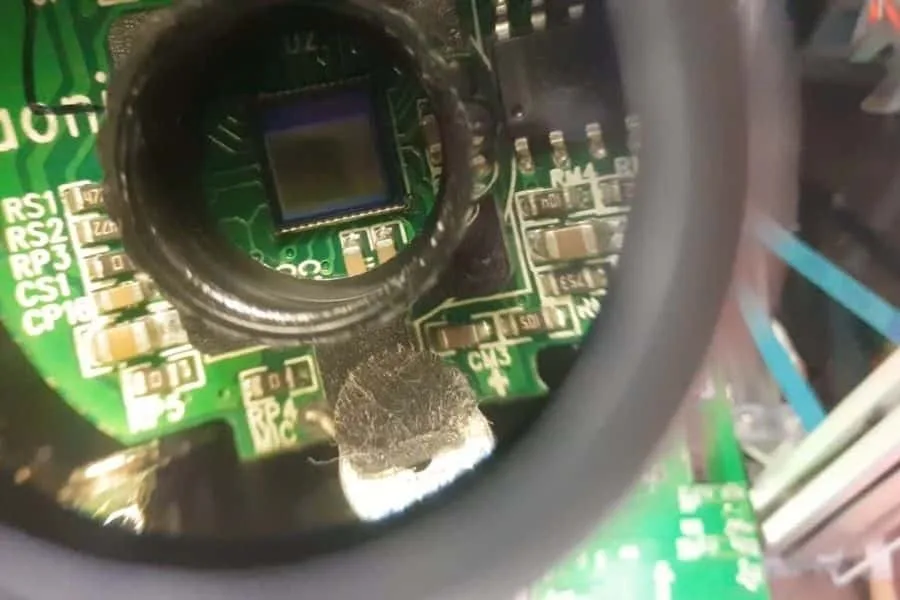
After removal, the site carries flux residue, loose braid fibres and sometimes small solder fragments. Clean the area with the appropriate solvent and an antistatic brush, then inspect under magnification for stray fibres, which are the most common cause of a short after a rework operation.
The pad surface should be examined for solderability before the replacement component is fitted. A pad that has lost its finish or has been overheated may need gentle re-tinning, and if the wetting is poor, the correct decision is to stop rather than to force the joint.
Stocking and Storing Wick
Wick has a shelf life because the flux coating oxidises and loses activity. Store it in the original packaging, away from heat and humidity, and date the containers so that old stock is used before new. A braid that has been open on a bench for months will behave noticeably worse than a fresh one.
gopcb treats rework consumables as controlled materials rather than as bench supplies, because the cost of a damaged pad is measured in scrapped assemblies, not in the price of a metre of braid, and pad damage is one of the quality issues that cannot be inspected back into the board. Keep a small range of widths rather than a single size, and replace a braid as soon as it stops drawing solder quickly.
FAQ
Can I use solder wick on any joint? It works on most exposed joints, but it is a poor choice where the pad is fragile or already reworked several times. Consider hot air or a dedicated desoldering tool for those sites.
Why does the braid stick to the pad? The joint was not fully molten when the braid was placed, so the operator pressed harder and the alloy solidified around the strands. Increase thermal mass rather than pressure.
Should I add fresh solder before wicking? Yes. A small amount of new solder improves heat transfer across an older joint and makes the removal faster and cleaner, which reduces the risk to the pad.