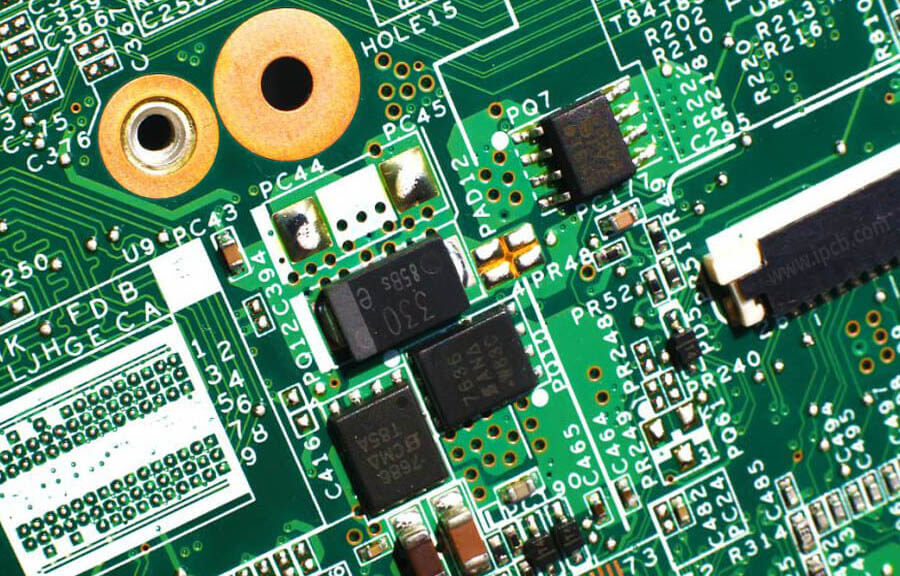
Serialization: Design Rules and Process Limits
Traceability is often treated as a labeling task, and it is really a data task. A board that carries a barcode but has no record of which paste lot, which profile or which operator produced it is not traceable; it simply has a number. Serialization becomes useful only when the number is linked to the process that created the unit.
Why Traceability Is a Process Requirement
The value of a traceable history appears on the day something goes wrong. If a defect is found in a shipped lot, the record answers which units share the suspect material, the suspect machine and the suspect profile, and it converts a blanket recall into a targeted containment. Without it, the only safe assumption is that every unit is affected.
Regulated products make the requirement explicit, but the operational case applies to any volume manufacturer. Traceability also shortens investigations because the question changes from what could have caused this to what was different about the units that failed, which is a far narrower question with a much cheaper answer.
Choosing What to Serialize
Unit-level traceability places a unique identifier on every board, while lot-level traceability identifies a batch. Unit-level costs more at marking and data handling but allows a single board to be investigated on its own, which is what a field return requires. Lot-level is often enough for a product sold as a kit or a consumable assembly with no individual identity.
The decision also depends on whether the identifier has to survive the environment. A label that falls off in the field breaks the chain at exactly the moment it is needed, so products that see heat, solvents or abrasion usually use a laser-marked identifier or a label placed where it will not be touched. The marking method is part of the traceability design rather than a finishing choice.
Label Content and Standard Formats
A useful label carries more than a serial number. Part number, revision, date code and lot are the minimum, with the serial number providing the key that links to the full record. Where the customer specifies a format, the standard is usually a GS1 application identifier structure or a two-dimensional symbol defined by a data syntax standard, so the same label can be read by different systems.
Content should be defined once and applied consistently, because a label that carries the same information in a different order on each product line forces every downstream system to be customised. The label layout, the data structure and the print location belong in the drawing, not in a work instruction that changes with the shift.
<img src="https://www.gopcba.com/wp-content/uploads/2026/08/Electrical-Testing.jpg" alt="Data matrix barcode laser marked on a finished circuit board” />
Barcode Quality and Read Rate
A symbol that scans on the bench may fail on the line, and the difference is print quality. Two-dimensional symbols are graded against a print quality standard that scores contrast, modulation and cell size, and a grade below the agreed minimum produces a scan failure rate that is both predictable and avoidable. Verifying the grade on the first label of each print run is far cheaper than reworking a batch of unreadable units.
Placement matters as much as print quality. A label placed over a via, on a curved surface or close to a high-contrast edge can defeat a scanner that is otherwise adequate. Where marking is laser-based, the contrast between marked and unmarked material must be sufficient for the reader, which sometimes requires a dedicated marking area on the board.
Linking Material Lots to Units
Traceability starts upstream with the incoming material. The reel, the tube and the tray each carry a lot that should be recorded against the production order, and where a feeder is loaded with a specific lot, the link between the feeder position and the unit is what makes the record useful. Barcodes on the reel and a scanner at the feeder accomplish this with little extra work.
Where the process runs multiple lots in one run, the record has to show the point at which the change occurred. A time-stamped changeover entry linked to the unit sequence is enough, provided the units are identified in order; without that link, the record can only say that a lot was used somewhere in the run.
Capturing Process Data Automatically
Manual entry is the weak point of every traceability system, because it is skipped when the line is busy. Machine data is more reliable: profile files from the oven, SPI and AOI results, printer settings and test results can all be captured automatically and linked to the unit or the panel. The inspection results in particular are valuable because they carry a time stamp and a position that ties directly to a unit.
Where a machine cannot be connected, the substitute is a record that is quick to complete and hard to skip, such as a scanned check sheet. A form with twenty fields will be filled in badly; one with three fields and a barcode will be filled in correctly, and a smaller accurate record beats a large unreliable one. The same principle applies to label data: capture what will be queried, not everything that could be.
Data Storage and Retention
The record has to survive at least as long as the product’s service life plus the retention period required by the customer or the regulator, and that period frequently runs to years. Storage therefore needs a defined backup, a defined format and a defined owner, because a record that exists only on one production computer will be lost when that computer is replaced.
Storing data in a human-readable export as well as in the database is a practical safeguard. Where a system is retired, the export is what remains, and a proprietary format from a discontinued product can make a complete record unusable. Retention should be stated in the process documentation so nobody has to decide at the time.
Using the Record in an Investigation
A well-built process record answers three questions quickly: which units share the suspect condition, what was different about them, and when the difference started. Reaching those answers requires that the data be searchable by material lot, by machine, by time and by serial number, which in turn requires the identifiers to be consistent across the process.
The test of a traceability system is a trial investigation. Picking a serial number at random and trying to reconstruct its build without asking anyone is the only way to know whether the record is complete, and the exercise usually reveals a gap that nobody had noticed.
Common Traps and How to Avoid Them
The recurring failures are familiar: a label that cannot be read after coating, a serial number that is reused after a system change, a lot change recorded on paper and never entered, and a data export that nobody has tested. Each is cheap to prevent at design time and expensive to discover during a containment.
The defence is to treat traceability as a process with its own checks rather than as an administrative task. Verify a label grade on each print run, confirm that the unit sequence has no gaps, and rehearse the data export before it is needed. A quarterly walkthrough of one serial number from build to shipment keeps the chain honest. Those three habits cover most of the ways a traceability system quietly stops working.
Related reading: our fabrication notes, board quality and design release notes cover the same ground.
FAQ
What is the difference between unit and lot traceability? Unit-level gives every board a unique identifier so a single return can be investigated. Lot-level identifies a batch and is cheaper, but it cannot isolate one unit’s history.
Which label standard should an assembly use? Follow the customer requirement. Common choices are a GS1 application identifier structure or a two-dimensional symbol with a defined data syntax, applied consistently across products.
How long should assembly records be kept? At least the product service life plus the customer or regulatory retention period, which often runs to several years, with a tested backup and a readable export.