Printed circuit boards (PCBs) are fundamental components in modern electronic systems. They provide both the mechanical support and electrical interconnection required to integrate electronic components and enable complex functions across a wide range of industries.
In the automotive industry, the importance of PCBs has increased significantly as vehicles become more electrified, connected, intelligent, and automated. From engine control and lighting to battery management, infotainment, advanced driver assistance systems, and vehicle networking, automotive PCBs are now essential to the operation of modern vehicles.
Unlike ordinary consumer electronics, automotive circuit boards must operate reliably under demanding environmental conditions. They may be exposed to temperature extremes, vibration, mechanical shock, humidity, chemicals, electromagnetic interference, and long operating cycles.
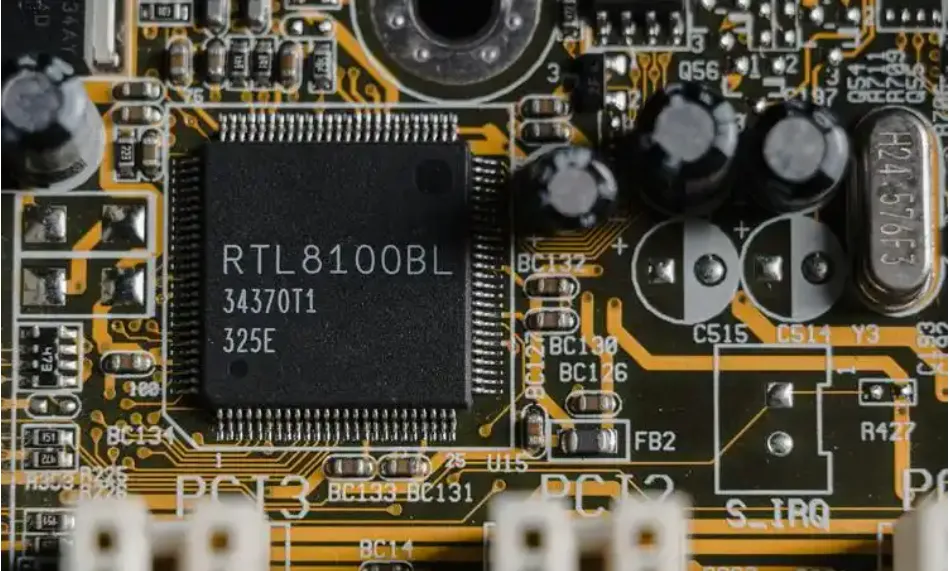
Therefore, automotive PCB design, automotive PCB manufacturing, and automotive PCB assembly require strict engineering controls and appropriate materials, manufacturing processes, inspection methods, and reliability testing.
As an experienced PCB manufacturer and PCB assembly service provider, Kingda provides automotive PCB prototype manufacturing, quick-turn PCB prototyping, PCB fabrication, component sourcing, SMT assembly, THT assembly, inspection, testing, and production solutions to support customers from initial design validation through production.
What Are Automotive PCBs?
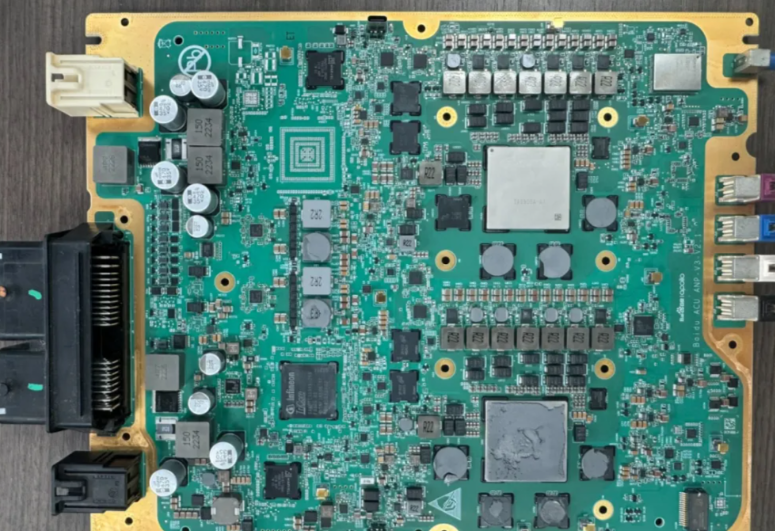
Automotive PCBs are printed circuit boards specifically designed and manufactured for electronic systems used in vehicles. They can be found in applications ranging from engine management and transmission control to lighting, infotainment, navigation, safety systems, battery management, sensors, and advanced driver assistance.
The primary functions of an automotive circuit board include:
- Mechanically supporting electronic components
- Electrically connecting components
- Distributing power and ground
- Transmitting digital and analog signals
- Managing sensors and actuators
- Supporting communication interfaces
- Controlling vehicle functions
- Enabling intelligent and safety-related systems
Automotive PCBs must be designed to maintain electrical and mechanical integrity under demanding operating conditions.
Typical environmental considerations include:
- High and low temperatures
- Thermal cycling
- Continuous vibration
- Mechanical shock
- Humidity and condensation
- Chemical exposure
- Electromagnetic interference
- Long service life
For high-reliability automotive applications, PCB manufacturing and inspection requirements may be based on applicable IPC specifications and customer-specific requirements. The appropriate PCB performance class should always be determined according to the application and applicable product specifications.
Because automotive electronics can directly affect vehicle performance and safety, reliability must be considered throughout the entire automotive PCB manufacturing process.
Basic Types of Automotive PCBs
Different vehicle systems require different PCB technologies. The correct board structure should be selected according to electrical performance, thermal requirements, mechanical conditions, available space, and cost.
1. Rigid FR-4 PCBs
Rigid FR-4 PCBs are widely used in automotive electronic systems because they provide good mechanical stability, electrical performance, manufacturability, and cost efficiency.
Common applications include:
- Engine control units
- Transmission control modules
- Instrument clusters
- Body control modules
- Infotainment systems
- Camera modules
- General electronic control units
FR-4 is suitable for many automotive applications, but material selection should consider the actual operating temperature, thermal cycling, reliability requirements, and PCB construction.
For high-temperature applications, high-Tg laminate materials may provide additional thermal reliability compared with standard materials.
2. Aluminum PCBs
Aluminum PCBs are designed to improve thermal management by providing an efficient heat dissipation path.
They are particularly suitable for automotive LED and other high-power applications where thermal performance is important.
Typical applications include:
- Headlights
- Brake lights
- Turn signals
- Daytime running lights
- Interior lighting
- Other high-power LED modules
The use of aluminum or another thermally optimized construction can help transfer heat away from high-power components and improve system reliability.
However, thermal performance depends on the complete thermal path, including PCB construction, copper thickness, thermal interface materials, heat sinks, and mechanical mounting.
3. Flexible PCBs
Flexible PCBs, commonly called flex PCBs, are manufactured using flexible substrates that allow the circuit to bend and conform to compact or irregularly shaped spaces.
They are useful when conventional rigid PCBs cannot easily fit the available installation space.
Automotive applications include:
- Steering column electronics
- Lighting assemblies
- Sensor modules
- Display systems
- Camera modules
- Door electronics
- Interior electronics
- Compact control modules
Flexible PCB design must consider bend radius, copper structure, stiffener requirements, dynamic or static bending, and mechanical stress.
4. Rigid-Flex PCBs
Rigid-flex PCBs combine rigid PCB sections with flexible circuit sections.
This construction can provide both mechanical stability and three-dimensional installation flexibility.
Important advantages include:
- Reduced connector count
- Reduced wiring complexity
- Better use of limited space
- Improved packaging flexibility
- Fewer mechanical connection points
- Improved resistance to certain vibration-related connection problems
Rigid-flex PCB technology can be particularly useful for compact automotive electronic assemblies where space, reliability, and mechanical integration are important.
Common Materials Used in Automotive PCBs
Material selection is an important part of automotive PCB design. The appropriate material depends on temperature, flexibility, electrical performance, thermal requirements, mechanical stress, and cost.
FR-4
FR-4 is one of the most commonly used PCB materials.
Its advantages include:
- Good electrical insulation
- Good mechanical strength
- Good dimensional stability
- Cost efficiency
- Wide manufacturing availability
For demanding automotive applications, high-Tg FR-4 or other specialized laminates may be selected to improve thermal performance and long-term reliability.
Aluminum
Aluminum PCB construction is commonly used where heat dissipation is a major design requirement.
The metal core provides a more effective thermal path than conventional FR-4 in many high-power applications.
This makes aluminum-based PCBs particularly useful for automotive LED lighting and other thermally demanding circuits.
Polyimide
Polyimide is widely used for flexible circuit applications where high flexibility and thermal resistance are required.
Polyimide-based flexible PCBs can provide:
- Excellent flexibility
- Good thermal stability
- Good dimensional stability
- Compact three-dimensional packaging
- Reduced wiring complexity
The correct polyimide construction should be selected according to the application’s temperature, bending, mechanical, and electrical requirements.
Automotive PCB Applications
Modern vehicles contain numerous electronic systems, and automotive PCBs are at the core of many of them.
As automotive electronics continue to develop, PCB applications are expanding from traditional engine control toward electrification, connectivity, intelligent driving, and vehicle computing.
Engine Control Units
Engine Control Units (ECUs) use PCBs to control and monitor various engine functions.
These systems may manage:
- Fuel injection
- Ignition timing
- Engine sensors
- Emission control
- Temperature monitoring
- Engine operating parameters
The PCB must provide reliable electrical connections and stable operation under temperature, vibration, and electromagnetic conditions.
Battery Management Systems
The growth of electric vehicles has increased the importance of Battery Management System (BMS) PCBs.
A BMS monitors and manages battery-related parameters such as:
- Cell voltage
- Current
- Temperature
- State of charge
- State of health
- Cell balancing
- Protection functions
Because the battery system is critical to EV performance and safety, BMS PCB design requires careful consideration of signal integrity, power distribution, isolation, thermal management, and reliability.
Infotainment and Navigation Systems
Modern infotainment systems combine multiple electronic functions into integrated platforms.
Automotive PCB assembly is used in systems supporting:
- GPS navigation
- Touchscreen displays
- Bluetooth connectivity
- Audio processing
- Video systems
- Wireless communication
- Vehicle networking
- Voice control
These systems often require high-density multilayer PCBs and careful high-speed signal routing.
Safety Systems
Safety-critical systems rely heavily on reliable electronic control.
Automotive PCBs can be used in:
- Airbag control systems
- Anti-lock braking systems
- Electronic stability control
- Collision detection
- Parking sensors
- Safety monitoring systems
For these applications, PCB reliability, component selection, manufacturing quality, inspection, and testing are particularly important.
ADAS and Intelligent Driving
Advanced Driver Assistance Systems (ADAS) are increasing the complexity of automotive electronics.
ADAS applications can include:
- Radar
- Cameras
- LiDAR-related electronics
- Blind-spot detection
- Lane departure warning
- Adaptive cruise control
- Parking assistance
- Collision warning
These applications may require HDI PCB, high-frequency materials, controlled impedance, fine-pitch components, and advanced signal-integrity design.
Lighting Systems
Automotive lighting increasingly uses LEDs and intelligent electronic controls.
PCBs are used in:
- Headlights
- Taillights
- Brake lights
- Turn indicators
- Interior lighting
- Adaptive lighting systems
For high-power LED applications, thermal management is particularly important.
Key Considerations in Automotive PCB Design
Automotive electronics operate under significantly more demanding conditions than many consumer electronic products.
Therefore, automotive PCB design must address both electrical performance and environmental reliability.
Thermal Management
Automotive electronics may generate substantial heat, particularly in engine control, power electronics, LED lighting, EV charging, and battery-related systems.
Effective thermal management may include:
- High-Tg PCB materials
- Increased copper thickness
- Thermal vias
- Large copper areas
- Metal-core PCB structures
- Heat sinks
- Thermal interface materials
- Optimized component placement
Thermal design should begin during PCB layout rather than being treated as an issue after fabrication.
High-power components should be positioned to minimize thermal interference with temperature-sensitive components.
Vibration Resistance
Vehicles experience continuous vibration and mechanical shock.
Poorly designed PCBs may experience:
- Solder joint fatigue
- Component cracking
- Via failures
- Copper cracking
- Connector damage
- Mechanical deformation
To improve automotive PCB reliability, designers should consider component weight, mounting location, PCB thickness, mechanical support, solder joint structure, and enclosure constraints.
Heavy components should be positioned and mechanically supported carefully to reduce stress during vibration.
Moisture and Corrosion Protection
Automotive electronics may be exposed to humidity, condensation, chemicals, and contaminants.
These conditions can contribute to:
- Corrosion
- Leakage current
- Electrochemical migration
- Insulation degradation
- Electrical instability
Depending on the application, conformal coating, sealing, potting, or protective enclosures may be used.
The protection method should be selected according to the actual environmental conditions rather than applied universally to every PCB.
EMI and EMC Control
Modern vehicles contain high-speed processors, wireless systems, radar, cameras, motors, power converters, and other sources of electromagnetic noise.
Therefore, EMI/EMC design is an important part of automotive PCB development.
Recommended practices include:
- Continuous ground planes
- Controlled signal return paths
- Proper layer stack-up
- Differential pair routing
- Short high-current loops
- Appropriate shielding
- Correct decoupling
- Separation of noisy and sensitive circuits
Poor PCB layout can result in signal interference, communication errors, or degraded sensor performance.
Automotive PCB Manufacturing Process
A professional automotive PCB manufacturing process requires strict control from material preparation through final inspection.
The general manufacturing workflow includes:
| Manufacturing Step | Description |
|---|---|
| Material Selection | Select PCB materials according to thermal, electrical, mechanical, and environmental requirements. |
| Circuit Pattern Formation | Transfer the PCB circuit pattern onto the substrate using appropriate imaging and etching processes. |
| Drilling | Create through-holes, vias, and other required holes according to the PCB design. |
| Copper Plating | Apply copper plating to establish electrical connectivity and achieve the required conductor thickness. |
| Surface Finish | Apply the specified surface finish to improve solderability and protect exposed copper. |
| Electrical Testing | Verify circuit continuity and isolation according to the PCB design. |
| Component Placement | Place electronic components accurately using SMT or THT processes. |
| Soldering | Establish reliable electrical and mechanical connections using reflow, wave, selective, or manual soldering where applicable. |
| Conformal Coating | Apply protective coating when required by the application. |
| Final Inspection | Verify PCB and assembly quality before shipment. |
For complex automotive projects, PCB fabrication and PCBA should be considered together from the beginning.
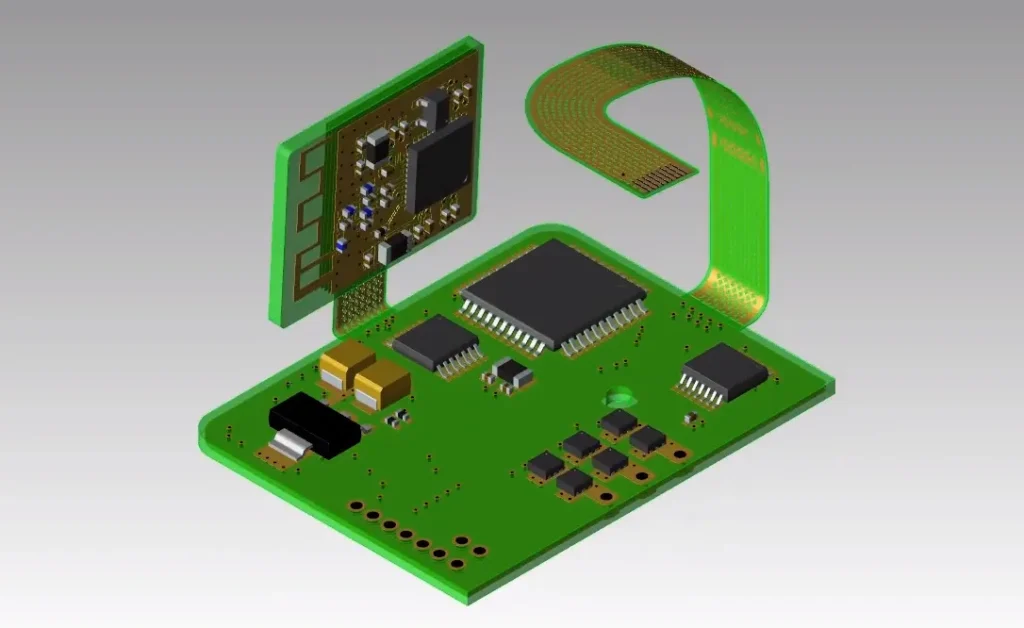
DFM Engineering Review
A DFM review helps determine whether a PCB design can be manufactured and assembled efficiently.
Typical DFM checks include:
- Trace width and spacing
- Via structures
- Hole sizes
- Component clearance
- Pad design
- PCB thickness
- Stack-up
- Solder mask
- Surface finish
- Assembly accessibility
- Testing requirements
Early DFM review can identify problems before PCB fabrication, reducing redesigns and improving prototype efficiency.
SMT Assembly
SMT assembly is widely used for automotive PCBA because it supports compact components and high-density circuit designs.
A typical SMT process includes:
- Solder paste printing
- Solder paste inspection
- Component placement
- Reflow soldering
- AOI inspection
- Additional testing
For high-density automotive PCBs, placement accuracy and soldering process control are particularly important.
THT Assembly
Some automotive applications require THT assembly for connectors, larger components, transformers, or mechanically demanding components.
THT can be combined with SMT to create a mixed-technology PCB assembly.
Depending on the design, soldering methods may include:
- Wave soldering
- Selective soldering
- Manual soldering
Automotive PCB Quality Control and Testing
Quality control is essential throughout the automotive PCB assembly process.
The appropriate testing program depends on the product application, customer requirements, reliability targets, and applicable standards.
Thermal Cycling Testing
Thermal cycling exposes the PCB or assembly to repeated temperature changes.
The purpose is to evaluate potential failures caused by repeated expansion and contraction of different materials.
Thermal cycling can help identify weaknesses in:
- Solder joints
- Vias
- Copper structures
- Component connections
- PCB laminate structures
Vibration Testing
Vibration testing simulates mechanical stresses experienced during vehicle operation.
It can be used to evaluate:
- Solder joint reliability
- Component attachment
- Connector integrity
- PCB mechanical strength
- Mechanical resonance
The test profile should be selected according to the intended vehicle environment and product specification.
Moisture and Corrosion Testing
Humidity and environmental exposure can affect PCB insulation, metal surfaces, solder joints, and protective coatings.
Depending on the application, testing may evaluate:
- Moisture resistance
- Corrosion resistance
- Insulation resistance
- Coating integrity
- Environmental durability
AOI and X-Ray Inspection
AOI (Automated Optical Inspection) can identify visible assembly defects such as:
- Missing components
- Incorrect component placement
- Polarity errors
- Solder bridging
- Visible solder defects
For BGA and other hidden solder joints, X-ray inspection can provide additional inspection capability.
Electrical and Functional Testing
Depending on the application, automotive PCBA may require:
- Continuity testing
- Isolation testing
- Flying probe testing
- ICT
- Functional testing
- Programming
- Communication testing
- Power-on verification
The test strategy should be defined during the design stage rather than added after PCB assembly is completed.
Automotive PCB Standards and Quality Requirements
Several standards are commonly relevant to automotive PCB projects, but they address different aspects of product development and manufacturing.
IPC-6012
IPC-6012 defines qualification and performance requirements for rigid printed boards.
It covers manufacturing characteristics such as:
- Copper structures
- Plating
- Holes
- Dimensional requirements
- Electrical performance
- Board construction
The applicable IPC class should be determined according to the product’s reliability requirements.
IPC-A-600
IPC-A-600 provides visual acceptance criteria for printed boards.
It is commonly used to evaluate PCB workmanship and manufacturing quality.
IATF 16949
IATF 16949 is an automotive quality management standard focused on process consistency, defect prevention, risk management, and continual improvement.
For automotive PCB manufacturers and PCBA providers, quality management and manufacturing process control are particularly important.
ISO 9001
ISO 9001 provides a general quality management framework for organizations across many industries.
It supports systematic quality management, process control, documentation, and continuous improvement.
AEC-Q100
AEC-Q100 is associated with the qualification of automotive integrated circuits and semiconductor components.
It is important to distinguish component qualification from PCB qualification. A PCB itself is not made “AEC-Q100 qualified”; instead, electronic components may have AEC-Q100 qualification.
ISO 26262
ISO 26262 addresses functional safety for road-vehicle electrical and electronic systems.
It is especially relevant to safety-related systems such as braking, steering, airbags, and other safety-critical electronic functions.
Major Challenges in Automotive PCB Development
1. Harsh Environmental Conditions
Automotive PCBs may be exposed to:
- High and low temperatures
- Humidity
- Vibration
- Mechanical shock
- Chemicals
- Dust and contaminants
- Electromagnetic interference
Therefore, automotive PCB suppliers must select appropriate materials, processes, and protection methods according to the application.
2. Reliability and Long Service Life
Automotive electronics are expected to operate reliably for many years.
A PCB failure can affect vehicle performance, system availability, or safety.
Therefore, reliability should be considered throughout:
Design → Material Selection → PCB Fabrication → Assembly → Inspection → Testing → Production
3. Integration and Miniaturization
Modern vehicles continue to integrate more electronics into smaller spaces.
This increases demand for:
- HDI PCB
- Fine-pitch components
- Multilayer PCB
- Microvias
- Rigid-flex PCB
- High-density component placement
However, miniaturization should not come at the expense of thermal performance, manufacturability, inspection accessibility, or reliability.
4. Supply Chain and Component Availability
Automotive PCB projects can involve large and complex BOMs.
Component availability should therefore be considered during the design stage.
Potential risks include:
- Obsolete components
- Long lead times
- Component shortages
- Unapproved substitutions
- Counterfeit components
- Package changes
Early BOM review and component sourcing can help reduce these risks.
Why Choose Kingda for Automotive PCB Manufacturing?
As an experienced PCB manufacturer and PCB assembly service provider, Kingda provides integrated PCB and PCBA solutions for customers developing automotive and other demanding electronic products.
Kingda’s services can support the product lifecycle from initial prototype development through production.
PCB Prototype Manufacturing
Kingda provides PCB prototype manufacturing and quick-turn PCB prototyping to help customers verify their designs before moving to larger production volumes.
Prototype production allows customers to evaluate:
- Electrical performance
- Component compatibility
- PCB manufacturability
- Assembly quality
- Thermal behavior
- Mechanical integration
Integrated PCB and PCBA Services
Kingda can support both PCB fabrication and PCB assembly, helping reduce unnecessary coordination between separate suppliers.
The integrated workflow can include:
PCB Design Review → DFM Engineering → PCB Manufacturing → Component Sourcing → SMT Assembly → THT Assembly → Inspection → Testing → Production
This approach can help improve communication and make design revisions easier to manage.
DFM Engineering Support
Automotive PCB designs often involve complex requirements related to thermal management, high-density routing, component placement, and assembly.
Kingda can provide manufacturing-oriented DFM engineering support to identify potential issues before fabrication and assembly.
This can help customers optimize the design for:
- Manufacturability
- Assembly efficiency
- Component availability
- Thermal performance
- Testing
- Production scalability
SMT and THT Assembly
Kingda supports SMT assembly and THT assembly for different PCB structures and component requirements.
This allows automotive PCB projects to combine compact surface-mount components with mechanically robust through-hole components where required.
Component Sourcing
Kingda can assist with component sourcing and BOM coordination during prototype and production preparation.
This helps customers consider component availability and sourcing requirements earlier in the development process.
Inspection and Testing
Kingda can integrate appropriate inspection and testing into the PCB assembly process, depending on project requirements.
Potential quality-control processes include:
- SPI
- AOI
- X-ray inspection
- Electrical testing
- Functional testing
- Final inspection
The exact inspection and testing strategy should be defined according to the product’s technical requirements and applicable standards.
From Prototype to Production
A successful automotive electronics project typically develops through multiple stages:
Concept → PCB Design → DFM Review → Prototype → Testing → Design Optimization → Small-Batch Production → Volume Manufacturing
Kingda supports this progression with PCB prototype manufacturing, quick-turn PCB services, PCB assembly, and production manufacturing solutions.
This enables customers to work with an integrated manufacturing partner as their products move from initial validation toward production.
Best Practices for Automotive PCB Development
To improve the reliability and manufacturability of automotive electronic products, designers should consider the following practices:
1. Define Environmental Requirements Early
Establish temperature, vibration, humidity, chemical exposure, and service-life requirements before PCB layout begins.
2. Select Materials Based on Application Requirements
Choose FR-4, high-Tg materials, aluminum, polyimide, or other specialized materials according to actual thermal, electrical, and mechanical requirements.
3. Design for Thermal Performance
Identify heat-generating components early and create an effective thermal path using copper, thermal vias, heat sinks, or other appropriate solutions.
4. Control EMI and Signal Integrity
Use appropriate grounding, impedance control, differential routing, shielding, and layer-stack design for high-speed and noise-sensitive circuits.
5. Consider Manufacturability
Perform a DFM review before fabrication to identify potential manufacturing and assembly problems.
6. Plan Testing During Layout
Test points, programming interfaces, inspection requirements, and functional testing should be considered during PCB design.
7. Prototype Before Mass Production
Automotive PCB prototype assembly provides valuable information about electrical performance, thermal behavior, mechanical integration, and manufacturing feasibility.
8. Maintain Process Traceability
Automotive electronics benefit from controlled manufacturing processes and appropriate production records throughout the PCB and PCBA lifecycle.
Frequently Asked Questions
What is an automotive PCB?
An automotive PCB is a printed circuit board designed specifically for electronic systems used in vehicles. It must meet the electrical, mechanical, thermal, environmental, and reliability requirements of automotive applications.
What types of PCBs are commonly used in automobiles?
Common types include rigid FR-4 PCBs, aluminum PCBs, flexible PCBs, rigid-flex PCBs, multilayer PCBs, and HDI PCBs.
The appropriate type depends on the application’s temperature, mechanical stress, thermal load, available space, signal requirements, and cost.
What materials are commonly used in automotive PCBs?
Common materials include FR-4, high-Tg laminates, aluminum, and polyimide.
Material selection should be based on actual operating requirements rather than simply choosing the lowest-cost option.
Why are automotive PCBs different from ordinary PCBs?
Automotive PCBs often need to withstand more severe temperature changes, vibration, mechanical shock, humidity, chemical exposure, and long-term operation than typical consumer electronics.
What standards are important for automotive PCBs?
Commonly relevant standards include IPC-6012, IPC-A-600, IATF 16949, ISO 9001, AEC-Q100, and ISO 26262.
However, these standards address different aspects of PCB manufacturing, component qualification, quality management, and functional safety.
Why is thermal management important for automotive PCBs?
High-power automotive electronics can generate significant heat. Proper thermal management helps maintain component temperatures within acceptable limits and improves long-term system reliability.
Can Kingda provide automotive PCB prototypes?
Yes. Kingda provides PCB prototype manufacturing, quick-turn PCB prototyping, PCB fabrication, SMT assembly, THT assembly, inspection, testing, and production solutions to support customers from design validation through manufacturing.
Conclusion
Automotive PCBs are fundamental to the operation of modern vehicles. As automotive technology continues to evolve toward electrification, connectivity, intelligent driving, and advanced electronic control, PCB requirements are becoming increasingly demanding.
The right combination of PCB structure, material, layout, thermal management, EMI/EMC control, manufacturing process, inspection, and testing is essential for achieving reliable automotive electronics.
Different applications may require different technologies, including rigid FR-4 PCB, aluminum PCB, flex PCB, rigid-flex PCB, multilayer PCB, or HDI PCB.
A professional automotive PCB project should also consider DFM, component sourcing, SMT/THT assembly, quality control, electrical testing, and long-term reliability from the earliest design stage.
As an experienced PCB manufacturer and PCB assembly service provider, Kingda offers PCB prototype manufacturing, quick-turn PCB prototyping, PCB fabrication, component sourcing, SMT assembly, THT assembly, inspection, testing, and production solutions.
By integrating engineering support, PCB manufacturing, and PCBA services, Kingda helps customers move efficiently from automotive PCB prototype development to small-batch and production manufacturing.