PCB Outsourced Assembly Risks: What Could Go Wrong
Modern electronics depend on boards that are assembled correctly the first time. Every product – a phone, a charger, a medical instrument or an industrial controller – relies on thousands of solder joints that must conduct current for years. This article explains PCB outsourced assembly risks in plain language: what it is, why it matters in managing the risks in outsourced assembly, and how a contract PCBA factory keeps it under control so that products ship without surprises.
1. The Order We Follow
Every job that leaves the factory passes through the same sequence. The order matters because each stage depends on the one before it, and a shortcut at the front shows up as a defect at the back.
1. Engineering review of the data package, including the notes that decide PCB Outsourced Assembly Risks and the features that will need special attention on the line.
2. Tooling and program preparation, with the stencil, the fixture and the placement data checked against the drawing.
3. First article run for managing the risks in outsourced assembly, measured and signed off before the rest of the lot is allowed to continue.
4. Production with in process checks, so the trend is watched while there is still time to correct it.
5. Final inspection, packing and delivery, with the inspection record travelling alongside the boards.
2. What PCB Outsourced Assembly Risks Means in Practice
the the likelihood, the the effect and the the control behind it.
3. What Decides the Result
The cost of a mistake is paid on the far side of the process, not where it was made.
4. Doing It
The work is done on a schedule rather than when a problem appears.
5. Running the Build on the Line
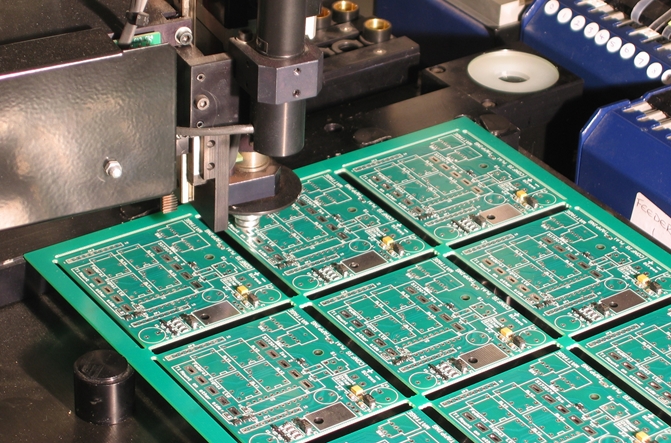
The result depends on the whole chain, not on any single machine. The board design fixes pad sizes and spacing, the printer controls the solder volume, the placement machine positions every component and the reflow oven forms the joints. Each step feeds the next one, which is why PCB assembly should be reviewed as one complete process instead of a collection of separate operations. Pairing that view with SMT PCB assembly gives the team a shared reference for every change, from a stencil tweak to a new component.
6. Checks That Hold the Yield Steady
First article inspection plays a special role at the start of every order. The first board is checked against the design in detail: component values, orientation, polarity and solder quality are verified before the line continues, which prevents an entire batch from inheriting a setup error. After the run, every board passes automated optical inspection, and samples move on to electrical test so the solder joints and the circuit are both proven before packing; this combination is the core of a practical PCBA testing plan.
Traceability turns good intentions into proof. The factory records which program ran, which reels of paste and components were used, which operator handled the job and what the inspection found. When a field return arrives six months later, that record is the fastest way to find the cause, and it is the clearest evidence that a documented quality management system is working.
7. Where These Boards Are Used
Assembled boards built with a well controlled process serve every industry: consumer electronics, networking gear, power supplies and instrumentation. The same core disciplines apply across all of them, but each market adds its own expectations. Consumer products need low cost and fast ramp, medical products demand documentation and traceability, automotive boards must survive vibration and temperature extremes, and industrial electronics value long service life and easy repair.
8. Common Questions
Buyers new to the process tend to ask the same things, and the answers are reassuring. None of the points below adds cost on its own, and each of them removes a risk from the schedule.
1. Can the process handle small batches? Yes. The setup for managing the risks in outsourced assembly is the same whether the lot is five panels or five hundred, so the tooling is shared and the unit price stays sensible.
2. How tight can the tolerance be? It depends on the feature and the material. The rule is to hold the tolerance the product actually needs and to leave the rest at a commercial level rather than paying for accuracy that nothing uses.
3. What happens if something in the file is unclear? An engineering question is raised before tooling. Answering it costs a message, while building on a guess can cost the whole lot.
9. Working With an Assembly Partner
Most boards today are built by specialists rather than in house. The investment in printers, placement machines, reflow ovens and inspection equipment is large, and the engineering time needed to keep the process stable is easy to underestimate. A manufacturing partner spreads that cost over many programs and brings the same discipline to every customer, with supporting services such as component procurement service and high volume PCB assembly available from a single source.
The choice between suppliers comes down to behavior under pressure: how a factory reacts to a design question, a component shortage or a quality issue tells more than its brochure. Ask for defect data, test coverage and customer references, and confirm the quality plan in writing before you commit a program.
10. Details That Are Easy to Overlook
Communication decides how well managing the risks in outsourced assembly matches the product intent. When the buyer shares the operating environment and the reliability target, and the factory answers with concrete process choices and test plans, small process changes are approved before they become quality incidents. Regular reporting during production keeps both sides aligned from prototype to volume, and a written summary of every change gives both parties a record they can trust at the end of the program.
11. Where gopcb Fits In
gopcb runs SMT lines supported by solder paste inspection, automated optical inspection and functional test in one facility. Our engineers review your Gerber files and BOM before production, discuss the process options, and ship boards with test records that give you confidence in the field.
If you are planning a new product or moving an existing design to volume production, send gopcb your design files and requirements. You will receive a DFM review, a clear quotation and a schedule you can plan around – and boards that work the way they should.
Every person touching the process needs training, and that rule applies fully to managing the risks in outsourced assembly. Operators must understand why a parameter window exists before they adjust it, inspectors must know what a real defect looks like, and engineers must be able to explain a change in the data. Factories that invest in training get faster responses to problems and fewer repeated mistakes, because knowledge on the floor is what turns written procedures into daily practice.
Conclusion
Put simply, PCB Outsourced Assembly Risks is not one decision but a series of small ones running from the first drawing to the shipping carton. Each of them is ordinary on its own, and taken together they decide whether the boards reach the assembly line ready to use. Handling them in order, with the numbers written down, is what separates a stable supply from a permanent firefight.
That is the full picture on “PCB Outsourced Assembly Risks: What Could Go Wrong”. For layout review, board fabrication, SMT assembly, component sourcing, stencil production, conformal coating, final assembly or test, contact gopcb with your files. You will receive a DFM report, an itemised quotation and a production schedule in writing before anything is committed to the line.