Compressed Air Dew Point Control for PCB Assembly: 7 Rules
Compressed air touches the product more often than most process engineers expect. It sprays flux, it blows solder paste and debris off a panel, it actuates dispensers and clamps, it dries boards after cleaning and it feeds the ionisers that control static. Every one of those contacts is a chance to deliver water, oil or particles straight onto the assembly.
The single number that describes how dry that air actually is is the dew point. A line that is dry in winter can be wet in summer, and a dryer that is overdue for a service can pass moisture without any obvious sign at the machine. Measuring the dew point, and keeping it inside a limit, is the control that prevents the problem instead of investigating it afterwards.
Where Compressed Air Touches the Product
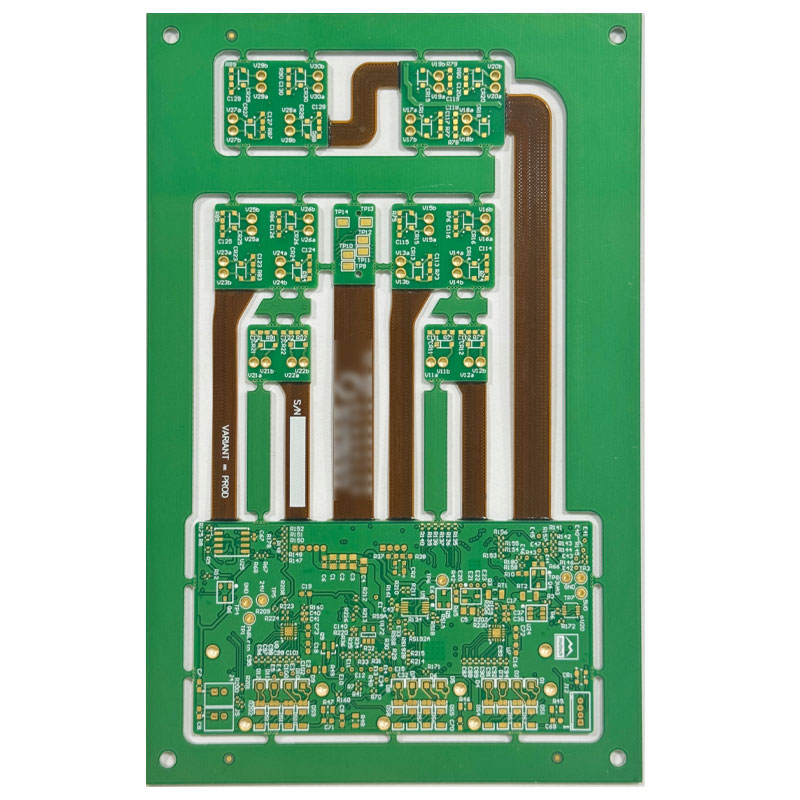
In a typical SMT and through hole line, air is used at the spray fluxer, at the paste dispenser, at the vacuum generators that hold parts, at the air knives that cool or dry a panel, at the blow off station after cleaning, and at any pneumatic clamp that holds a board during processing. In each case the air either touches the board directly or touches a component that then touches the board.
Water in that air is not always visible as a droplet. A partially saturated stream can deposit a film on a surface, dilute the flux that is being sprayed, or cool a local area enough for condensation to form. Those effects are small individually and cumulative in production, which is why the air supply belongs on the process control list rather than on the facilities list.
What Dew Point Means on a Pressurised Line
Dew point is the temperature at which the air becomes saturated and water starts to condense out. The value that matters for a compressed air system is the pressure dew point, measured at line pressure, because compressing air raises its dew point. A dryer rated for a pressure dew point of three degrees Celsius will deliver air that condenses as soon as it expands at a nozzle in a cold workshop.
The number should be specified together with the pressure at which it is measured and the class of the air system. Where the air is used on a coating or a cleaning step, the limit is tighter than for air that only drives a cylinder, and the specification should distinguish between the two rather than applying one number to the whole plant.
How Wet Air Shows Up as a Defect
The mildest effect is a change in flux behaviour. A spray fluxer that receives wet air produces a wider, coarser pattern because the droplets are diluted, and the solids content that lands on the board is lower than the setting. That shows up later as poor wetting in a location that shifts with the weather.
A more serious effect is contamination. Water carries dissolved solids, and when it evaporates on a board it leaves them behind, which can raise the ionic contamination of a surface that the cleaning process was supposed to leave clean. In a coating operation the water becomes a trapped volatile that produces voids and poor adhesion, which is exactly the failure seen when humidity is not controlled in the coating process.
The Dryer Chain
A refrigerated dryer removes most of the moisture and is the normal first stage. A desiccant dryer follows it where a lower dew point is needed, and a membrane or absorption dryer is used for a small point of use demand. The three have different turndown behaviour and different failure modes, and a system designed for a plant load can be badly wrong for a single critical station.
The desiccant stage has a finite capacity and a regeneration cycle, so its dew point drifts as the desiccant ages and as the cycle timing changes. Monitoring the dew point after the final stage, rather than relying on the service interval, is what turns the dryer from a piece of plant into a controlled process element.
Air Line Design and Condensate
The pipework decides whether the dry air reaches the machine dry. Every branch should be taken from the top of the main, so that condensate running along the bottom of the pipe cannot flow into it, and every low point needs a drain. A machine fed from a dead leg that has collected water overnight will receive that water at the first use of the shift.
Condensate traps have to be maintained. A float trap that has stuck, or an automatic drain that has been isolated because it was noisy, will fill the leg and repeat the problem at every station downstream. Where the plant has a ring main, the drains and the drop legs should be on a schedule, and the schedule should be checked rather than assumed.
Oil Mist and Particle Control
A lubricated compressor delivers oil mist into the line, and oil on a board is a contamination problem, an adhesion problem for coatings and a defect source at the fluxer. Coalescing filters remove the aerosol, but they load up, and a saturated element passes oil while the pressure drop across it looks acceptable.
Particles follow the same logic. A filter that is intended to protect the air bearings of a machine may do nothing for the chemistry of the process, and a point of use filter should be selected for the process rather than for the machine. The class of filtration belongs in the air specification, together with the dew point, rather than being chosen by whoever installs the machine.
Monitoring, Alarms and Records
A dew point sensor at the point of use, connected to an alarm, is the only way to know that the air is still within specification. A single measurement at the dryer outlet is not enough, because the pipework between the dryer and the machine can add moisture at exactly the moment the demand is highest.
The record should show the dew point against the process that uses the air, so that a defect investigation can rule the air in or out quickly. The same discipline applies at the flux spray station, at the coating operation, and in the general contamination control routine, because all three depend on air that is clean and dry.
FAQ
What dew point should a PCB assembly plant use? The limit depends on what the air touches. Air that only drives a cylinder can be relatively wet, while air that sprays flux, dries a board or feeds a coating process needs a much lower pressure dew point. The value should be set per application and verified at the point of use.
Why is the dew point measured at pressure? Because compressing air concentrates the moisture in it. A dew point quoted at atmospheric pressure describes air that is not compressed, and it cannot be compared with a measurement taken on a pressurised line.
How can water in the air be spotted without an instrument? By looking for a film or droplets at a nozzle during a shift change, by watching for a change in spray pattern between morning and afternoon, and by checking the drains at the low points. Those are all symptoms, which is why an instrument is the better control.