
Plating Filter Pump: 4 Checks for Bath Turnover
A plating filter pump moves the bath through a housing where the particulate is captured and returns the clean solution to the tank. It is the least glamorous piece of equipment on a plating line, and it is the one that quietly decides how many nodules appear on the panels.
Choosing it is not a matter of matching the pipe size. The flow rate has to give an adequate turnover, the pump has to survive the chemistry without adding contamination of its own, and the housing has to be easy to change without spilling the bath.
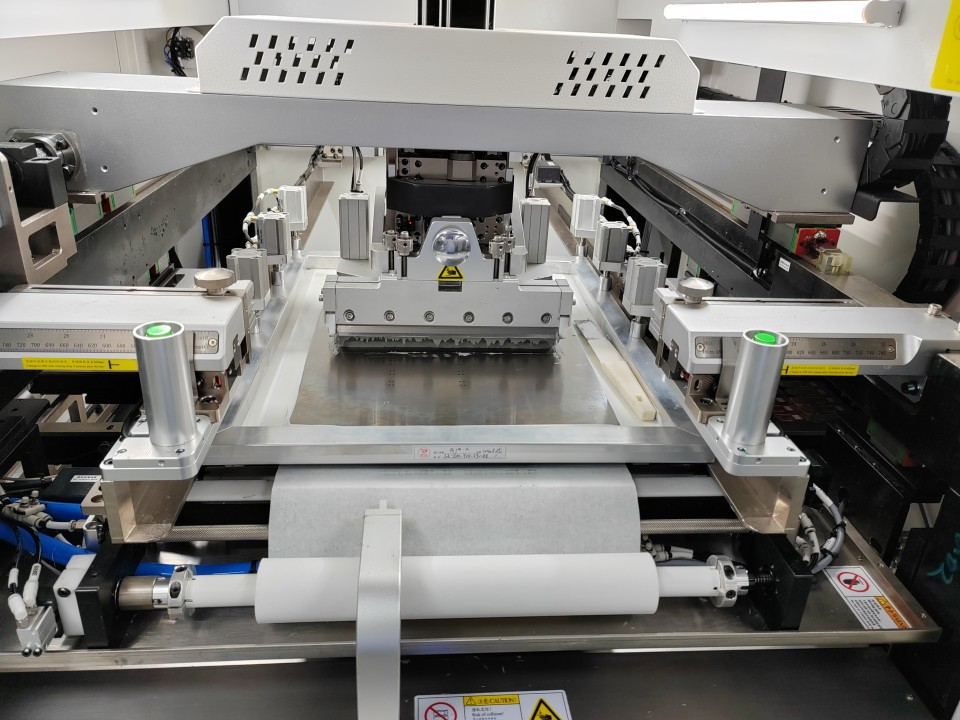
<img src="https://www.gopcba.com/wp-content/uploads/2026/05/12温区氮气回流焊-1.jpg" alt="Plating filter pump and cartridge housing beside a plating tank” />
What the Filtration Loop Has to Do
The loop has two jobs: remove particulate before it can be codeposited, and keep the solution moving so that the tank does not stratify. Both depend on the flow that reaches the tank, not on the flow written on the pump curve.
Particulate in a plating bath comes from the anodes, from the panels, from breakdown of additives and from the air itself. Each source produces a different particle size, and the housing and element have to be chosen for the smallest of them.
A loop that is too small removes particles slowly, so their concentration rises until the deposit begins to include them. A loop that is too large stirs the tank violently, disturbs the sludge layer and can damage the anodes.
Turnover Rate and Why It Matters
Turnover is the number of times the tank volume passes through the filter in an hour. It is the figure that describes whether the filtration is keeping up, and it is calculated from the real flow rather than from the rated flow.
Typical practice for a plating bath is several turnovers per hour, with the exact figure depending on the loading of the line and on how much particulate the process generates. A bath that is dirty at the end of a shift needs more than one that stays clear.
Turnover also matters for mixing. A bath with poor circulation can be hotter at the heater and more concentrated at the addition point, and the filter loop is often the only thing moving the solution during a quiet period.
Sizing the Pump for the Tank
Sizing starts with the tank volume and the target turnover, and it continues with the pressure drop through the housing, the pipework and the element. That total loss determines the flow the pump will actually deliver.
A pump chosen at its maximum rated flow will fall short as soon as an element loads, because a partly blocked element raises the system resistance. The pump should be able to hold the target flow at the end of the element life, not just when it is new.
Pipe diameter, bends and the length of the run all contribute to the loss. Undersized pipework on an otherwise adequate pump is a common reason a loop never reaches its intended turnover.
Cartridge, Bag and Wound Filters
Cartridge filters are simple to change and hold a defined pore size, which makes them predictable. They have a limited dirt capacity, so they are best where the particulate load is moderate and the element can be changed often.
Bag filters hold more debris and tolerate a heavier load, and they are common on plating lines that generate sludge. Their pore size is coarser for the same footprint, so they are often used upstream of a finer element.
Wound and pleated elements offer a large surface in a small housing and a range of ratings. The choice between them is a balance of holding capacity, cost and the size of particle that the process can tolerate, which is discussed with cartridges in filter cartridge selection.
Materials and Chemical Compatibility
The wetted materials have to resist the bath. A pump body or impeller that corrodes adds metal ions to a solution that is already being analysed for them, and the deposit shows the result.
Seals, gaskets and housing linings matter as much as the pump body. A seal that swells in an alkaline bath leaks, and one that hardens in an acid bath fails without warning.
The same applies to the hoses and valves in the loop. A cheap hose that leaches plasticiser contaminates the bath organically, and organic contamination is removed by the process described in carbon treatment.
Continuous versus Batch Filtration
Continuous filtration runs while the line is plating, and it is the normal arrangement for a production bath. It keeps the particle concentration low at the point where it matters, which is at the panel surface.
Batch filtration is used to clean a bath that has become heavily loaded, or to polish it before a demanding job. It is effective but slow, and it treats the symptom rather than preventing it.
Some lines run a low continuous flow at all times and increase it during plating. That approach keeps the bath mixed overnight and still delivers more filtration when the load is highest.
Maintenance, Pressure and Records
Differential pressure across the housing is the measurement that shows the state of the element. A rising difference means the element is loading, and the flow is falling at the same time.
Records should carry the flow rate at commissioning, the differential pressure at which elements are changed and the materials of construction of the loop. Without the first figure, there is no reference for diagnosing a slow decline.
Pump seals and impellers should be inspected on a schedule, because wear inside the pump reduces flow quietly. A pump whose flow has fallen while the pressure is unchanged is usually worn internally rather than blocked.
Symptoms of a Poor Filtration Loop
The most visible symptom is nodules on the deposit, which appear as small raised points where particulate has been encapsulated by copper or nickel. Their number tracks the particulate concentration in the bath.
A rough or dull deposit, a filter that blocks within days and a bath that needs frequent carbon treatment all point at the same loop. Analysing the bath shows the chemistry, but only the filtration explains why it keeps deteriorating.
Stratification is the quieter symptom. A bath that is not circulated shows a temperature difference between the top and the bottom of the tank, and the deposit from a panel plated in that bath reflects it.
Selection and Verification
Selection should be documented as a calculation: tank volume, target turnover, element rating, system pressure drop and the resulting pump duty. That document is what makes the next change of pump or element a decision rather than a guess.
Verification is a flow measurement at the return to the tank, taken when the element is new and again when it is partly loaded. The two values show whether the pump is delivering the duty it was selected for.
Where the bath has been changed or the tank altered, the calculation should be repeated. A loop that was adequate for one chemistry may not be for another, and the analysis behind the decision is described in plating bath analysis, with reference methods published by IPC.
FAQ
How often should a plating filter be run? Continuously on a production bath, because particles plate into the deposit as soon as they are in the tank. Batch filtration is a recovery measure rather than a normal operating mode.
Can a larger pump damage the bath? It can disturb the sludge layer and the anodes if the flow is excessive, so the duty should be calculated rather than maximised. Turnover, not pump size, is the target.
Why does the flow fall while the pressure stays the same? That pattern usually points at wear inside the pump rather than at a blocked element, and the pump should be inspected.