Solder Mask Ink Color Control: 6 Steps for Consistent Batches
Solder mask ink color is a cosmetic property that customers treat as a quality property, and it has real technical consequences as well. Pigment loading changes viscosity, cure behavior and how completely the mask shadows ultraviolet light. Two panels that look slightly different on a bench can behave differently in the developer, which is why color control belongs in the process, not only in the shipping inspection area.

What Determines Solder Mask Ink Color
Color comes from pigment particles dispersed in a resin system, plus fillers that raise opacity and control flow. The pigment itself sets the hue, the particle size distribution sets the depth and gloss, and the ratio of pigment to resin sets how much the surface reflects light after cure.
Matte green and glossy green use different formulations and produce different measured values even when the supplier considers them the same color. That is why a specification based only on a name, such as green or black, gives no protection. The reference has to be a measured standard tied to a specific product code.
Filler content is the variable that surprises most shops. Fillers raise opacity so the mask blocks ultraviolet light during exposure, and they also lighten the apparent color. A supplier change that keeps the same pigment but alters filler loading shifts the measured value without any change on the production line.
Pigment Dispersion and Mixing Practice
Pigment dispersion quality decides whether color is even across a panel. Poorly dispersed ink has clusters that scatter light differently from the surrounding film, which shows up as streaks, mottling and uneven gloss, especially on large copper planes where the mask is thin.
Mix with the equipment the supplier recommends and for the time the supplier specifies. Over-mixing introduces air and heats the ink, both of which change viscosity and, indirectly, appearance. Under-mixing leaves pigment settled on the container bottom and produces a first batch that is lighter than the last.
Keep containers closed between uses and mix only what the shift will consume. Ink left open in a printing area picks up solvent and moisture from the air, and both change the way the cured film reflects light.
Color Measurement: Instruments and Geometry
Color measurement with a spectrophotometer gives numbers that a supplier and a customer can both use. Measure with the geometry stated in the specification, because a 45 degree instrument and an integrating sphere see gloss and texture differently. Report the illuminant and observer settings with every reading.
Prepare the sample the same way every time. A cured, flat mask surface over bare laminate reads differently from a mask over copper. Standardize the sample construction, the cure condition and the measurement area, then keep a physical standard panel to check the instrument between calibrations. Record who took the reading and when, because a measurement with no name behind it is hard to defend in a customer discussion.
Ink Batch Consistency Between Lots
Ink batch consistency starts at receiving inspection. Ask for the color values with each lot and compare them with the reference before the drum reaches the screen printing line. A lot that differs slightly may still be usable for a product with loose tolerance, but it should not be released for a customer with a tight one.
Record the ink lot number against every production lot of panels. If a customer complaint arrives weeks later, the record shows immediately whether the ink changed. Without that link, the investigation restarts from zero and every conversation becomes a negotiation.
Color Difference in Solder Mask and Customer Tolerances
Color difference in solder mask is normally expressed as a numeric delta from the standard, and customers usually quote a limit rather than a specific value. Agree on the limit in writing before production, including the measurement geometry and the sample preparation method, so both sides measure the same way.
Where a customer has no stated limit, propose one based on a visual comparison of acceptable and unacceptable panels. Photograph those panels under a fixed light booth and keep them as a boundary set. Written numbers plus physical examples resolve almost every dispute quickly.
Cure and Thickness Effects on Appearance
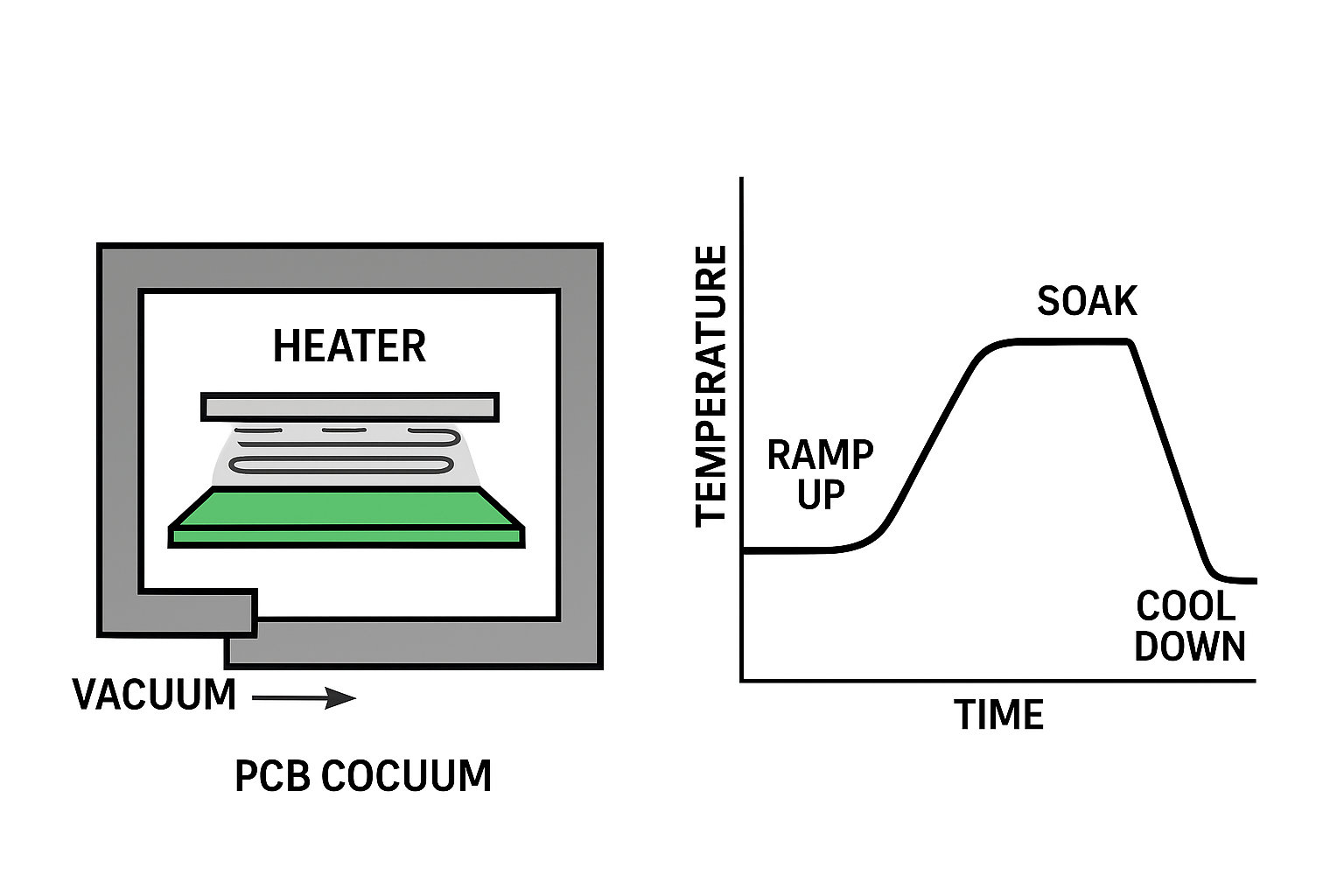
Cure changes color. Under-cured mask stays slightly softer and often appears lighter, while over-cured mask darkens and can take on a yellow cast, particularly with green formulations. That is one reason a color reading taken before final cure has little value.
Thickness matters in the same way, because a thicker film absorbs more light and appears deeper. If the printing or coating step deposits more ink on one area, the panel shows a visible gradient after cure. Review the solder mask ink viscosity control data before adjusting any color-related parameter. Cure profile verification with a thermal logger is the only reliable way to prove the oven is doing what the recipe claims.
Gloss, Texture and Perceived Color
Operators and customers judge color visually, and gloss affects that judgment strongly. A matte surface scatters light and looks lighter and softer, while a glossy surface looks darker and more saturated. Two panels can match numerically and still look different because their texture differs. Judge appearance under a defined light booth rather than under whichever lamp happens to sit nearest the inspection bench.
Control texture through the same variables that control gloss: ink formulation, cure schedule and the surface beneath the mask. Where appearance is critical, include a gloss measurement in the inspection plan and state the angle in the requirement.
Storage, Settling and Remixing
Ink settles during storage, and the settled layer is pigment-rich. Using a drum without adequate remixing produces a panel that is darker than the reference at the start of the drum and lighter at the end. Remix to a defined procedure rather than by eye.
Storage temperature and age influence how easily the ink remixes. Follow the solder mask ink shelf life rules, rotate stock so the oldest drum is used first, and record the date each drum is opened and finished. Shelf life matters here, because a drum near the end of its life often mixes less uniformly than a fresh one.
Documenting Color for Every Batch
Keep a color record with the ink lot, the panel lot, the cure recipe and the measured values. That record is what turns color from an opinion into a trend, and it supports a fast answer when a customer asks whether a shipment drifted.
The same discipline applies to printed markings, since legend ink curing control affects how white and how crisp the silkscreen appears against the mask. Reference values from IPC help when a customer specification uses general language rather than a measured standard. Store the standard panels in the dark, since a reference panel that fades is worse than no reference at all.
FAQ
How is solder mask ink color measured? With a spectrophotometer under a defined illuminant and geometry, on a sample prepared with the same construction and cure as production. Keep a physical standard panel to verify the instrument between calibrations.
Why does cured mask look darker than the wet ink? Cure drives off solvent, densifies the film and crosslinks the resin, all of which change how light is absorbed and reflected. Judge color only after the mask has completed its final cure schedule.
Can a color difference indicate a process problem? Yes. A shift in appearance often tracks a change in film thickness, cure or solder mask adhesion conditions rather than the pigment itself, so investigate the process before rejecting the ink lot.