
Open Time on the Line: Keeping a Print Consistent
Open time is the period during which solder paste can be out of its container and still print within specification. It is a property of the material and it is short, which means every pause in production consumes part of it. It is quoted by the supplier, and it is reached sooner in a warm workshop than in a cool one.
The change that matters happens in the vehicle rather than in the powder. Solvent leaves the surface of the paste, the viscosity rises, and the paste stops transferring from the stencil as cleanly as it did when it was fresh. Printer settings that were correct at the start of a shift are slightly wrong by the end of it.
What Open Time Measures
The measurement is a print result rather than a chemical one. A sample is exposed to the workshop environment for a series of intervals, printed at each interval and measured for volume and for deposit quality. The intervals are short at first and longer as the paste approaches its limit.
The limit is the point at which the result leaves the print window. Different products reach that point at different times, so the open time is quoted for a standard pattern and then confirmed on the actual product. A product with small apertures reaches the limit sooner, because a small aperture is more sensitive to a change in viscosity.
Drying and Other Changes as Paste Ages
Three things happen at once. The solvent fraction falls, the viscosity rises and the paste becomes tacky rather than fluid. Each of the three changes printing behaviour in a different way. The order in which they appear depends on the paste, and the outward sign is the same in each case: a deposit that no longer releases cleanly.

The flux also begins to separate from the powder, and a paste that has separated prints a deposit with an uneven metal content. The deposit may look correct and solder differently from one printed an hour earlier. Separation is visible on the stencil as a film of clear flux around the paste.
Viscosity and Print Volume
Viscosity controls how the paste fills an aperture and how it releases from the wall. As viscosity rises, the paste fills more slowly and releases less completely, so the printed volume falls. The same property decides how quickly the paste recovers after the squeegee passes, which affects the shape of the deposit.
The fall is gradual and easy to accept as normal variation. A volume that drifts down by ten percent across a shift is a drift rather than a trend, and it is the signature of open time being consumed. A printer that compensates automatically will follow the drift and hide it until the machine reaches a limit. The compensation is a control loop, and it will hide a drift until the loop itself runs out of range.
Temperature and Humidity Effects
Temperature has a strong effect on viscosity, so a workshop that warms during the day changes the printing result without any change to the machine. Paste at thirty degrees prints differently from the same paste at twenty two degrees. The paste temperature is therefore part of the process record, and it is easily measured on the stencil.
Humidity affects the flux. Paste exposed to damp air absorbs moisture that changes its tack and its behaviour in reflow, and the effect appears as an increase in defects that are otherwise unexplained. An uncontrolled humidity is a workshop where the paste behaves differently on a wet day.
Paste on the Stencil During a Shift
The paste on the stencil is a thin layer with a large surface area, and it loses solvent faster than the paste in the container. The roller of paste at the squeegee is the part that is most exposed. It is also the first part to dry and the last part to be used.
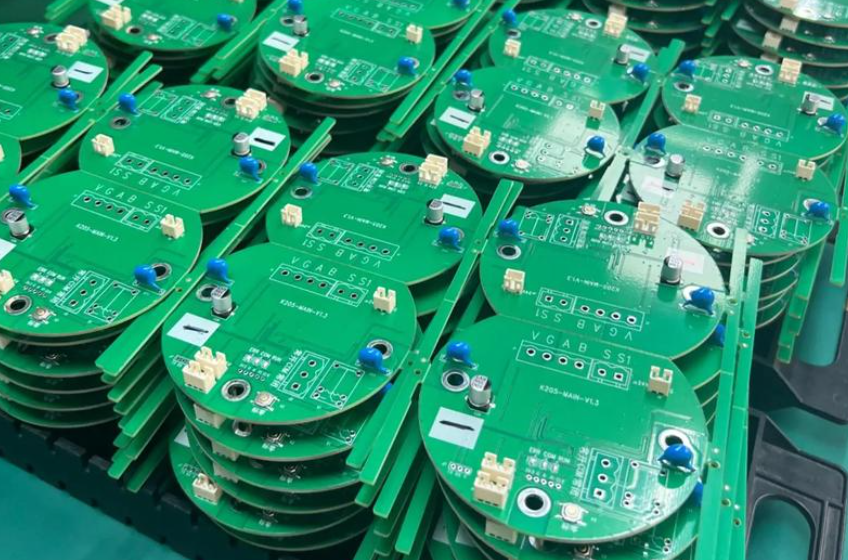
The printed area of the stencil matters as well. A large board with a small printed area exposes more paste to more air than a small board with a dense pattern, so the same volume of paste ages differently. The rate of loss is a function of exposed area rather than of the volume on the stencil.
Detection on the Line
The most useful signal is printed volume from the inspection system, plotted against time. A downward slope that recovers when fresh paste is added confirms the diagnosis without any further test. The slope is more informative than any single reading, and it is available whenever the printer is instrumented.
A manual check is also possible. Rolling a small amount of paste between the fingers shows the tack, and paste that has become sticky and stringy has already passed its working limit. The check is crude and quick, and it is best used to confirm what the volume data already suggests.
Setting a Working Limit
The working limit is shorter than the published open time, because the published figure is measured on a standard pattern and in a controlled environment. The limit is the time at which the volume on the real product begins to fall. The published figure is a starting point for a trial rather than a limit to be enforced.
The limit is then managed operationally: paste is added in smaller amounts more often, the stencil is cleaned on a defined interval, and the timer for paste on the machine is treated like any other process parameter. Adding paste in smaller amounts keeps the age of the material on the stencil closer to uniform.
Handling at Breaks and Changeovers
At a break the paste is either returned to its container or covered. Returning it is better for the material and worse for contamination, because paste that has been on the stencil carries dust and dried flakes back into the jar. A covered stencil is not a sealed container, and the paste on it keeps losing solvent. A discard rule that is written down is worth more than a longer open time.
The safe practice is to discard the paste that has been on the stencil and to take fresh material for the next run. The cost of that habit is small against the cost of a shift printed outside the volume window.
Records and Control
The record holds the paste lot, the time the container was opened, the time the paste was on the machine and the print volume trend. With those fields a drift can be attributed to the paste rather than to the stencil or the printer. The lot matters because two lots of the same product can have slightly different open times.
The cleaning interval that keeps the stencil side stable is described in the notes on under stencil cleaning, the measurement itself in the notes on paste volume measurement, and the parameters that interact with viscosity in the notes on print speed and pressure.
FAQ
Does refrigerated paste have a longer open time? No. It has a longer shelf life. Open time is measured at the working temperature and starts when the paste reaches the machine.
Can old paste be revived by stirring? Stirring redistributes separated flux and does not restore the solvent that has been lost.
How is the limit confirmed on a product? By printing at intervals and measuring volume. The point at which the volume falls outside the window is the working limit for that product.