Energy Storage PCB: When Thick Copper Becomes Scarce
An energy storage PCB has moved from a supporting component to a constrained resource. Reports in August 2026 described more than ten storage companies issuing price increase notices ranging from five to thirty percent, a rebound in lithium carbonate prices, rising costs for power conversion systems, insulated gate bipolar transistors and batteries, utilization approaching ninety percent at leading manufacturers, and order books extending beyond six months.
The reason the board matters in that list is that storage inverters rely on thick copper, high glass transition laminate and power semiconductors, and AI data centre construction is competing for the same inputs. What used to be a component purchased alongside batteries is now part of the same constrained supply chain as accelerator hardware.
Why the Cost Pressure Moved Downstream
Storage cost discussions traditionally centred on cells and raw materials. In this cycle the pressure has visibly moved into power electronics, because inverters, battery management and protection circuits use materials that are also in demand elsewhere.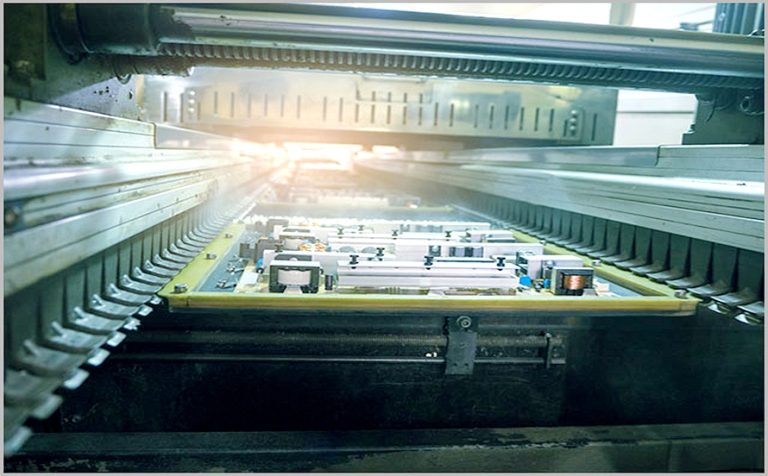
A power conversion system handles high voltage and high current continuously, so its board uses heavier copper than a control board and material with better thermal stability. When several industries need those same inputs at once, the component that was treated as a commodity becomes the item with the longest lead time.
What an Inverter Board Has to Do
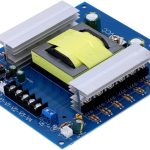
An inverter converts between direct and alternating current at high power, switching devices that draw substantial current and generate heat. The board distributes that current, carries the gate drive signals that control switching, and hosts the sensing and protection circuits that keep the system safe.
Those functions conflict in layout. High current paths need copper area and generous spacing, gate drive needs short low inductance loops, and sensing needs to measure current accurately without picking up switching noise. Resolving the three together is what makes an inverter board a design exercise rather than a wiring task.
Thick Copper and Its Manufacturing Limits
Copper thickness is measured against the current it must carry, the temperature rise that is acceptable and the voltage drop the design tolerates. In storage systems operating continuously, those margins are tight, which pushes designs toward heavier copper and larger plane areas.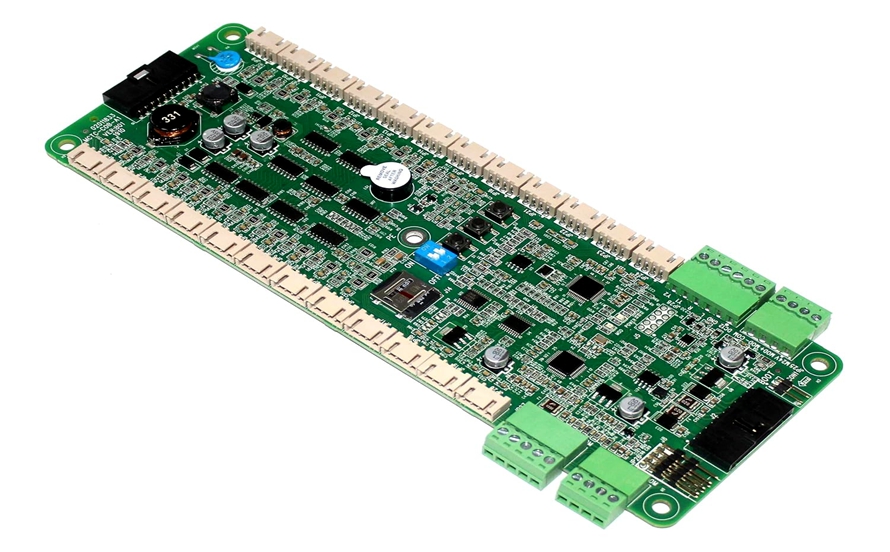
Heavy copper is harder to process. Etching fine features becomes difficult, lamination pressure must be controlled to avoid resin starvation, and the copper distribution across layers has to stay balanced to prevent warpage. Manufacturers able to run heavy copper routinely, rather than as a special process, hold an advantage when demand tightens, and this is a very different discipline from fine line capability.
High Temperature Materials and Their Reasons
Storage equipment operates in enclosures where ambient temperature can be high, and it operates continuously rather than in bursts. High glass transition laminates are used because they retain mechanical and electrical properties at elevated temperature and because their dimensional behaviour during lamination is more predictable.
They also cost more and require different process parameters than standard FR-4, which is one reason material substitution is not a simple procurement decision on these boards. A change in laminate can shift thermal behaviour, dimensional stability and reliability, so requalification is required, and that cost is now more visible because of the price pressure on the material.
Battery Management Electronics
Battery management boards measure cell voltages and temperatures, balance cells and communicate with the system controller. The measurement side must be accurate and isolated, while the balancing side may switch significant current through resistive paths.
This creates a board with mixed requirements: precision analogue measurement, isolation at system voltage, and current handling in a confined space. In containerised storage systems, thousands of cells are monitored, which places emphasis on consistency and on the reliability of every connection rather than on performance in a single channel.
Competing With AI Infrastructure for Capacity
Data centre power systems use similar materials: heavy copper for distribution, high temperature laminate, and power semiconductors. When accelerator racks consume increasing amounts of these components, storage manufacturers find themselves queuing behind a larger buyer.
That competition is structural rather than temporary. AI infrastructure is being built at a scale that affects the supply of power electronics generally, so storage designers should assume that material availability will remain a planning constraint and choose constructions that can be sourced from more than one supplier.
Design Choices That Reduce Exposure
Where the electrical requirement allows, designs can use heavier copper in fewer layers rather than moderate copper in several, reducing lamination cycles and material consumption. Separating power and control onto different boards also allows each to use the material it actually needs instead of a compromise grade.
Standardising on widely available material grades rather than exotic ones, and keeping a qualified alternative, reduces the risk of a supply interruption. Those are unglamorous decisions, but in a market where lead times exceed six months they determine whether a project can be delivered on the planned schedule.
Thermal Behaviour in Continuous Operation
Storage systems often operate at high load for hours, so thermal design cannot assume the intermittent duty cycles used in consumer or automotive applications. Steady state temperature rise determines component derating and influences the lifetime of the board and its joints.
Thermal vias under switching devices, generous copper spreading and placement that separates heat sources from temperature sensitive measurement circuits are the standard measures. Verifying them requires measurement under load on a finished assembly, since conduction through interfaces is difficult to model accurately and is often where the margin disappears.
Reliability Over a Long Service Life
Storage installations are expected to operate for a decade or more with limited intervention. Thermal cycling, humidity and continuous electrical stress accumulate, and the failures that matter most are those that develop slowly rather than those that appear immediately.
Design and manufacturing therefore favour conservative current densities, robust solder joints on large components, and finishes that resist corrosion. Qualification testing reproduces the operating environment rather than a laboratory condition, and the results are used to justify the design, which is the practical purpose of quality control in power electronics.
Testing Power Boards at Production Scale
Functional testing for an inverter or battery management board has to apply power and verify behaviour under load, which means test equipment capable of handling the currents involved. Inspection alone cannot confirm that a board will survive operation.
Test coverage should include isolation, switching behaviour, sensing accuracy and thermal response, and it should be applied to production units rather than only to prototypes. Where boards and assemblies come from the same supplier, failures can be traced to the process step responsible, which is why assembly testing is worth planning with the fabricator rather than separately.
What the Constraint Means for Buyers
Buyers in this market should expect longer lead times, less price flexibility and more scrutiny of design choices that consume scarce material unnecessarily. Quotations that assume the previous supply conditions will not hold.
The practical response is to plan further ahead, commit material against a rolling forecast, and treat the board as a long lead item in project planning rather than as a component purchased at the end. That change in sequencing is what separates projects that reach production on schedule from those that wait for a laminate grade.
Balancing Power and Control on One Board
Many inverter designs place control, sensing and power switching on the same board to shorten connections, which forces designers to manage noise and thermal load in a single layout. Separating them into two boards is cleaner electrically but adds connectors and cost.
Where they share a board, the practical solution is physical partitioning with defined zones for power, drive and measurement, and a stack up that provides clean references for the sensitive circuits. Getting that partition right during planning avoids a redesign later, when the mechanical envelope is already fixed.
Protection and Isolation Requirements
Storage systems must survive faults, including short circuits and ground faults, and the protection circuits sit on the boards handling the power. That means creepage and clearance distances, isolation barriers and current sensing that remains accurate under fault conditions.
These requirements consume board area and limit layout freedom, particularly where system voltages are high. They also interact with thermal design, since isolation gaps interrupt the copper that would otherwise spread heat, so the layout satisfies electrical safety and thermal performance simultaneously rather than one after the other.
Where the Storage Market Goes Next
Demand for storage is being driven by grid requirements and by data centre power, so the market is likely to keep growing even as costs rise. Manufacturers who secure material and capacity early will be able to accept orders that others cannot serve.
For board suppliers the opportunity is in power electronics rather than in general capacity. Heavy copper processing, high temperature material handling and reliable testing at power levels are the capabilities that matter, and building them takes time, which is precisely why the constraint is likely to persist while demand continues to grow in power conversion.