When choosing a PCB assembly method, manufacturers typically consider two major technologies: Through-Hole Technology (THT) and Surface Mount Technology (SMT). Both technologies have unique advantages and are suitable for different electronic products and manufacturing requirements.
The choice between THT vs SMT can significantly affect PCB assembly cost, component density, production efficiency, mechanical reliability, and product performance. SMT is widely used for compact, high-density, and automated electronics manufacturing, while THT remains valuable for components that require strong mechanical connections, higher power handling, or greater resistance to physical stress.
As an experienced PCB manufacturer and PCB assembly service provider, Kingda provides professional PCB prototype manufacturing, quick-turn PCB prototyping, SMT assembly, THT assembly, and PCB assembly solutions, supporting customers from initial design verification through full-scale production.
This guide explains the key differences between THT and SMT PCB assembly, including cost, reliability, component density, assembly speed, applications, advantages, disadvantages, and hybrid assembly options.
What Are THT and SMT?
Before comparing THT vs SMT, it is important to understand how each PCB assembly technology works.
What Is Through-Hole Technology (THT)?
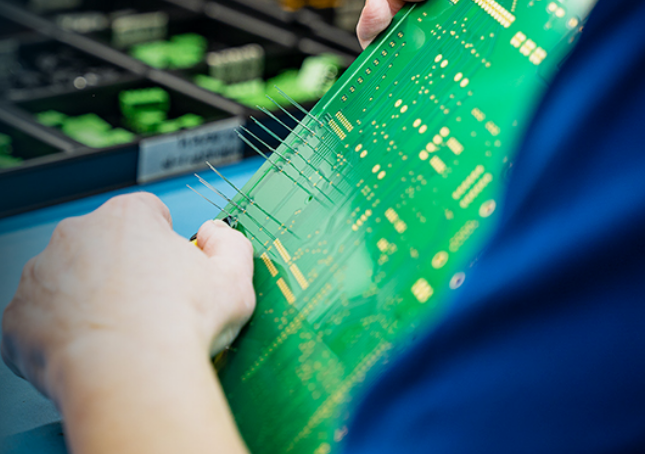
Through-Hole Technology (THT) is a traditional PCB assembly technology in which component leads are inserted through drilled holes in a printed circuit board. The leads are then soldered to the opposite side of the PCB, creating both an electrical and mechanical connection.
THT components generally have longer leads and larger packages than surface-mount components. Because the leads physically pass through the PCB, they provide strong mechanical anchoring.
Typical THT components include:
- Large capacitors
- Transformers
- Relays
- Power inductors
- Connectors
- Fuses
- High-power resistors
- Switches
THT is particularly useful when a PCB must withstand significant mechanical stress, vibration, high current, or repeated connection and disconnection.
What Is Surface Mount Technology (SMT)?
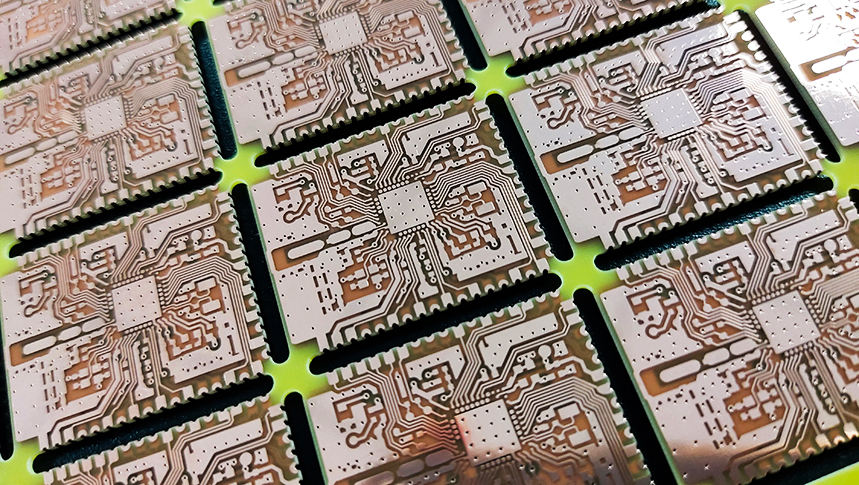
Surface Mount Technology (SMT) mounts electronic components directly onto the surface of a PCB rather than inserting component leads through drilled holes.
The components used in SMT are known as Surface Mount Devices (SMDs). Typical SMDs include resistors, capacitors, diodes, transistors, ICs, connectors, and other compact electronic components.
A typical SMT assembly process includes:
Solder Paste Printing → Solder Paste Inspection (SPI) → Pick and Place → Reflow Soldering → AOI → X-Ray Inspection → Functional Testing
Because SMT is highly compatible with automated production equipment, it is widely used for high-volume and high-density PCB assembly.
THT vs SMT: Key Differences
The major differences between THT and SMT can be evaluated from several perspectives, including cost, reliability, component density, production speed, mechanical strength, and application requirements.
1. THT vs SMT Cost
PCB assembly cost depends on PCB design complexity, component count, production volume, materials, labor requirements, inspection requirements, and manufacturing processes.
THT Cost
THT can involve additional PCB fabrication steps because component leads require drilled holes. Through-hole components may also require manual insertion or specialized insertion equipment.
For small production quantities, however, THT can be practical because prototype assembly and manual rework are relatively straightforward.
SMT Cost
SMT is generally more cost-efficient for medium- and high-volume production because most processes can be automated.
Automated pick-and-place machines, solder paste printers, reflow ovens, SPI, AOI, and other inspection equipment can significantly reduce manual labor and improve production consistency.
SMT also allows components to be smaller and eliminates many through-holes, which can simplify PCB layout and increase available routing space.
Therefore, the relationship between THT vs SMT cost depends heavily on production volume and design requirements rather than one technology always being cheaper.
For high-volume manufacturing, SMT automation generally provides strong cost advantages. For prototypes, low-volume production, or specialized components, THT may remain practical.
2. THT vs SMT Reliability
Reliability is another important consideration when comparing THT vs SMT reliability.
THT Reliability
THT components have leads that pass through the PCB, providing strong mechanical anchoring. This makes them useful for applications exposed to:
- Mechanical vibration
- Shock and impact
- Heavy components
- High insertion/extraction forces
- High current
- High voltage
- Thermal stress
For example, connectors, transformers, relays, and large power components often benefit from THT construction.
SMT Reliability
Modern SMT assemblies can also provide excellent reliability when the PCB layout, component selection, soldering process, and thermal design are properly controlled.
SMT components have short electrical paths and compact solder joints. Proper PCB design and manufacturing controls can improve resistance to thermal cycling, vibration, and other environmental stresses.
For demanding applications, manufacturers may combine SMT and THT on the same PCB. This mixed-technology PCB assembly allows SMT to provide high component density while THT provides mechanical reinforcement for selected components.
Therefore, rather than treating THT or SMT as universally more reliable, the appropriate technology should be selected according to the component type, mechanical environment, electrical requirements, and product lifecycle.
3. THT vs SMT Component Density
THT vs SMT component density is one of the most significant differences between the two technologies.
THT components require drilled holes and sufficient clearance around the component leads. This consumes valuable PCB real estate and can restrict routing.
SMT components, in contrast, are mounted directly onto the PCB surface. Components can be placed on both sides of the board, allowing designers to achieve much higher component density.
SMT is therefore particularly suitable for:
- Smartphones
- Wearable electronics
- IoT devices
- Medical electronics
- Automotive electronics
- Communication equipment
- Compact industrial controllers
SMT also supports advanced packages such as QFN, QFP, BGA, CSP, and fine-pitch IC packages, enabling increasingly compact PCB designs.
For applications where board size and weight are important, SMT generally provides greater design flexibility.
4. THT vs SMT Assembly Speed
Production speed is another important difference.
THT Assembly
THT assembly may involve manual component insertion, lead forming, soldering, inspection, and rework. Automated insertion equipment can improve productivity, but THT remains less suitable for highly dense assemblies containing thousands of small components.
SMT Assembly
SMT is highly automated. A modern SMT production line can integrate:
Automatic PCB Loading → Solder Paste Printing → SPI → Pick and Place → Reflow → AOI → X-Ray → Testing
High-speed placement machines can process large numbers of components quickly, making SMT particularly suitable for medium- and high-volume PCB assembly manufacturing.
Automation also improves repeatability and reduces the variation associated with manual assembly.
5. THT vs SMT Applications
The appropriate technology depends heavily on the product’s operating environment and electrical requirements.
Typical THT Applications
THT PCB assembly is commonly used for:
- Power supplies
- Transformers
- Relays
- Heavy connectors
- Industrial control equipment
- High-current circuits
- High-voltage equipment
- Mechanical switches
- Large capacitors and inductors
- Equipment exposed to substantial vibration
Typical SMT Applications
SMT PCB assembly is widely used in:
- Consumer electronics
- Smartphones
- Wearable devices
- IoT products
- Automotive electronics
- Medical electronics
- Telecommunications
- Industrial automation
- Networking equipment
- Computing systems
- High-density digital electronics
Many modern electronic products use both technologies rather than relying exclusively on SMT or THT.
THT vs SMT Pros and Cons
| Factor | THT | SMT |
|---|---|---|
| Component density | Lower | Higher |
| Assembly automation | Moderate | Excellent |
| Production speed | Generally lower | Generally higher |
| Mechanical strength | Strong | Good with proper design |
| Board space | More space required | Highly space-efficient |
| Prototyping | Easy manual handling | Requires more specialized tools |
| Rework | Relatively easy | More technically demanding |
| High-power components | Well suited | Component-dependent |
| Fine-pitch components | Limited | Excellent |
| Double-sided assembly | Limited | Excellent |
| High-volume production | Less efficient | Highly suitable |
| Compact products | Less suitable | Highly suitable |
Advantages and Disadvantages of THT
Advantages of THT
- Strong mechanical connections
- Suitable for heavy and large components
- Good choice for high-current and high-voltage applications
- Easier manual inspection and rework
- Suitable for harsh mechanical environments
- Useful for connectors and components exposed to repeated mechanical forces
Disadvantages of THT
- Requires drilled through-holes
- Lower component density
- More PCB space is consumed
- Can increase PCB fabrication complexity
- Less efficient for highly automated high-volume production
- Components generally occupy more physical space
Advantages and Disadvantages of SMT
Advantages of SMT
- High component density
- Smaller and lighter PCB assemblies
- Excellent compatibility with automated production
- High production efficiency
- Suitable for double-sided PCB assembly
- Supports fine-pitch and advanced IC packages
- Shorter electrical paths
- Suitable for high-frequency and high-speed circuits
- Strong cost efficiency in medium- and high-volume production
Disadvantages of SMT
- Requires sophisticated production equipment
- Fine-pitch components can be more difficult to rework
- Hidden solder joints such as BGA connections require X-ray inspection
- Component selection must consider thermal and mechanical requirements
- Some large or high-power components are better suited to THT
When Should You Choose SMT or THT?
Instead of simply asking whether SMT or THT is better, engineers should evaluate the specific requirements of the PCB project.
Choose SMT When:
- PCB size needs to be minimized
- High component density is required
- Automated production is important
- Production volume is medium or high
- Fine-pitch ICs are used
- Double-sided assembly is required
- High-speed or high-frequency signals are involved
- Weight reduction is important
Choose THT When:
- Components experience high mechanical stress
- Large or heavy components are required
- High current or voltage is involved
- Strong mechanical anchoring is important
- Components may need frequent replacement
- The design contains large connectors, transformers, or relays
Choose Mixed SMT/THT Assembly When:
Many sophisticated electronic products require both technologies.
For example, a PCB can use SMT assembly for processors, memory, sensors, resistors, capacitors, and other high-density components while using THT assembly for connectors, transformers, relays, and large power components.
This approach is commonly known as mixed assembly, hybrid PCB assembly, or SMT/THT assembly.
How Kingda Supports SMT and THT PCB Assembly
As an experienced PCB manufacturer and PCB assembly service provider, Kingda provides integrated manufacturing solutions covering PCB prototyping, quick-turn PCB manufacturing, SMT assembly, THT assembly, inspection, testing, and volume production.
Kingda’s manufacturing capabilities can support customers throughout the product development cycle, from initial design verification and prototype production to small-batch manufacturing and full-scale production.
Kingda’s Key PCB Assembly Advantages
1. One-Stop PCB and PCBA Manufacturing
Kingda integrates PCB fabrication and PCB assembly, helping customers simplify supplier management and coordinate fabrication, component sourcing, assembly, inspection, and testing.
2. Prototype to Mass Production
Kingda provides PCB prototype manufacturing, quick-turn PCB prototyping, small-batch PCB assembly, and volume production, supporting projects as they move from engineering validation to commercial manufacturing.
3. SMT and THT Assembly
Kingda supports both SMT and THT PCB assembly, allowing engineers to select the appropriate technology according to component characteristics, mechanical requirements, power requirements, and product application.
4. DFM and Manufacturing Engineering Support
Professional Design for Manufacturing (DFM) analysis helps identify potential manufacturing issues before production. This can reduce redesigns, improve manufacturability, and shorten development cycles.
5. Quality Inspection and Process Control
Kingda can integrate inspection and testing throughout the PCB assembly process, including SPI, AOI, X-ray inspection, and functional testing, depending on project requirements.
6. Reliable PCB Assembly Solutions
Kingda focuses on process control, manufacturing consistency, component traceability, and quality management to support reliable PCB and PCBA production for industrial, automotive, medical, communications, consumer electronics, and other applications.
Conclusion
The choice between THT vs SMT depends on the specific electrical, mechanical, thermal, dimensional, and production requirements of a PCB project.
SMT offers high component density, excellent automation, compact designs, and efficient production, making it highly suitable for modern high-density electronic products.
THT provides strong mechanical connections and remains valuable for large, heavy, high-power, high-voltage, and mechanically stressed components.
In many practical PCB designs, the most effective solution is not choosing only one technology but combining SMT and THT assembly on the same PCB. This mixed-technology approach allows designers to take advantage of SMT’s miniaturization and automation while retaining THT’s mechanical strength for specific components.
As an experienced PCB manufacturer and PCB assembly service provider, Kingda provides PCB prototype manufacturing, quick-turn PCB prototyping, SMT assembly, THT assembly, and turnkey PCB assembly solutions, helping customers move from initial design verification to reliable small-batch and volume production.