Electronics Manufacturing Services (EMS): PCB Design, PCB Manufacturing & 12-Step Process
Electronics Manufacturing Services (EMS), also known as electronic contract manufacturing, refers to a broad range of services that support the development, production, testing, assembly, distribution, and after-sales management of electronic products. Depending on the provider and project requirements, an EMS company may offer services ranging from PCB Design and PCB Manufacturing to PCB assembly, component sourcing, testing, programming, packaging, logistics, and repair.
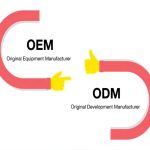
An Electronics Manufacturing Services provider typically works with original equipment manufacturers (OEMs), technology companies, product developers, and other organizations that need reliable electronic manufacturing capabilities without managing every production activity internally.
A professional EMS provider can integrate engineering, procurement, manufacturing, quality control, testing, and supply chain management into a coordinated production process. This integrated approach can help manufacturers improve production efficiency, control quality, reduce manufacturing risks, and bring electronic products to market more efficiently.
For companies developing a new electronic product, understanding the EMS process is important because every stage—from design verification to final packaging—can influence product quality, manufacturing cost, reliability, and delivery time.
What Is Electronics Manufacturing Services?
Electronics Manufacturing Services (EMS) are outsourced services provided by specialized manufacturers to support the development and production of electronic products.
Depending on the project, EMS services may include:
- PCB Design and engineering support
- PCB Manufacturing
- PCB assembly
- SMT assembly
- Through-hole/PTH assembly
- Electronic component sourcing
- IC programming
- PCB testing and inspection
- Functional testing
- Mechanical and electromechanical assembly
- Reliability and aging testing
- Conformal coating
- Final quality assurance
- Custom packaging
- Warehousing and logistics
- Product repair and after-sales support
The main advantage of an integrated EMS model is that multiple manufacturing activities can be coordinated through one supply chain and quality management system. Instead of managing separate PCB manufacturers, component suppliers, assembly houses, testing companies, and logistics providers, an OEM can work with an EMS partner that manages a larger portion of the manufacturing lifecycle.
Electronics Manufacturing Services Process: 12 Key Steps
Although the exact manufacturing workflow varies according to product type, volume, complexity, and customer requirements, a typical EMS project can be divided into the following 12 stages.
1. DFM and DFA Review
Design for Manufacturing (DFM) and Design for Assembly (DFA) are among the first engineering activities in an EMS project.
DFM evaluates whether a PCB design can be manufactured efficiently and consistently, while DFA focuses on whether components can be assembled efficiently and reliably.
A comprehensive DFM/DFA review can identify manufacturing risks before production begins.
PCB File Verification
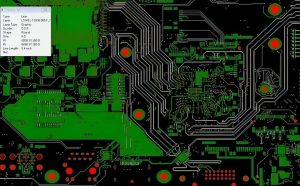
PCB file verification is an essential part of the electronics manufacturing process. Engineers review the supplied manufacturing data to ensure that the PCB layout, layer structure, component information, drill data, copper features, solder mask, silkscreen, and other production files are complete and consistent.
During this stage, manufacturers may identify issues such as:
- Missing or incorrect Gerber data
- Inconsistent layer information
- Incorrect drill files
- Insufficient copper spacing
- Manufacturing tolerance problems
- Incorrect component footprints
- Solder mask clearance issues
- Unclear fabrication requirements
A thorough file review helps prevent production delays, unnecessary rework, and manufacturing defects.
For customers requiring engineering assistance, Kingda can review production data and provide manufacturing feedback before fabrication and assembly begin.
Bill of Materials (BOM) Verification
BOM verification is another critical step in the EMS workflow.
The BOM contains information about the components required to manufacture the electronic product, including part numbers, quantities, package types, manufacturers, approved alternatives, and other purchasing information.
During BOM verification, the manufacturer checks whether:
- Component part numbers are correct
- Required quantities are available
- Components are obsolete or discontinued
- Approved alternatives are available
- Package information matches the PCB design
- Component specifications meet project requirements
- Purchased components match the approved BOM
Early BOM verification can reduce the risk of component shortages, incorrect parts, production interruptions, and assembly problems.
2. PCB Manufacturing and Component Procurement
Once the design and manufacturing data have been verified, the EMS process moves into PCB fabrication and electronic component procurement.
PCB Manufacturing
PCB Manufacturing is the process of converting a PCB design into a physical printed circuit board.
Depending on the application, PCB manufacturing may involve materials such as FR-4, aluminum, ceramic, high-frequency laminates, or other specialized substrates.
Typical PCB fabrication operations include:
- Material preparation
- Inner-layer imaging
- Copper etching
- Lamination
- Drilling
- Plating
- Outer-layer imaging
- Solder mask application
- Surface finishing
- Silkscreen printing
- Electrical testing
- Final inspection
The exact process depends on the PCB structure and technical requirements. A simple two-layer PCB may require a relatively straightforward process, while HDI, high-frequency, rigid-flex, and multilayer PCBs require more sophisticated manufacturing techniques.
Reliable PCB Manufacturing requires careful control of dimensional tolerances, copper thickness, impedance, hole quality, surface finish, solder mask, and other critical parameters.
Electronic Component Procurement
Electronic component procurement involves sourcing the parts required for PCB assembly and final product manufacturing.
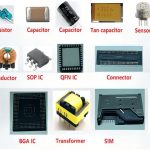
Common components include:
- Integrated circuits
- Microcontrollers
- Resistors
- Capacitors
- Diodes
- Transistors
- Connectors
- Sensors
- Relays
- Power devices
- Electromechanical components
A professional EMS provider must consider component quality, availability, lead time, lifecycle status, pricing, traceability, and regulatory requirements.
Effective component procurement is especially important when products use specialized or high-demand components. Careful supply chain management can reduce the risk of production interruptions caused by shortages, obsolete components, or unexpected delivery delays.
3. PCB Assembly
After the bare PCB and components are available, the next stage is PCB assembly.
Modern EMS providers generally use a combination of SMT, PTH, and manual assembly methods depending on the product design.
SMT Assembly
SMT Assembly, or Surface Mount Technology assembly, is one of the most widely used methods for assembling modern electronic products.
During SMT assembly, surface-mount components are positioned directly onto solder pads on the PCB. A typical SMT process includes:
- Solder paste printing
- Solder paste inspection
- Component placement
- Reflow soldering
- Automated optical inspection
- Additional inspection or testing
Automated pick-and-place machines enable manufacturers to install a large number of components quickly and accurately.
SMT is particularly suitable for compact electronic products and high-volume production because it supports high component density, automated manufacturing, and efficient production throughput.
PTH Assembly
Through-hole assembly, also known as PTH assembly, involves inserting component leads through holes in the PCB and soldering them to the board.
PTH components are often used when a component requires strong mechanical attachment or when the component package is not suitable for surface mounting.
Typical applications include:
- Power electronics
- Industrial equipment
- Automotive electronics
- Connectors
- Transformers
- Large capacitors
- Mechanical switches
Through-hole components can provide strong mechanical connections, making PTH assembly suitable for applications exposed to vibration, mechanical stress, or demanding operating conditions.
Manual PCB Assembly
Manual assembly involves technicians placing and soldering components by hand.
Although automated assembly is widely used for mass production, manual assembly remains useful for:
- Prototypes
- Small production batches
- Engineering samples
- Rework
- Special components
- Low-volume products
Experienced technicians can perform detailed soldering and assembly work while following defined process and inspection requirements.
4. IC Programming
IC programming is an important stage in many electronics manufacturing projects.
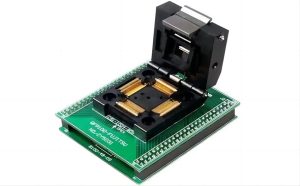
Integrated circuits such as microcontrollers, memory devices, and programmable logic devices may need firmware or configuration data before the finished product can operate correctly.
During IC programming, the required software or firmware is written into the device according to the customer’s specifications.
The process may include:
- Firmware loading
- Device identification
- Programming verification
- Configuration
- Serial-number assignment
- Security or calibration data programming
- Post-programming functional checks
Programming can be performed before component placement, after PCB assembly, or as part of final product testing, depending on the device and manufacturing requirements.
Accurate IC programming helps ensure that each finished electronic product contains the correct firmware and configuration.
5. PCB Testing and Inspection
Testing and inspection are essential parts of PCB Assembly and EMS production because they help identify manufacturing defects before products reach customers.
Different inspection technologies can be combined depending on the product’s complexity and reliability requirements.
Automated Optical Inspection (AOI)
Automated Optical Inspection (AOI) uses cameras and image-processing systems to inspect assembled PCBs for visible manufacturing defects.
AOI can detect issues such as:
- Missing components
- Incorrect component placement
- Component polarity errors
- Solder bridging
- Insufficient solder
- Excessive solder
- Misalignment
- Open solder joints
- Other assembly defects
AOI provides rapid inspection and is particularly valuable in automated production environments.
Visual Inspection
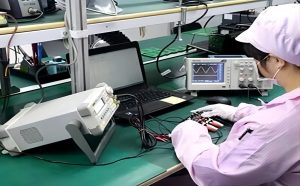
Visual inspection is a fundamental quality-control method in electronics manufacturing.
Experienced inspectors examine the PCB and assembled components to identify visible abnormalities that may not be detected by automated equipment.
Visual inspection can focus on:
- Component placement
- Solder joints
- PCB surface condition
- Connector installation
- Solder mask condition
- Silkscreen quality
- Mechanical assembly
- Cosmetic defects
Although automated inspection systems provide high-speed inspection, manual visual inspection remains useful as part of a comprehensive quality-control system.
In-Circuit Testing (ICT)
In-Circuit Testing (ICT) is used to evaluate individual components and electrical connections on an assembled PCB.
An ICT system uses a specialized fixture and test equipment to access designated test points on the circuit board.
Depending on the design, ICT can identify problems such as:
- Open circuits
- Short circuits
- Incorrect component values
- Missing components
- Incorrect component placement
- Electrical connection problems
ICT can provide detailed information about PCB assembly quality and is particularly useful in repeatable production environments.
6. Electromechanical Assembly
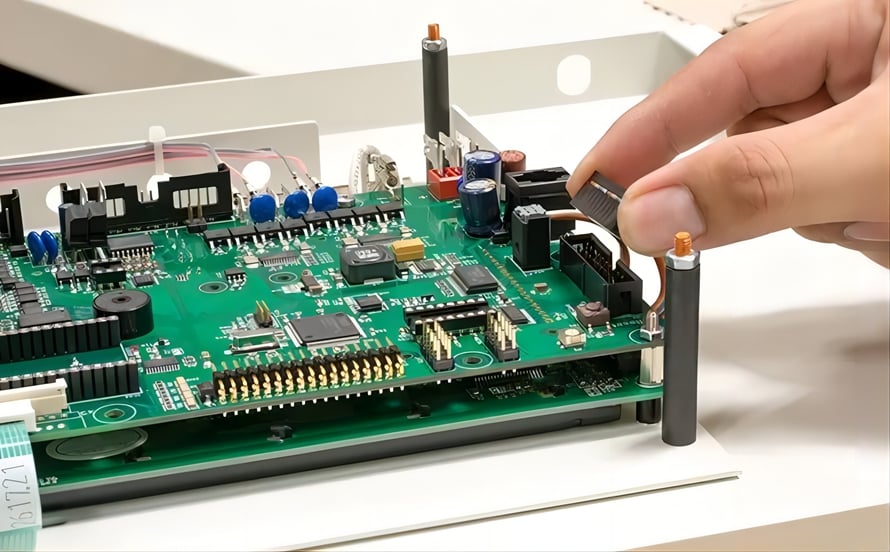
Electromechanical assembly combines electronic components with mechanical components to create a complete functional system.
Depending on the product, this may involve integrating:
- PCBs
- Motors
- Sensors
- Actuators
- Connectors
- Enclosures
- Switches
- Displays
- Cables
- Mechanical structures
The objective is not simply to assemble individual components but to ensure that electrical and mechanical systems work together correctly.
Professional Electromechanical Assembly requires careful attention to mechanical tolerances, electrical connections, cable routing, fastening methods, thermal considerations, and product-level testing.
7. Functional Testing
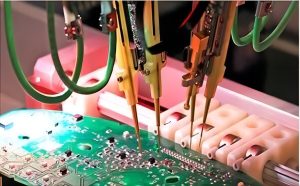
Functional testing verifies whether the completed electronic product performs according to its design requirements.
Unlike component-level inspection, functional testing evaluates the behavior of the assembled product as an operating system.
Depending on the product, functional testing may include:
- Power-up testing
- Communication testing
- Input/output verification
- Sensor testing
- Display testing
- Motor operation
- Wireless communication
- Voltage and current measurements
- Software and firmware verification
Functional testing helps identify problems that may not be visible through AOI, ICT, or visual inspection alone.
For complex electronic products, functional testing may be performed at multiple stages of production.
8. Aging and Reliability Testing
Aging testing, sometimes referred to as burn-in testing, is used to evaluate product reliability under controlled operating conditions.
During aging testing, electronic products may be operated for a specified period under defined electrical, temperature, or environmental conditions.
The objective is to identify potential early-life failures and verify that the product remains stable during extended operation.
Depending on the product, reliability testing may include:
- Elevated-temperature operation
- Continuous power cycling
- Long-duration functional operation
- Temperature and humidity exposure
- Electrical load testing
- Environmental stress testing
The exact test conditions should be established according to the product’s specifications, application environment, and reliability requirements.
9. Wire Bonding
Wire bonding is a semiconductor and microelectronics interconnection technology used to create electrical connections between a semiconductor die, package, substrate, or other conductive structures.
Fine wires—commonly gold, aluminum, or copper—can be bonded between designated connection points.
Common wire bonding techniques include:
- Ball bonding
- Wedge bonding
The appropriate method depends on the device structure, materials, wire characteristics, production requirements, and application.
Wire bonding is particularly important in applications where conventional PCB-level component connections are not sufficient to establish the required electrical interconnection.
10. Conformal Coating
Conformal coating is a protective process in which a thin insulating layer is applied to an assembled PCB.
The coating conforms to the shape of the PCB and its components, helping protect the assembly from environmental contamination
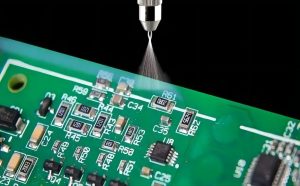
.
Depending on the coating material and application, conformal coatings can provide protection against:
- Moisture
- Dust
- Corrosive contaminants
- Chemicals
- Salt spray
- Condensation
- Certain environmental stresses
Conformal coating can also improve electrical insulation between conductive areas.
Common coating materials include acrylic, silicone, polyurethane, epoxy, and other specialized formulations.
The coating material and application method should be selected according to the product’s operating environment and reliability requirements.
11. Final Quality Assurance (FQA)
Final Quality Assurance (FQA) is one of the final checkpoints before an electronic product is released for shipment.
At this stage, the manufacturer verifies that the finished product meets the agreed specifications and quality requirements.
Final quality control may include:
- Product appearance inspection
- PCB assembly inspection
- Functional test results
- Electrical test results
- Mechanical inspection
- Firmware verification
- Label and serial-number verification
- Packaging inspection
- Documentation review
A robust FQA process helps ensure that defective products are identified before shipment.
It also provides an opportunity to verify manufacturing records and traceability information when required by the customer’s quality system.
12. Custom Packaging
Custom packaging is the final stage of many EMS manufacturing projects.
Electronic products can be sensitive to impact, vibration, moisture, electrostatic discharge, dust, and temperature changes. Therefore, packaging must be designed according to the product’s physical and environmental requirements.
Custom packaging may include:
- ESD-protective materials
- Anti-static bags
- Foam inserts
- Protective trays
- Custom cartons
- Moisture-resistant packaging
- Shock-absorbing structures
- Product-specific fixtures
Proper packaging protects finished products during storage, handling, and transportation.
For sensitive electronic assemblies, packaging design should also consider electrostatic discharge protection and mechanical protection to reduce the risk of damage before the product reaches its final destination.
Why Is EMS Important for Modern Electronics Manufacturing?
The electronics industry increasingly requires products that are smaller, more powerful, more reliable, and faster to manufacture. As a result, electronic manufacturing has become considerably more complex.
A professional EMS provider can integrate multiple manufacturing activities into a coordinated workflow, including PCB Manufacturing, component procurement, PCB Assembly, programming, testing, mechanical integration, and final packaging.
This integrated approach can provide several practical benefits.
Integrated Supply Chain Management
An EMS provider can coordinate PCB fabrication, component sourcing, assembly, testing, and logistics through a unified manufacturing workflow.
Manufacturing Expertise
Experienced EMS manufacturers can provide engineering feedback related to DFM, DFA, component selection, assembly processes, and testing requirements.
Quality Control
A structured quality-management system can introduce inspection and testing checkpoints throughout the manufacturing process rather than relying solely on final inspection.
Production Flexibility
EMS providers may support prototypes, small batches, medium-volume production, and high-volume manufacturing depending on their equipment and capabilities.
Reduced Manufacturing Complexity
By outsourcing multiple manufacturing activities to one qualified partner, OEMs can reduce the number of individual suppliers they need to coordinate.
How to Choose an Electronics Manufacturing Services Provider
When selecting an EMS partner, companies should evaluate the provider according to the actual technical and commercial requirements of the project.
Important factors include:
- PCB Design and engineering capabilities
- PCB Manufacturing capabilities
- PCB assembly technology
- SMT and PTH production capacity
- Component sourcing capabilities
- Testing and inspection equipment
- Quality-management systems
- Production traceability
- Manufacturing certifications
- Production capacity and lead time
- Prototype and low-volume capabilities
- Supply chain management
- Packaging and logistics services
- Experience with the target industry
For high-reliability products, customers should also verify whether the EMS provider can support the applicable industry standards, testing requirements, material specifications, and documentation requirements.
Kingda Electronics Manufacturing Services
Kingda can support customers across multiple stages of the electronics manufacturing lifecycle, from PCB Design and PCB Manufacturing through PCB assembly, component sourcing, testing, programming, electromechanical assembly, and final product preparation.
By integrating engineering and manufacturing capabilities, Kingda can help customers coordinate different stages of electronic product development and production through a unified workflow.
For projects requiring customized manufacturing solutions, customers can work with Kingda to define PCB specifications, component requirements, assembly processes, testing procedures, quality requirements, and delivery expectations.
Summary
Electronics Manufacturing Services cover much more than simply assembling electronic components onto a PCB. A complete EMS workflow can include PCB Design, PCB Manufacturing, component procurement, SMT and PTH assembly, IC programming, PCB inspection, electrical testing, functional testing, electromechanical assembly, reliability testing, conformal coating, final quality assurance, and custom packaging.
The 12-step EMS process described in this article provides a practical overview of how electronic products can move from engineering data to a finished and tested product.
For OEMs and product developers, selecting an EMS partner with suitable engineering capabilities, manufacturing resources, quality systems, testing technologies, a