OEM vs ODM: Differences, Advantages, Costs & Electronics Manufacturing
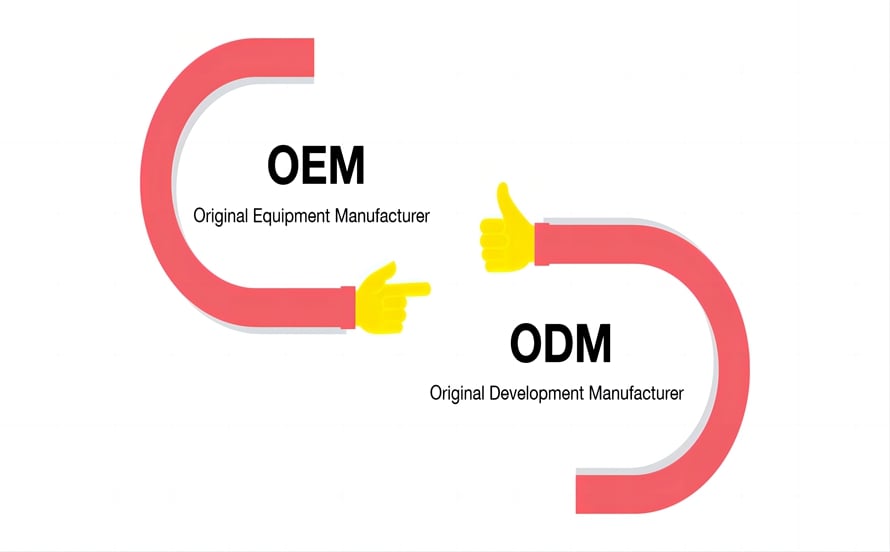
OEM and ODM are two widely used manufacturing models in the electronics industry. Both allow companies to outsource some or all of their product manufacturing activities, but they differ significantly in terms of product ownership, design responsibility, customization, intellectual property, and manufacturing control.
For companies developing electronic products, understanding the difference between OEM and ODM is particularly important. The choice can affect PCB Design, PCB Manufacturing, component sourcing, product development costs, production flexibility, intellectual property ownership, and time to market.
Before choosing a manufacturing partner, companies should understand what OEM and ODM mean, how each model works, and which responsibilities belong to the brand owner and manufacturer.
What Is OEM?
OEM stands for Original Equipment Manufacturer.
In an OEM manufacturing model, the brand owner generally owns or controls the product concept, specifications, engineering requirements, and product design. The manufacturer is contracted to produce the product according to the customer’s specifications.
For electronic products, an OEM project may involve the customer providing:
- Product specifications
- Product architecture
- PCB Design
- Bill of Materials (BOM)
- Mechanical drawings
- Firmware requirements
- Component specifications
- Quality standards
- Packaging requirements
The OEM manufacturer then uses these requirements to manufacture and assemble the product.
For example, an electronics company may develop a new industrial controller and complete its own product development and PCB Design. The company can then contract an OEM manufacturer to fabricate the PCB, source components, perform PCB Assembly, conduct testing, and manufacture the finished product under the customer’s brand.
In this arrangement, the manufacturer provides production capabilities while the brand owner maintains greater control over the product concept and specifications.
How Does OEM Manufacturing Work?
A typical OEM manufacturing workflow can include the following stages:
- Product concept and market requirements
- Product engineering and development
- PCB and mechanical design
- Prototype development
- DFM and DFA review
- PCB Manufacturing
- Component procurement
- PCB assembly
- Product testing
- Final assembly
- Quality inspection
- Packaging and delivery
The exact workflow depends on the product and the agreement between the customer and manufacturer.
An OEM manufacturer may provide only production services, or it may provide additional engineering, procurement, testing, packaging, and logistics support.
Advantages of OEM Manufacturing
Greater Product Customization
One of the major characteristics of OEM manufacturing is that the customer generally provides the product specifications and design requirements.
This gives the brand owner greater control over:
- Product appearance
- Circuit architecture
- PCB layout
- Component selection
- Mechanical structure
- Firmware
- Electrical performance
- Product functions
- Packaging
For complex electronic products, this flexibility can be particularly important.
A company can develop a unique product according to its own technical requirements instead of simply selecting an existing manufacturer design.
Better Control Over Product Development
OEM manufacturing can provide greater control over the product development process.
The brand owner can establish detailed requirements for the product and work with the manufacturer to determine how those requirements should be translated into production.
For PCB-based products, this may include controlling:
- PCB layer count
- Board dimensions
- Copper thickness
- Material selection
- Impedance requirements
- Surface finish
- Component specifications
- Assembly technology
- Testing requirements
This is particularly useful for products that require specialized electrical or mechanical performance.
Suitable for Complex Products
OEM manufacturing can be appropriate for products with highly customized designs or specialized technical requirements.
Examples include:
- Industrial control systems
- Medical electronics
- Automotive electronics
- Telecommunications equipment
- Consumer electronics
- Power electronics
- IoT devices
These products may require customized PCB Manufacturing, specialized components, firmware, mechanical structures, and testing procedures.
Potential Cost Benefits
Although developing a fully customized product requires significant engineering investment, outsourcing manufacturing can reduce the need to build and operate an internal production facility.
Instead of investing heavily in:
- PCB fabrication equipment
- SMT production lines
- Testing equipment
- Assembly facilities
- Manufacturing personnel
- Procurement infrastructure
the brand owner can use an established OEM manufacturing partner.
The actual cost advantage depends on production volume, product complexity, material requirements, labor costs, tooling, testing requirements, and the commercial agreement.
OEM and B2B Manufacturing
OEM manufacturing is commonly associated with business-to-business (B2B) relationships.
For example, an electronics brand may develop a product and contract a manufacturing company to produce it. The finished product is then sold under the brand owner’s name.
A value-added reseller (VAR), by comparison, may purchase a product or platform and add additional services, configuration, integration, or customization before selling it to customers.
The roles can overlap in practice, so the specific contractual relationship should be clearly defined.
What Is ODM?
ODM stands for Original Design Manufacturer.
In an ODM model, the manufacturer has already developed some or all of the product design and manufacturing platform. The customer can then purchase an existing product design and sell it under its own brand, sometimes with modifications or customization.
Unlike a traditional OEM model, the ODM manufacturer typically contributes substantially more to product design and engineering.
An ODM may provide:
- Product architecture
- Industrial design
- Electronic design
- PCB Design
- Mechanical design
- Prototype development
- Component selection
- Manufacturing
- Testing
- Packaging
- Supply chain management
The customer can therefore enter the market without developing every part of the product from scratch.
How Does ODM Manufacturing Work?
A typical ODM process may look like this:
- Customer identifies a target product
- ODM presents an existing product platform
- Customer selects specifications and options
- Product customization is defined
- Engineering modifications are completed
- Prototype or sample is produced
- Testing and validation are performed
- PCB Manufacturing and component procurement begin
- Mass production starts
- Products are packaged and delivered under the customer’s brand
The degree of customization depends on the ODM provider and the agreement.
Some ODM products may be almost completely standardized, while others can be modified significantly to meet customer requirements.
ODM as a Private-Label Manufacturing Model
ODM is often associated with private-label manufacturing.
In a private-label arrangement, a manufacturer produces a product that is sold under another company’s brand.
For example, an ODM may already have an electronic product platform with an established PCB, enclosure, firmware, and production process. A customer can customize the branding, packaging, appearance, software, or selected specifications before selling the product under its own brand.
This approach can significantly reduce the amount of time required for product development.
However, private-label products must still comply with applicable product safety, labeling, environmental, and regulatory requirements.
The fact that a product is manufactured by an ODM does not eliminate the customer’s responsibilities regarding market-specific compliance.
ODM Can Shorten Time to Market
One of the major reasons companies consider ODM manufacturing is development speed.
Developing a new electronic product from the beginning can require substantial engineering work.
A new product may require:
- Market research
- Industrial design
- Electronic engineering
- PCB Design
- Firmware development
- Prototype development
- Component qualification
- Mechanical engineering
- Testing
- Certification
- PCB Manufacturing
- Production validation
An ODM can reduce some of this development work by starting with an existing product platform.
Instead of creating an entirely new product architecture, the customer may only need to customize selected functions, appearance, branding, or specifications.
This can potentially shorten development cycles and reduce engineering expenditure.
ODM Cost Advantages
ODM manufacturing can provide cost advantages because the manufacturer can spread engineering, tooling, procurement, and production resources across multiple customers or product programs.
For example, an ODM may already have:
- Product designs
- PCB layouts
- Manufacturing processes
- Component suppliers
- Production equipment
- Testing systems
- Tooling
- Technical personnel
Customers do not necessarily need to build all of these capabilities independently.
However, lower development costs do not automatically mean that ODM is less expensive in every situation. The actual cost depends on customization requirements, order volume, intellectual property arrangements, tooling, component prices, certification, and other commercial factors.
OEM vs ODM: What Is the Difference?
The main difference between OEM and ODM is the distribution of product design and manufacturing responsibilities.
In an OEM model, the customer generally provides the product design and specifications, while the manufacturer focuses primarily on production.
In an ODM model, the manufacturer contributes an existing product design or platform and manufactures the product for the customer, often with some degree of customization.
OEM vs ODM Comparison
| Factor | OEM | ODM |
|---|---|---|
| Product design | Primarily provided by customer | Primarily developed by manufacturer |
| Manufacturing | Manufacturer | Manufacturer |
| Customization | Generally higher | Depends on platform |
| Development investment | Generally higher for customer | Generally lower |
| Product development time | Can be longer | Can be shorter |
| Design control | Generally greater for customer | More dependent on manufacturer |
| Intellectual property | Must be contractually defined | Must be contractually defined |
| Suitable for | Highly customized products | Faster product launches |
| Existing product platform | Usually not required | Commonly used |
| Engineering involvement | Customer-led | Manufacturer-led or shared |
The table provides a general comparison. Actual responsibilities and ownership depend on the manufacturing agreement and project structure.
OEM vs ODM for Electronics and PCB Products
The difference becomes particularly important when manufacturing electronic products.
OEM PCB Manufacturing
In an OEM project, the customer may provide its own PCB design files and manufacturing specifications.
The manufacturing partner can then provide:
- PCB fabrication
- Component sourcing
- SMT assembly
- PTH assembly
- IC programming
- PCB testing
- Functional testing
- Final assembly
This approach allows the customer to retain greater control over the electronic design.
ODM PCB Manufacturing
In an ODM project, the manufacturer may already own or control an existing electronic design platform.
The customer may request modifications such as:
- PCB layout changes
- Component changes
- Connector changes
- Firmware modifications
- Power-supply adjustments
- Interface changes
- Mechanical modifications
- Branding changes
The manufacturer can then modify the existing design and manufacture the customized product.
OEM vs ODM vs EMS
OEM and ODM are sometimes confused with EMS, but they describe different aspects of manufacturing relationships.
OEM generally refers to a manufacturing arrangement in which the customer provides the product specifications or design and contracts another company to manufacture it.
ODM generally refers to a model in which the manufacturer provides an existing product design or development platform in addition to manufacturing.
EMS, or Electronics Manufacturing Services, refers more broadly to outsourced electronics manufacturing services such as PCB assembly, component sourcing, testing, programming, box-build assembly, and supply chain management.
An EMS provider may support either OEM or ODM customers.
For example, an OEM customer may provide its own PCB Design and ask an EMS company to perform PCB Manufacturing, PCB assembly, testing, and final assembly.
An ODM company, on the other hand, may provide the electronic design itself and use its manufacturing resources or external EMS partners to produce the finished product.
Advantages and Disadvantages of ODM
Advantages of ODM
Lower Product Development Requirements
Customers can use an existing product platform rather than developing every component from the beginning.
This can reduce the engineering resources required for product development.
Faster Product Introduction
Because much of the product architecture may already exist, ODM manufacturing can potentially shorten the path from concept to mass production.
Access to Manufacturing Expertise
ODM manufacturers often have established engineering teams, suppliers, manufacturing processes, and production equipment.
Customers can therefore benefit from existing manufacturing knowledge without building the entire infrastructure internally.
Reduced Initial Investment
An ODM model can reduce the upfront investment required for product development, especially when the customer can use an existing platform with limited modifications.
Supply Chain Support
An established ODM may already have relationships with PCB manufacturers, component suppliers, assembly facilities, logistics providers, and testing laboratories.
This can simplify supply chain coordination.
Disadvantages of ODM
Limited Design Flexibility
Because ODM products are often based on existing designs, customers may have fewer options for fundamental design changes.
Extensive modifications can also increase engineering costs and development time.
Intellectual Property Considerations
Intellectual property ownership must be clearly defined before an ODM project begins.
Contracts should specify ownership or licensing rights for:
- PCB layouts
- Schematics
- Firmware
- Mechanical designs
- Industrial designs
- Manufacturing processes
- Product improvements
- Customer-specific modifications
Companies should not assume that they automatically own every design element simply because they paid for customization.
Dependence on the Manufacturer
A customer may become dependent on the ODM’s engineering capabilities, production resources, component supply chain, and existing product platform.
This can become an important consideration when the customer wants to change manufacturers later.
Product Differentiation
When several customers use similar underlying ODM platforms, it may be more difficult to create substantial technical differentiation unless the customer invests in meaningful customization.
How to Choose Between OEM and ODM
The right manufacturing model depends on the product, technical requirements, budget, development resources, and desired level of control.
OEM may be more appropriate when a company:
- Already has its own product design
- Requires extensive customization
- Needs greater control over PCB design
- Has proprietary technology
- Has strong engineering capabilities
- Requires a highly differentiated product
ODM may be more suitable when a company:
- Wants to reduce development time
- Has limited engineering resources
- Wants to launch an established product category quickly
- Can work with an existing product platform
- Wants to reduce initial development investment
- Requires moderate rather than completely custom design
Companies should evaluate these factors together rather than selecting a model solely according to manufacturing price.
Key Considerations Before Signing an OEM or ODM Agreement
Before entering an OEM or ODM relationship, companies should carefully define the responsibilities of both parties.
Important contractual considerations include:
Product Specifications
Clearly define the electrical, mechanical, software, performance, and quality requirements.
PCB and Manufacturing Data
Specify who owns and controls:
- Schematics
- PCB layout files
- Gerber files
- Drill files
- BOMs
- Assembly drawings
- Test specifications
Intellectual Property
Clearly define ownership and licensing rights for existing and newly developed intellectual property.
Tooling
Determine who owns molds, fixtures, test equipment, programming fixtures, and other manufacturing tools.
Component Sourcing
Define approved suppliers, component alternatives, lifecycle management, and responsibility for obsolete components.
Quality Requirements
Specify inspection standards, acceptance criteria, testing procedures, traceability requirements, and defect-management processes.
Confidentiality
Confidential information should be protected through appropriate contractual arrangements.
Production and Delivery
Production quantities, lead times, delivery terms, packaging requirements, and logistics responsibilities should be documented.
OEM and ODM with Kingda
For electronic products that require professional PCB Manufacturing, PCB assembly, component sourcing, testing, and related manufacturing services, Kingda can support customers across different stages of the electronics production process.
Customers with their own product designs can use an OEM-oriented manufacturing approach, while companies that need greater engineering and manufacturing support can discuss customized development and production requirements with Kingda.
Depending on the project, services may include:
- PCB Design support
- PCB Manufacturing
- PCB Assembly
- SMT Assembly
- PTH Assembly
- Component sourcing
- IC programming
- AOI inspection
- ICT
- Functional testing
- Electromechanical assembly
- Conformal coating
- Final quality control
- Custom packaging
The appropriate manufacturing model should be determined according to the customer’s product ownership, technical requirements, customization needs, production volume, and intellectual property arrangements.
Summary
OEM and ODM are two important manufacturing models used throughout the electronics industry.
With OEM manufacturing, the customer generally provides the product specifications and design, while the manufacturing partner focuses on production and related services. This model can provide greater control and customization, making it suitable for companies with proprietary designs or specialized technical requirements.
With ODM manufacturing, the manufacturer contributes an existing product design or platform and provides production services. This approach can reduce development requirements and potentially shorten time to market, but customers should carefully evaluate customization limitations and intellectual property ownership.
For electronic products, the distinction can directly affect PCB Design, PCB Manufacturing, component sourcing, assembly, testing, product ownership, and long-term supply-chain flexibility.
Before selecting an OEM or ODM partner, companies should carefully evaluate technical capabilities, quality systems, production capacity, engineering support, intellectual property arrangements, component sourcing, testing capabilities, and contractual responsibilities.